
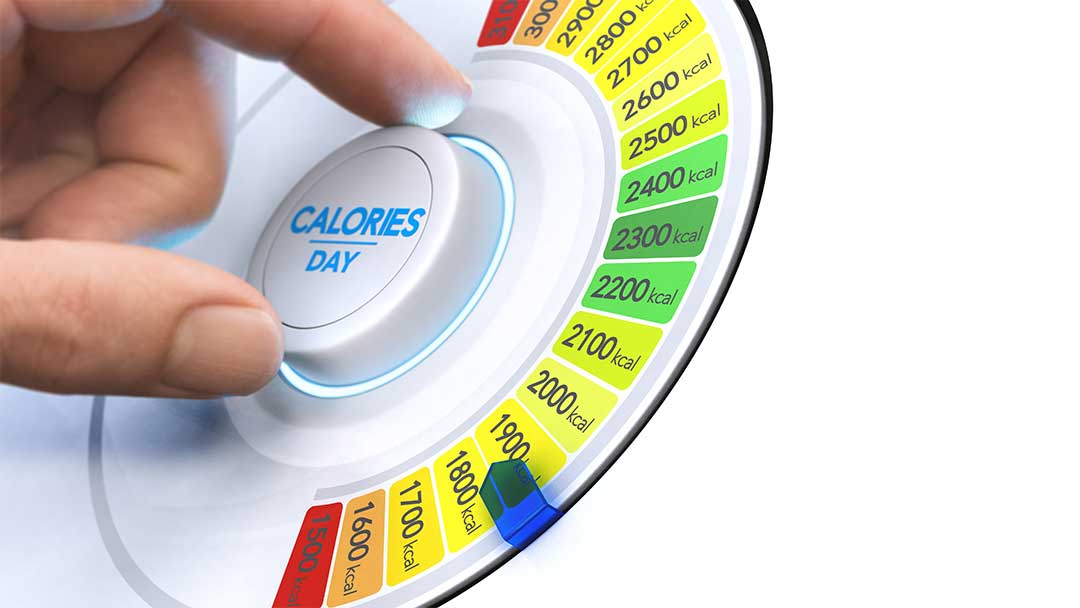
BMR, TDEE, and daily energy planning
How to Calculate Your Caloric Needs
Caloric needs are the number of calories your body is likely to use in a day after accounting for resting metabolism, daily movement, exercise, digestion, and your goal. This guide explains the full process: estimate basal metabolic rate, apply an activity factor, choose a realistic adjustment for weight change, track results, and revise the estimate with real-world data.
Caloric Needs Calculator
Use this calculator for an educational estimate of daily maintenance calories and a practical goal target. It uses the Mifflin-St Jeor equation for BMR, then multiplies by an activity factor to estimate TDEE.
The default example uses a 30-year-old, 75 kg, 175 cm, lightly active profile.
What Caloric Needs Really Mean
Your caloric needs are not one fixed number engraved into your body. They are an estimate of daily energy use, usually expressed in calories per day. That estimate changes with body size, body composition, age, activity, training, occupation, sleep, illness, environment, and weight change. A person who weighs 80 kg and trains five days per week will usually need more energy than the same person after losing 15 kg and taking a desk job. A calorie estimate is therefore a starting point, not a permanent rule.
The purpose of calculating caloric needs is to make decisions less random. If you know your approximate maintenance calories, you can plan fat loss with a controlled deficit, muscle gain with a controlled surplus, or weight maintenance with fewer swings. Without an estimate, people often rely on hunger, food labels, trends, or copied diet plans. Those can work for some people, but a structured estimate gives you a testable number. You can eat near that number, track body weight and performance for two to four weeks, then adjust based on evidence.
Caloric needs should also be separated from food quality. Calories measure energy. They do not measure protein quality, fiber, vitamins, minerals, sodium, satiety, digestion, cultural fit, or enjoyment. A person can hit a calorie target with a poor diet, and a person can eat nutrient-dense foods while still eating too much or too little energy for their goal. A useful plan combines the energy target from this page with enough protein, carbohydrates, fats, fiber, water, and micronutrients. For broader meal planning, use this page alongside the macro calculator and the health and fitness calculators.
The Four Parts of Daily Energy Expenditure
Total daily energy expenditure, often called TDEE, is the total energy your body uses across a full day. It has four major parts. The first is basal metabolic rate, or BMR, which is the energy used at rest for breathing, circulation, temperature regulation, cell maintenance, brain function, and organ function. The second is exercise activity, such as running, lifting, cycling, swimming, sport, or planned cardio. The third is non-exercise activity, which includes walking, standing, fidgeting, housework, commuting, carrying groceries, and active work. The fourth is the thermic effect of food, which is the energy used to digest, absorb, and process nutrients.
BMR is usually the largest part of the total. That is why height, weight, age, and the equation profile have such a strong effect on the calculator result. Exercise can add a lot of energy use, but only on days when it happens. Non-exercise activity can be surprisingly important because it happens all day. Two people can both report "light exercise three times per week" while one sits most of the day and the other walks, stands, and does errands for hours. Their TDEE may differ by hundreds of calories.
The thermic effect of food is usually included indirectly in activity multipliers rather than calculated separately in everyday tools. Protein has a higher thermic effect than fat or carbohydrate, but that does not mean extremely high protein automatically creates large weight changes. It simply means digestion has an energy cost. For practical planning, estimate BMR, multiply by an activity factor, choose a goal adjustment, then validate the result against body weight trend. Precision comes from follow-up, not from pretending the first estimate is perfect.
Step 1: Estimate BMR
Basal metabolic rate is the foundation of most calorie calculations. It estimates how many calories your body would use in a resting state before planned movement is added. Most online calculators use a predictive equation because direct measurement requires laboratory equipment. The Mifflin-St Jeor equation is commonly used for adults because it performs reasonably well across many modern populations. It uses weight in kilograms, height in centimeters, age in years, and an equation constant.
In these formulas, \(W\) is body weight in kilograms, \(H\) is height in centimeters, and \(A\) is age in years. For example, a 30-year-old male profile at 75 kg and 175 cm gives \(10(75)+6.25(175)-5(30)+5\). That equals \(750+1093.75-150+5=1698.75\), or about 1699 calories per day. This is not the final daily calorie need because it does not yet include normal movement and exercise.
There are other equations, including Harris-Benedict and Katch-McArdle. Harris-Benedict is older and still common. Katch-McArdle uses lean body mass, so it can be helpful when body fat percentage is known with reasonable accuracy. Most people do not need to run every formula. The more important skill is understanding that all equations are estimates. If your actual weight trend disagrees with the estimate after several weeks of consistent tracking, your real maintenance is different from the calculated value.
Step 2: Convert BMR to TDEE
After BMR is estimated, multiply it by an activity factor. Activity factors are broad categories that attempt to account for planned exercise, ordinary movement, and daily life. A sedentary multiplier of 1.20 may fit someone with a desk job, little exercise, and low step count. A lightly active multiplier of 1.375 may fit someone who exercises one to three times per week or walks regularly. A moderately active multiplier of 1.55 may fit consistent training three to five days per week. Very active and highly active categories are for demanding exercise, physically active jobs, or both.
If the example BMR is 1699 and the activity factor is 1.55, TDEE is \(1699\times1.55=2633\) calories per day. This means that, on average, eating near 2633 calories should maintain body weight if the activity estimate and food tracking are accurate. In the real world, body weight can still move because sodium, carbohydrate, menstrual cycle changes, bowel contents, hydration, and training soreness all affect water weight. That is why weekly averages are more useful than one daily weigh-in.
The activity multiplier is often the weakest link in the calculation. Many people overestimate activity because workouts feel hard, but the rest of the day may be very sedentary. Others underestimate activity because they do not think of walking, standing, caregiving, or active work as exercise. When unsure, choose the lower of two categories, track for a few weeks, and adjust. If weight is stable at a higher intake than predicted, your true expenditure is higher. If weight increases at the estimated maintenance target, the multiplier may be too high or intake tracking may be incomplete.
Activity Multipliers Explained
| Activity level | Multiplier | What it often looks like | Common mistake |
|---|---|---|---|
| Sedentary | 1.20 | Desk work, low step count, little planned exercise, long sitting time. | Choosing lightly active because of one or two short workouts while the rest of the week is mostly sitting. |
| Lightly active | 1.375 | Exercise one to three days per week, regular walking, or a moderately mobile routine. | Ignoring low weekend movement or assuming all workouts burn more calories than they do. |
| Moderately active | 1.55 | Training three to five days per week plus a reasonable daily step count. | Using this category for gym attendance without considering low non-exercise movement. |
| Very active | 1.725 | Hard training most days, active job, or a combination of structured exercise and high movement. | Using this category during a short training phase and then forgetting to reduce calories when activity drops. |
| Highly active | 1.90 | Physical labor, high-volume sport, military-style training, or long endurance blocks. | Choosing it for motivation rather than evidence from work, steps, and training volume. |
Activity categories are useful, but they are not exact. If you wear a step tracker, use the weekly average as context. Someone with 3500 steps per day and three short workouts may still be closer to lightly active than moderately active. Someone with 12000 steps per day, a standing job, and three workouts may be closer to moderately active or very active. The calculator cannot see your day; it can only apply the category you choose.
Step 3: Choose a Goal Adjustment
Once TDEE is estimated, the goal adjustment turns maintenance into an action target. For weight maintenance, the adjustment is zero. For fat loss, subtract a modest amount. For muscle gain or weight gain, add a modest amount. This guide uses 250 and 500 calorie adjustments because they are easy to understand and usually more sustainable than extreme changes.
A 250 calorie deficit is often appropriate when someone is already lean, wants slow fat loss, is training hard, or struggles with hunger. A 500 calorie deficit is more aggressive but still common. Larger deficits may produce faster scale movement at first, but they can increase hunger, reduce training performance, and raise the risk of lean mass loss if protein and resistance training are not adequate. For muscle gain, a 250 calorie surplus is often enough for leaner gain phases. A 500 calorie surplus may suit people who are underweight, very active, or willing to accept faster fat gain along with strength progress.
The adjustment should fit the person, not just the goal. A 500 calorie deficit from 3000 calories leaves 2500 calories, which may be manageable. The same 500 calorie deficit from 1500 calories leaves 1000 calories, which is too low for many adults without medical supervision. Percentages can help: a 10 to 20 percent reduction from maintenance is often more realistic than a fixed cut for everyone. For many people, the best target is the one that can be followed consistently while preserving energy, mood, training quality, and nutrient intake.
Step 4: Track the Result and Adjust
The most important part of calculating caloric needs happens after the calculator. Eat close to the target for at least two weeks, preferably three or four, and track body weight using weekly averages. Daily weight is noisy. A salty dinner, a hard leg workout, constipation, menstrual cycle changes, travel, alcohol, or a higher-carbohydrate meal can move scale weight by more than a pound without reflecting fat gain or loss. Weekly averages smooth out some of that noise.
If your goal is maintenance and your weekly average stays stable, the estimate is good enough. If weight rises for several weeks, either intake is above maintenance or expenditure has dropped. If weight falls, intake is below maintenance. If your goal is fat loss and the weekly average is not moving after three to four weeks, reduce calories modestly, increase activity, or improve tracking accuracy. If weight is falling too quickly and energy is poor, raise calories or reduce the deficit. If your goal is muscle gain and weight is not increasing at all, add a small surplus. If weight jumps rapidly with waist gain, reduce the surplus.
Adjustments do not need to be dramatic. A change of 100 to 200 calories per day is often enough. You can also adjust activity instead of food. Adding a daily walk may be easier than removing another snack. Increasing food may be easier than reducing training volume if performance is falling. The best plan is not the most mathematically dramatic plan; it is the plan that produces the intended trend with the least disruption.
Worked Example: Maintenance Calories
Consider a 35-year-old female equation profile, 68 kg body weight, 165 cm height, and lightly active routine. The Mifflin-St Jeor estimate is \(10(68)+6.25(165)-5(35)-161\). That equals \(680+1031.25-175-161=1375.25\), or about 1375 calories for BMR. With a lightly active multiplier of 1.375, estimated TDEE is \(1375\times1.375=1891\) calories per day. A maintenance target would therefore start around 1900 calories.
If this person eats near 1900 calories for three weeks and weight stays within the same weekly average range, the estimate is working. If weight rises slowly, actual maintenance may be closer to 1750 or tracking may be missing some intake. If weight falls, actual maintenance may be higher than expected. Instead of changing everything after one week, the person should evaluate the trend, step count, training consistency, and tracking accuracy. Maintenance is a range, not a single magic number.
A useful maintenance strategy is to set a target range rather than one exact number. For this example, 1800 to 2000 calories might be more realistic than demanding exactly 1891 calories every day. Some days will be higher, some lower. The weekly average matters more than perfect daily sameness. This approach is especially helpful for people with changing schedules, social meals, or variable training days.
Worked Example: Fat Loss Calories
Now consider a 40-year-old male equation profile, 92 kg body weight, 180 cm height, and sedentary work with three workouts per week. If he chooses lightly active, BMR is \(10(92)+6.25(180)-5(40)+5\), which equals \(920+1125-200+5=1850\) calories. TDEE with 1.375 is \(1850\times1.375=2544\) calories. A mild deficit target is about 2294 calories. A larger but still common deficit target is about 2044 calories.
Which target should he choose? If hunger is high, training is demanding, or previous diets failed because they were too strict, the mild deficit is more sensible. If appetite is manageable and the person is comfortable tracking intake, the 500 calorie deficit may be appropriate. Protein should be planned carefully during fat loss, so the protein requirement calculator can be used after calories are estimated. If the goal includes improved body composition, the body fat calculator and lean body mass calculator can provide additional context.
After three weeks, the trend decides the next step. If the weekly average is falling at a comfortable pace and strength is mostly stable, continue. If there is no change and tracking is honest, reduce by 150 to 200 calories or add more movement. If weight drops very quickly and the person feels drained, increase calories slightly. Fat loss should be measurable, but it should not require the lowest possible intake from the start.
Worked Example: Muscle Gain Calories
For muscle gain, maintenance is the baseline and the surplus should be controlled. Imagine a 24-year-old male equation profile, 78 kg, 178 cm, training four days per week with a moderate step count. BMR is \(10(78)+6.25(178)-5(24)+5\), which equals \(780+1112.5-120+5=1777.5\). With a 1.55 multiplier, TDEE is about \(1778\times1.55=2756\) calories. A lean gain target might start around 3000 calories.
The surplus only works well if training is progressive. If calories increase but training does not provide a reason to build muscle, more of the weight gain will be fat. Protein should be adequate, but once it is adequate, extra calories can come from carbohydrates and fats based on preference and performance. The protein intake calculator, carbs calculator, and fat intake calculator can help convert the calorie target into macronutrients.
The rate of gain should be monitored. A beginner may gain faster than an advanced lifter. A lean, experienced lifter usually benefits from a smaller surplus because muscle gain is slow. If body weight rises too quickly and waist measurements climb rapidly, reduce calories. If weight does not move after two to three weeks and training performance is not improving, add 100 to 200 calories per day. Again, the calculator gives the first estimate; the body-weight trend refines it.
Why the 3500-Calorie Rule Is Only a Rough Guide
A common rule says that 3500 calories equals about one pound of body fat. This can help explain why a 500 calorie daily deficit is often associated with about one pound per week of weight loss. Seven days of 500 calories equals 3500 calories. However, real bodies are dynamic. As body weight changes, energy expenditure changes. Hunger, spontaneous movement, water balance, glycogen, digestion, and metabolic adaptation can all shift the outcome. The rule is useful for rough planning, but it should not be treated as a guarantee.
For fat loss, the first week can show a large drop because glycogen and water change. Later weeks may slow. For weight gain, the first week may show quick increases from food volume, sodium, and glycogen, not just tissue gain. Over months, the same calorie target can produce different results as body weight and activity change. This is why modern weight planning tools use dynamic models, and why a simple calculator should be paired with ongoing review.
Use the 3500-calorie rule as a plain-language estimate, not as a contract. If your numbers do not match perfectly, it does not mean you failed. It means the model is simplified. The practical response is to collect better data, average weight over time, and adjust the target carefully.
Calorie Needs and Macronutrients
Once you estimate calories, the next question is what those calories should be made of. Carbohydrate and protein each provide 4 calories per gram. Fat provides 9 calories per gram. Alcohol provides energy too, but it is not an essential nutrient. These values allow you to translate a calorie target into grams of macronutrients. For example, if a person eats 2000 calories and wants 120 grams of protein, protein supplies \(120\times4=480\) calories. If fat is 70 grams, fat supplies \(70\times9=630\) calories. The remaining calories can be assigned mostly to carbohydrates.
Macronutrient distribution depends on goal and preference. Higher protein can help during fat loss and muscle gain. Carbohydrates often support training performance, especially for endurance and higher-volume lifting. Dietary fat supports essential functions and food satisfaction. There is no single perfect macro split for every person. A good split meets protein needs, includes enough fat, leaves enough carbohydrate for energy and fiber-rich foods, and fits the person's culture and appetite.
If you prefer a calculator that turns calories into a macro plan, use the advanced macro calculator. If you are learning the underlying biology, the RevisionTown pages on proteins and carbohydrates and lipids connect food energy to biomolecules, structure, and function.
Calorie Needs for Maintenance
Maintenance calories are the intake level at which body weight stays broadly stable over time. Broadly stable does not mean the scale is identical every morning. It means the average is not trending up or down over several weeks. Maintenance is often the most useful number to know because both fat loss and weight gain are based on it. If you do not know maintenance, deficits and surpluses are guesswork.
Maintenance is also not just for people who are finished with a diet. Maintenance phases can restore training performance, reduce diet fatigue, stabilize habits, and teach people how much food supports their current body. Someone who has been dieting for months may benefit from spending time near maintenance before beginning another deficit. Someone trying to gain muscle may use maintenance for a few weeks to establish a baseline before adding calories.
The maintenance calorie calculator can be used when maintenance is the only goal. This page goes further by explaining why maintenance estimates change and how to adjust them. If your calculated maintenance is 2400 calories but your weight is slowly increasing at 2400, your true maintenance may be lower, your intake tracking may be incomplete, or your activity may have declined. The right answer is found by reviewing the whole pattern.
Calorie Needs for Fat Loss
Fat loss requires an energy deficit, but the size of the deficit matters. A small deficit is slower but easier to maintain and less disruptive to training. A moderate deficit is efficient for many people. A large deficit can work short-term, but it carries more risk of hunger, fatigue, lower performance, mood changes, and lean mass loss. The best deficit is not the one that sounds most impressive; it is the one you can repeat while preserving health and daily function.
For many adults, a deficit of 250 to 500 calories per day is a reasonable starting range. Smaller people, lean people, and highly active athletes may need the lower end. Larger people with higher maintenance needs may tolerate the higher end. People with medical conditions, pregnancy, lactation, eating disorder history, or prescribed diets should not use a public calculator as their only guide. Weight loss should not override medical care.
During fat loss, protein and resistance training become important because the goal is not simply to lose weight; the goal is usually to lose fat while retaining muscle and function. The protein requirement calculator helps set daily protein. The calories burned calculator can estimate activity energy, but be conservative. Exercise calorie estimates often overstate what should be eaten back, especially when devices or machines assume generalized body data.
Calorie Needs for Weight Gain
Weight gain requires an energy surplus. The goal determines how aggressive the surplus should be. If the purpose is muscle gain, a smaller surplus paired with progressive training is usually better than a large surplus without structure. If the purpose is restoring weight after under-eating, illness, or appetite loss, professional guidance may be needed. In all cases, the calorie target should be paired with enough protein, training or rehabilitation when appropriate, and nutrient-dense foods.
A surplus of about 250 calories per day often works well for lean gain phases. A 500 calorie surplus may be useful for people who struggle to gain weight, have high activity, or accept faster scale gain. If the surplus is too large, body fat gain can outpace muscle gain. If the surplus is too small, body weight may not move and training may stall. Track weekly averages and adjust in small steps.
Gaining weight can be difficult for people with low appetite. Liquid calories, energy-dense snacks, larger portions of starches, nuts, seeds, olive oil, dairy, smoothies, and more frequent meals can help. The goal is not to eat uncomfortable amounts at one meal; it is to create a repeatable daily surplus. If weight loss is unintentional, rapid, or accompanied by symptoms, seek medical evaluation rather than only increasing calories.
Why Your Calorie Needs Change Over Time
Calorie needs change as body weight changes. A smaller body usually burns fewer calories at rest and during movement. A larger body usually burns more. If you lose 20 kg, your old maintenance calories may become a surplus. If you gain 10 kg, your old surplus may become maintenance. This is one reason diets plateau: the intake that created a deficit at the start may no longer create the same deficit after weight loss.
Activity also changes, often without people noticing. During a diet, some people unconsciously move less because energy is lower. They sit more, gesture less, reduce steps, or shorten workouts. During a surplus, some people move more. Training blocks, seasons, work schedules, school routines, sleep, and stress all affect daily movement. A calculator cannot predict those changes indefinitely.
Recalculate when body weight changes by about 5 to 10 percent, when training changes substantially, when your job or routine changes, or when your weight trend no longer matches your target. The highly advanced BMR calculator can be useful when you want another estimate. The TDEE calculator is helpful when expenditure is the main focus.
Common Calculation Mistakes
| Mistake | Why it causes problems | Better approach |
|---|---|---|
| Choosing an activity multiplier that is too high | The calculated TDEE becomes inflated, so a fat-loss target may actually be maintenance. | Choose the lower category when unsure and adjust after tracking. |
| Using one weigh-in to judge success | Water, sodium, glycogen, digestion, and hormones can hide the true trend. | Use weekly averages and compare several weeks. |
| Forgetting drinks, oils, sauces, and bites | Small untracked items can add hundreds of calories per day. | Track consistently during the testing phase, including cooking fats and beverages. |
| Cutting calories too low too fast | Hunger, fatigue, lower training output, and poor adherence become more likely. | Use a moderate deficit and preserve protein, fiber, and activity. |
| Eating back all exercise calories | Device and machine estimates can overstate exercise expenditure. | Use activity calories as context, then rely on the body-weight trend. |
| Not updating after weight change | Maintenance needs shift as body size and activity change. | Recalculate after meaningful weight or routine changes. |
How to Use Food Tracking Without Becoming Rigid
Tracking calories is a measurement tool. It does not need to become a permanent lifestyle for everyone. Many people track for two to four weeks to learn portion sizes, hidden calories, and average intake. After that, they may switch to simpler habits, such as consistent breakfasts, protein at each meal, measured cooking oil, planned snacks, and regular weigh-ins. Others prefer longer tracking because it reduces uncertainty. Both approaches can work.
Accuracy matters most during the testing phase. Use a food scale for calorie-dense foods when possible, read serving sizes carefully, and remember that restaurant meals can vary widely. Track oils, dressings, nut butters, sauces, alcohol, sweetened drinks, and snacks. Do not worry about perfect precision for low-calorie vegetables, but do not ignore foods that carry meaningful energy. The goal is to learn your average intake, not to punish yourself for normal eating.
If tracking increases anxiety, binge-restrict cycles, or obsessive behavior, use a less numerical method and seek support if needed. Calorie awareness should make decisions clearer. It should not reduce health to arithmetic alone. A healthy eating plan still needs flexibility, social meals, cultural foods, and enough nourishment.
Calorie Needs and Exercise
Exercise affects caloric needs directly and indirectly. Directly, it uses energy during the activity. Indirectly, it can improve fitness, preserve muscle during weight loss, support appetite regulation, and improve health markers independent of scale weight. The CDC notes that physical activity increases the number of calories the body uses and that maintaining weight loss usually requires regular activity. This is why a calorie plan should not rely only on eating less; movement is part of long-term maintenance.
However, exercise calories are easy to overestimate. A hard 30-minute workout may feel like it burned enough to justify a very large meal, but the actual energy cost may be more modest. Fitness machines and watches use estimates that can be wrong for individuals. If you eat back every estimated exercise calorie and fat loss stalls, use a more conservative approach. Keep activity consistent, set calories from the TDEE estimate, and let the weight trend guide changes.
Strength training is especially useful during fat loss and gain phases because it helps direct the body toward retaining or building lean mass. Cardio and walking are useful for cardiovascular health, energy expenditure, and daily movement. The best exercise plan is the one that fits your body, schedule, and goal while being repeatable. Calories are part of the plan; fitness, strength, sleep, and recovery matter too.
Calorie Needs and Body Composition
Two people with the same height and weight can have different calorie needs if their lean mass and activity differ. Muscle, organs, bone, and connective tissue are metabolically active. Fat tissue also uses energy, but less per unit than lean tissue. This is why body composition helps interpret calorie needs, especially for athletes, people who have lost a lot of weight, and people with higher body fat. If you have a reliable body fat estimate, tools like the body fat percentage calculator can help you think beyond scale weight alone.
Body composition also changes the goal. Someone at a healthy body weight but low muscle mass may not need weight loss; they may need strength training, adequate protein, and maintenance or a small surplus. Someone at a higher body weight with low activity may benefit from a moderate deficit and walking before attempting intense training. Someone who is already lean and training hard should be cautious with large deficits because performance and recovery can suffer quickly.
Do not let body composition estimates create false precision. Home methods can be wrong. Use them as context, not as absolute truth. The scale trend, waist measurements, strength, photos, health markers, and how you feel all provide different information. Calorie needs are best managed by combining several signals.
Special Situations and Safety Limits
Use professional guidance when health risk is present. Public calorie calculators are not appropriate as the only guide for pregnancy, lactation, children, teens with growth concerns, eating disorder recovery, diabetes medication changes, kidney disease, cancer care, bariatric surgery, digestive disease, unexplained weight change, or prescribed medical diets.
Adults with medical conditions may have calorie needs that differ from standard equations. Some medications affect appetite, fluid balance, blood sugar, or body weight. Some conditions require higher energy intake for healing, while others require careful restriction or nutrient timing. Pregnancy and lactation add energy and nutrient demands that should not be reduced to a standard fat-loss calculator. Children and teens are growing, so adult dieting formulas can be inappropriate.
Very low calorie diets should be medically supervised. Eating far below estimated needs for long periods can increase the risk of nutrient deficiencies, fatigue, gallstones, menstrual disruption, muscle loss, and disordered eating patterns. A calculator can help an adult understand approximate maintenance, but it cannot judge whether an aggressive target is safe. When in doubt, choose a more moderate adjustment and involve a qualified professional.
How to Turn a Calorie Target Into Meals
After calculating calories, build meals in a simple order. First, set protein because it supports satiety and lean mass. Next, set dietary fat at a reasonable level. Then allocate the remaining calories mostly to carbohydrates, emphasizing fiber-rich foods when possible. Finally, include fruits, vegetables, fluids, and foods that make the plan satisfying. The target should fit your life, not force a completely unfamiliar eating pattern overnight.
For a 2200 calorie maintenance target, one person might eat three meals and a snack. Another might prefer two larger meals. A runner may place more carbohydrates around training. A lifter in a gain phase may use a larger post-workout meal. Someone with a desk job and evening hunger may save more calories for dinner. The calorie number is the budget; meal timing and food selection are the spending plan.
Keep the first version boring enough to measure. Use repeatable meals for breakfast and lunch, then vary dinner. Learn the calorie content of common portions. Use the recipe calorie guide when cooking mixed dishes. Once you understand your usual foods, you can be more flexible without losing track of the average.
How Often Should You Recalculate?
Recalculate when the inputs change. If age changes by one year, the effect is small. If weight changes by 10 kg, the effect is meaningful. If you move from a desk job to a physical job, activity changes. If you stop training because of injury, activity changes. If you start a new endurance program, activity changes. If your weight trend does not match your target for a full month, your practical maintenance has changed or the original estimate was off.
Many people do well with a monthly review during active fat loss or gain phases. Maintenance phases may only need review every few months. Athletes may review more often around training blocks. The goal is not to recalculate every day. Daily recalculation creates noise. Use stable inputs, follow the plan, gather data, then adjust deliberately.
It is also normal for calorie needs to vary by day. A rest day may use fewer calories than a long training day. Some people prefer the same calorie target every day because it is simple. Others prefer higher-calorie training days and lower-calorie rest days. Both approaches can work if the weekly average matches the goal.
Frequently Asked Questions
What is the easiest way to calculate caloric needs?
Estimate BMR with a validated equation, multiply by an activity factor to estimate TDEE, then add or subtract a goal adjustment. The simplest formula is \( \text{TDEE}=\text{BMR}\times\text{activity factor} \). After that, track your body-weight trend and adjust the number if reality disagrees with the estimate.
What is the difference between BMR and TDEE?
BMR is an estimate of calories used at rest for basic body functions. TDEE is the total estimated calories used in a day after adding activity and daily movement. BMR is the base. TDEE is the number usually used for maintenance planning.
Should I use BMR or TDEE for weight loss?
Use TDEE. Weight loss targets are usually based on eating below total daily energy expenditure, not below BMR. BMR does not include normal movement, work, and exercise. Eating far below BMR for long periods may be inappropriate for many adults unless medically supervised.
How accurate is a caloric needs calculator?
It is an estimate. Equations can be close for many people and off by several hundred calories for others. Accuracy improves when you track intake, weekly weight averages, activity, and performance for several weeks. The calculator gives the starting number; your trend data makes it personal.
Why am I not losing weight at my calculated deficit?
The most common reasons are overestimated activity, underestimated intake, short tracking period, water retention, inconsistent weekends, or a deficit that is smaller than expected. Use weekly averages, track carefully for a few weeks, and adjust by 100 to 200 calories if needed.
Do I need to eat the same calories every day?
No. The weekly average matters most for body-weight trend. Some people prefer the same target every day because it is easy. Others prefer more calories on training days and fewer on rest days. Choose the pattern you can repeat consistently.
Are calories all that matter?
Calories matter for body weight, but nutrition quality matters for health, hunger, performance, and adherence. A useful plan includes enough protein, fiber, healthy fats, carbohydrates as needed, vitamins, minerals, and fluids. Food quality and calorie balance should work together.
How many calories should I cut for fat loss?
A reduction of 250 to 500 calories per day is a common starting range for many adults. Smaller people, lean people, athletes, and people with high hunger may need the lower end. Larger deficits can be used in some situations but are harder to sustain and may require professional oversight.
How many calories should I add for muscle gain?
A surplus of about 250 calories per day is a conservative starting point for lean gain. If weight does not increase after two to three weeks, add another 100 to 200 calories. Pair the surplus with progressive resistance training and adequate protein.
Why did my calorie needs drop after losing weight?
A smaller body usually uses fewer calories. Movement may also decrease during dieting, and the body may adapt by becoming more energy efficient. Recalculate after meaningful weight loss and adjust based on your new trend.
Practical Checklist
- Measure current body weight and height as accurately as practical.
- Estimate BMR using a consistent equation.
- Choose an activity multiplier that reflects the whole week, not only workouts.
- Use TDEE as the maintenance estimate.
- Add or subtract a modest calorie adjustment based on your goal.
- Track intake and weekly average body weight for two to four weeks.
- Adjust by 100 to 200 calories if the trend does not match the goal.
- Plan protein, fats, carbohydrates, fiber, and fluids instead of focusing on calories alone.
- Recalculate after meaningful body weight, routine, or training changes.
- Seek professional guidance when medical conditions, pregnancy, lactation, or disordered eating risk are present.
Key Takeaway
To calculate your caloric needs, estimate BMR, multiply by an activity factor to get TDEE, apply a realistic goal adjustment, and then verify the result with real-world tracking. The calculation is useful because it gives you a starting point. The follow-up is essential because your body, habits, and activity determine the true number over time. Use the calculator on this page as the first estimate, then refine it with weekly averages, training feedback, appetite, and health context.
For more specific tools, use the highly advanced calorie calculator for detailed calorie estimates, the advanced TDEE calculator for expenditure planning, and the macro calculator to distribute the calorie target into protein, carbohydrates, and fats. A good calorie target is not just a number; it is a number you can test, understand, and sustain.