Fat Intake Calculator
Use this fat intake calculator to estimate daily fat grams from calories, macro percentage, and practical diet goals. It converts fat calories into grams, estimates saturated fat limits, shows grams per meal, and helps you understand whether your plan is moderate-fat, low-fat, higher-fat, or potentially too restrictive for normal nutrition planning.
Dietary fat is not just stored energy. It helps absorb fat-soluble vitamins, supports cell membranes, contributes to hormone production, makes meals satisfying, and carries essential fatty acids that the body cannot make in adequate amounts. At the same time, fat is energy dense, so even small portions can change total calories quickly. A useful fat target must balance both ideas: enough fat for health and food satisfaction, but not so much that it crowds out protein, carbohydrates, fiber, or calorie goals.
This page is designed for readers who want an everyday fat calculator, not a complex clinical diet prescription. It gives the math clearly, explains how to interpret the result, and connects fat intake with calories, protein, carbohydrates, food quality, saturated fat, and meal planning. If you are building a full macro plan, use this tool with RevisionTown's Calorie Calculator, Protein Calculator, and Carbs Calculator.
Daily Fat Intake Calculator
What This Fat Intake Calculator Measures
The calculator estimates how many grams of dietary fat fit a daily calorie target. It also gives a saturated fat ceiling and a simple per-meal split. The main output is based on the standard energy value for fat: \(1 \text{ gram of fat}=9 \text{ calories}\). If you know your daily calories and choose a fat percentage, the calculator converts that percentage into fat calories and then into grams.
For example, a person eating 2200 calories with fat set to 30% would calculate \(2200 \times 0.30 = 660\) calories from fat. Since each gram of fat provides 9 calories, the gram target is \(660 \div 9 = 73.3\) grams per day. If that person eats four meals or eating occasions, the rough meal split is \(73.3 \div 4 = 18.3\) grams per meal. Real meals do not need to be identical, but the split helps turn a daily number into portions you can use.
The tool can also estimate calories from height, weight, age, sex equation, and activity factor using the Mifflin-St Jeor method. If you already have a calorie target from a coach, dietitian, food log, or previous calculator, use your known number. If you need a deeper energy estimate before setting fat grams, start with the Advanced TDEE Calculator, Highly Advanced BMR Calculator, or Maintenance Calorie Calculator.
Fat Intake Formulas
The core formula is short, but it explains most fat calculators. First multiply daily calories by the selected fat percentage. Then divide by 9 because fat provides 9 calories per gram. This is why fat grams are lower than carbohydrate or protein grams at the same calorie percentage. A 600-calorie allotment gives \(600 \div 9 = 66.7\) grams of fat, but the same 600 calories would give 150 grams of carbohydrate or protein because those macronutrients provide 4 calories per gram.
The saturated fat ceiling uses the same method. If saturated fat is limited to less than 10% of calories, then a 2000-calorie diet gives \(2000 \times 0.10 = 200\) calories from saturated fat. Dividing by 9 gives about 22.2 grams. Many label examples simplify this to about 20 grams on a 2000-calorie diet. If a person chooses a stricter 6% ceiling, the same 2000 calories gives \(2000 \times 0.06 \div 9 = 13.3\) grams.
Meal planning uses another simple division. If the daily fat target is 75 grams and the person eats four meals, the rough average is \(75 \div 4 = 18.75\) grams per meal. Some meals may be lower and others higher. A dinner with salmon, olive oil, and avocado may contain more fat than breakfast, while a pre-workout meal may be lower in fat to digest more comfortably. The per-meal value is a planning guide, not a rule.
How To Use The Calculator Well
- Enter the daily calorie target you are actually using. If you are unsure, estimate it first with a calorie or TDEE tool.
- Choose a fat percentage that matches your diet pattern. A balanced plan often sits near 25% to 35%, while low-fat and lower-carb plans may sit outside that range.
- Select the number of meals or eating occasions you normally follow. This turns the daily target into an easier portion estimate.
- Review the saturated fat ceiling. This is not a target to reach; it is a limit to stay under when choosing foods.
- Compare the result with protein and carbohydrate goals. A fat target is useful only when it leaves enough calories for the rest of the diet.
If you are building a complete macro plan, calculate protein first, set fat second, and let carbohydrates fill much of the remaining training and energy budget. The Macro Calculator and Advanced Macro Calculator are useful companions when you want one page to compare the full split.
Common Fat Percentage Ranges
Fat percentage ranges should be interpreted as planning zones, not moral categories. A higher-fat diet is not automatically unhealthy, and a lower-fat diet is not automatically better. Food quality, calories, saturated fat, fiber, protein, and overall pattern matter. The same 70 grams of fat can come from olive oil, nuts, fish, avocado, and seeds, or from pastries, fried foods, processed meats, and large amounts of butter. The grams are the same, but the food pattern is not.
| Fat percentage | Common interpretation | Practical notes |
|---|---|---|
| Less than 15% | Very low fat | Can be hard to sustain and may leave little room for essential fatty acids or fat-soluble vitamin absorption unless carefully planned. |
| 15% to 20% | Low fat | Sometimes used for specific preferences or high-carbohydrate performance plans, but food choices must still include essential fats. |
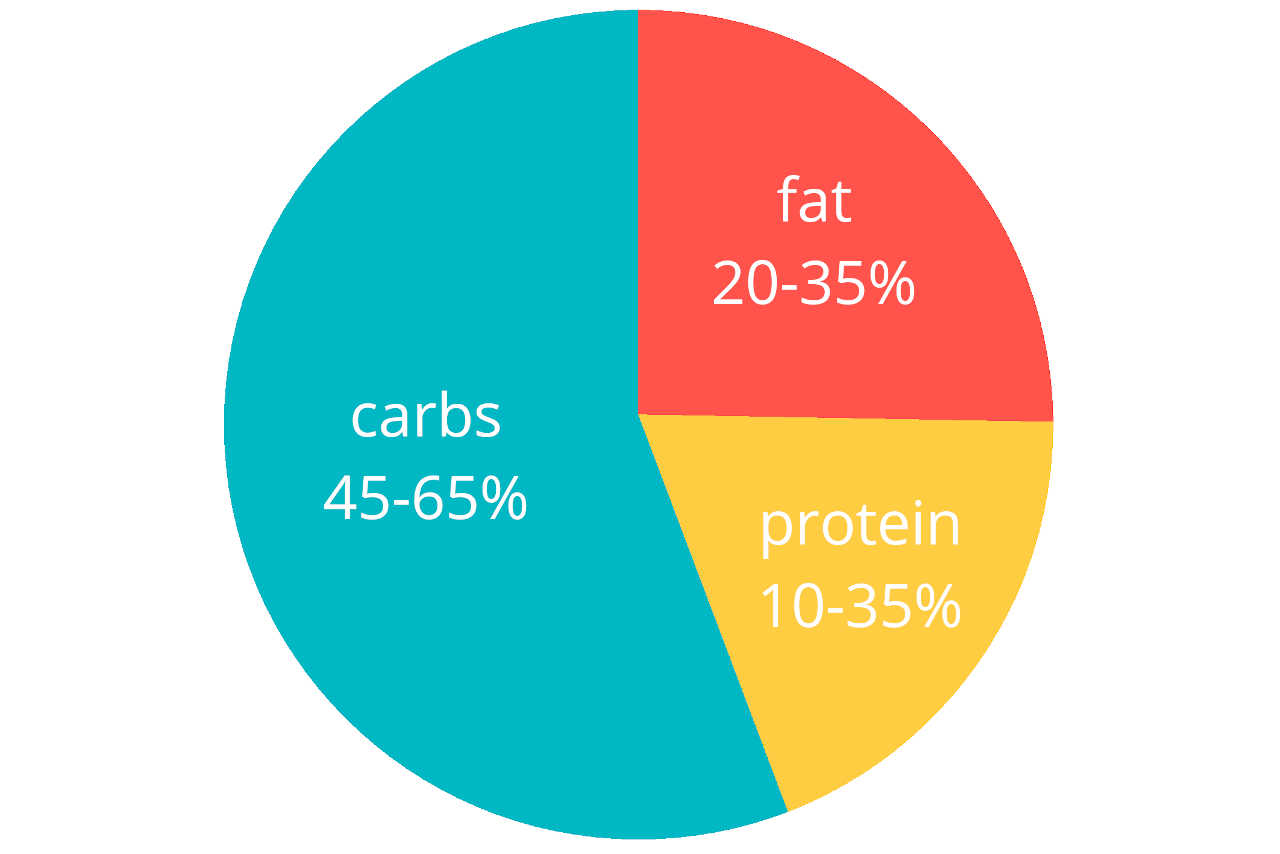
| 20% to 35% | Moderate or balanced | A common everyday planning range for many healthy adults, leaving room for protein and carbohydrates. |
| 35% to 45% | Higher fat | Can fit Mediterranean-style or lower-carbohydrate patterns when most fat comes from unsaturated sources and calories are controlled. |
| More than 45% | Very high fat | Usually requires deliberate planning so carbohydrate, protein, fiber, and micronutrient intake do not become too low. |
The calculator allows a wide range because readers use different dietary approaches. For general nutrition planning, many users will land near 25% to 35%. If you choose a very low or very high value, the page will still do the math, but the result should be reviewed in context.
Understanding Total Fat, Saturated Fat, And Trans Fat
Total fat includes saturated, monounsaturated, polyunsaturated, and trans fats. The total number tells you how much energy is coming from fat, but it does not tell you the quality of that fat. That is why modern nutrition guidance focuses on the types of fat and the foods that provide them. Unsaturated fats are generally emphasized, saturated fat is limited, and artificial trans fat is avoided as much as possible.
Monounsaturated and polyunsaturated fats are often found in olive oil, canola oil, avocado, nuts, seeds, tofu, edamame, and fish. These foods can fit well in balanced eating patterns because they provide essential fats and often replace foods higher in saturated fat. Saturated fat is found in higher amounts in fatty meats, butter, full-fat dairy, coconut oil, palm oil, and many baked or fried foods. A diet can include some saturated fat, but it should not dominate the fat budget.
Trans fat is different. It is listed on Nutrition Facts labels, but it does not have a daily value because experts have not set an intake level to aim for. The practical advice is to keep trans fat as low as possible. If a label lists partially hydrogenated oil in the ingredients, that is a warning sign even if the trans fat line looks small. This page's calculator does not assign a trans fat target because the useful target is avoidance.
Better fat swaps
Instead of only cutting fat, improve the type of fat. Use olive or canola oil instead of butter for many cooking tasks, choose nuts or seeds instead of heavily processed snacks, include fish or plant proteins instead of fatty processed meats, and use avocado, hummus, or nut butter in measured portions when they fit your calories.
Why Dietary Fat Matters
Dietary fat provides energy, but its role goes beyond calories. Cell membranes contain fatty acids that affect membrane structure and function. The nervous system uses fats in cell signaling and insulation. Some fats act as precursors for compounds involved in inflammation, clotting, and other processes. Fat also helps the body absorb vitamins A, D, E, and K, which are called fat-soluble because they need fat for normal absorption.
Fat also affects how meals feel. A meal with no fat may digest quickly and feel less satisfying, even if the calorie count looks reasonable. A meal with too much fat may feel heavy and can push calories higher than intended. The useful target is usually in the middle: enough fat to make meals satisfying and nutritionally complete, but measured enough that the day still fits the calorie goal.
Because fat is energy dense, portion awareness matters. A tablespoon of oil, a handful of nuts, a large avocado, cheese, dressing, butter, and spreads can all add meaningful calories. These foods are not automatically bad. They simply need to be counted honestly. A person can eat a high-quality diet and still overshoot calories if oils, nuts, and sauces are poured freely without awareness.
Fat Intake And Weight Management
Weight change is driven primarily by energy balance over time. Fat is energy dense, so changing fat portions can make a large difference in daily calories. Reducing two tablespoons of oil from a day removes roughly 240 calories. Adding a handful of nuts can add 150 to 250 calories depending on portion size. These adjustments are easy to miss because the food volume is small.
That does not mean low-fat eating is required for fat loss. Some people feel more satisfied with moderate fat and can maintain a calorie deficit more easily. Others prefer a lower-fat, higher-carbohydrate pattern because it gives more food volume from grains, fruits, legumes, potatoes, and vegetables. The best fat-loss target is the one that keeps calories controlled, protein adequate, fiber high enough, and meals enjoyable enough to repeat.
If fat loss is your goal, avoid reducing fat so aggressively that meals become dry, bland, or socially difficult. Very low-fat plans can work on paper but fail in real life because food satisfaction falls. A better approach is to measure concentrated fats carefully, choose mostly unsaturated sources, keep protein strong, use high-fiber carbohydrates, and adjust calories gradually. You can pair this page with the Body Fat Calculator and Lean Body Mass Calculator to track body composition context rather than relying only on scale weight.
Fat Intake For Training And Performance
Training changes how fat targets should be interpreted. Endurance athletes use fat as an important fuel source during low and moderate intensity work, but hard intervals, lifting, sprints, and many sports still depend heavily on carbohydrates. A very high-fat target may be compatible with some lower-carbohydrate approaches, but it can also reduce carbohydrate availability if total calories are limited. That can make intense training feel harder.
For many active people, a moderate fat intake allows enough room for both protein and carbohydrate. A runner, cyclist, swimmer, football player, lifter, or mixed-sport athlete may do well with fat around 20% to 35% of calories, then adjust based on appetite, digestion, and performance. Pre-workout meals are often lower in fat because fat slows digestion. Larger fat portions may fit better at meals farther away from training.
If you train hard and feel low-energy after raising fat, check whether carbohydrate dropped too low. If you feel hungry after lowering fat, check whether meals lost too much satisfaction. Macro planning is a balancing act, not a contest to maximize or minimize one nutrient. The Calories Burned Calculator can help estimate activity energy, while the macro tools can help divide calories after training demands are understood.
Worked Examples
Example 1: Balanced diet
A person eating 2000 calories chooses 30% of calories from fat. The formula is \(2000 \times 0.30 \div 9 = 66.7\) grams of fat per day. A saturated fat ceiling at 10% is \(2000 \times 0.10 \div 9 = 22.2\) grams, although many label examples use about 20 grams as a simple daily reference.
Example 2: Fat loss calories
A person cutting on 1700 calories chooses 25% from fat. The result is \(1700 \times 0.25 \div 9 = 47.2\) grams per day. Divided across four meals, that is about 12 grams per meal. The person may use lower-fat cooking methods but still include measured oils, nuts, eggs, fish, or avocado for satisfaction.
Example 3: Higher-calorie training plan
A lifter eating 3000 calories chooses 28% fat. The calculation is \(3000 \times 0.28 \div 9 = 93.3\) grams per day. The number sounds high, but it is only 28% of a larger calorie budget. This leaves calories for protein and carbohydrate if the full macro split is planned carefully.
Example 4: Lower-carb preference
A person eating 2300 calories chooses 40% fat. The result is \(2300 \times 0.40 \div 9 = 102.2\) grams per day. This may fit a lower-carbohydrate approach, but the person should still check fiber, protein, saturated fat, food variety, and whether the remaining carbohydrate supports activity.
Food Sources Of Fat
Food sources matter as much as the final gram number. Unsaturated fat sources include olive oil, canola oil, avocado, almonds, walnuts, peanuts, chia seeds, flaxseed, pumpkin seeds, sunflower seeds, tofu, edamame, and fatty fish. These foods can be excellent choices when portions are measured. They provide flavor, texture, and important nutrients, but they are still calorie dense.
Saturated fat sources include butter, cream, cheese, fatty cuts of meat, processed meats, coconut oil, palm oil, pastries, and many fried foods. You do not need to remove every food that contains saturated fat, but you should know where most of it is coming from. Many people do not exceed saturated fat because of one obvious food; they exceed it because small amounts appear in several meals across the day.
Low-fat and reduced-fat foods can be useful, but they are not automatically healthier. A reduced-fat dessert may contain added sugars and similar calories. A low-fat dressing may be lower in calories but less satisfying. A fat-free yogurt may be useful if it is high in protein and not high in added sugars. Use the label rather than the front-of-package claim. The RevisionTown pages on human nutrition and carbohydrates and lipids give useful background for students learning how fats fit into broader nutrition concepts.
Reading Labels For Fat
Nutrition labels list total fat, saturated fat, and trans fat. Some labels also voluntarily list monounsaturated and polyunsaturated fat. The serving size matters because the label applies to one serving. If a package has two servings and you eat the whole package, you double the listed fat and calories. This is especially important for oils, spreads, nuts, chips, baked goods, and restaurant-style packaged meals.
The percent daily value helps compare foods quickly. A low percent daily value per serving means the food contributes a small amount toward a daily reference amount. A high percent daily value means the food contributes a larger amount. For saturated fat, lower is usually better because it is a nutrient to limit. For total fat, the context depends on the food. Olive oil is high in fat because it is oil; that does not make it a poor choice, but it does mean the portion should match the calorie goal.
Pay attention to ingredients. If a food contains partially hydrogenated oils, avoid making it a staple. If a food is high in saturated fat but low in fiber and protein, it may not be very filling for the calories. If a food is high in unsaturated fat and also provides fiber, protein, or micronutrients, it may fit well even if the calorie density is high. Labels are tools for comparison, not substitutes for judgment.
How Fat Fits With Protein And Carbohydrates
Macro planning is easiest when each macronutrient has a job. Protein supports tissue maintenance and recovery. Carbohydrates support high-intensity training, fiber-rich foods, and many plant foods. Fat supports essential fatty acids, vitamin absorption, meal satisfaction, and food texture. A good plan does not treat one macro as good and another as bad; it distributes calories in a way that supports the person's goals and routine.
If protein is fixed first, fat can be adjusted based on preference and health context. The remaining calories often become carbohydrates. For example, if a 2200-calorie plan includes 140 grams of protein and 70 grams of fat, protein supplies 560 calories and fat supplies 630 calories. The remaining calories are \(2200 - 560 - 630 = 1010\) calories, or about 253 grams of carbohydrate. This is why one change affects the entire diet. Raising fat by 20 grams adds 180 calories, which must come from somewhere if total calories stay the same.
For many users, the most sustainable plan is moderate protein, moderate fat, and carbohydrates matched to activity. A low-carb eater may prefer higher fat. A high-volume endurance athlete may prefer lower fat and higher carbohydrate. A person with a smaller calorie budget may need lower fat portions to leave room for protein and fiber. Use this calculator to see the tradeoff clearly before changing the whole diet.
Adjusting Fat Intake Over Time
Your fat target may need adjustment as your calories, training, body weight, appetite, and food preferences change. If a meal plan feels dry, bland, and hard to repeat, fat may be too low or poorly distributed. If calories keep running high even though meals look small, added oils, nuts, spreads, cheese, and dressings may be contributing more fat than expected. Neither issue requires panic. Adjust portions and food choices in small steps.
To lower fat without making meals unpleasant, start with invisible fats. Measure cooking oil, choose leaner cuts of meat, reduce heavy sauces, switch some full-fat dairy to lower-fat versions, or use smaller portions of nuts and cheese. Keep some flavorful fats in the meal so the plan still feels satisfying. To raise fat in a useful way, add olive oil, avocado, nuts, seeds, fatty fish, or whole eggs in measured portions. Avoid raising fat mostly through fried foods and pastries if the goal is health and performance.
Review your weekly average instead of one day. A dinner out may be higher in fat and calories, while another day may be lower. What matters is the pattern. If weight, energy, digestion, and performance are moving in the right direction, the target may be appropriate. If progress stalls or the plan feels hard to repeat, adjust calories and macros deliberately rather than changing everything at once.
Low-Fat Diets, Higher-Fat Diets, And Choosing A Style
Low-fat diets can work when they help control calories and include enough essential fats. They often emphasize grains, fruit, legumes, vegetables, lean proteins, and lower-fat dairy. The risk is that very low fat can reduce satisfaction, limit fat-soluble vitamin absorption, and make meals feel repetitive. A low-fat pattern should still include foods such as nuts, seeds, fish, soy, or measured oils so the body receives essential fatty acids.
Higher-fat diets can also work when calories are appropriate and fat quality is strong. Mediterranean-style patterns may be higher in fat but emphasize olive oil, nuts, seeds, fish, legumes, vegetables, and whole foods. Lower-carbohydrate patterns can be higher in fat as well, but they need careful attention to fiber, saturated fat, protein, and micronutrients. A high-fat pattern built mostly on processed meats, butter, and low-fiber foods is different from a higher-fat pattern built on unsaturated fats and whole foods.
The right style is the one that supports health markers, energy, digestion, training, and adherence. If a plan requires constant willpower, it may not be the best plan even if the macro numbers look impressive. Start with a moderate fat target, observe how meals feel, and adjust based on results.
Hidden Fats And Portion Awareness
Many fat-calculation errors come from hidden fats rather than obvious foods. Most people know that butter, oil, nuts, and cheese contain fat. Fewer people notice how quickly fat adds up from cooking oil, sauces, salad dressings, mayonnaise, cream-based coffee drinks, fried coatings, pesto, nut butters, chocolate, granola, and restaurant meals. These foods can be part of a healthy pattern, but they need honest portions when calories matter.
Oil is the most common example. A tablespoon of oil contains about 14 grams of fat. If a recipe uses three tablespoons but you mentally count one, the difference is almost 28 grams of fat and about 250 calories. Nuts are similar. A small measured serving may be useful and nutrient-dense, while repeated handfuls can move the day far above the target. Cheese, peanut butter, hummus, tahini, and avocado are not bad foods, but their portions change the macro math quickly.
The goal is not to become obsessive. It is to learn your normal serving sizes. Measure oil for a week. Weigh a usual handful of nuts once. Compare your actual spoonful of peanut butter with the serving size on the label. After a short learning period, you can estimate more accurately without measuring everything forever. Most people do not need perfect tracking; they need enough awareness to stop accidental overages.
When fat intake is too high, do not remove all high-fat foods at once. Start with the fats you do not notice or enjoy much. If oil disappears into a pan and does not improve the meal, reduce it. If a dressing is there only by habit, use a lighter amount. Keep the fats that make meals satisfying, such as olive oil on vegetables, salmon at dinner, nuts in yogurt, or avocado in a meal that needs flavor and texture.
Saturated Fat Budgeting
The calculator's saturated fat result is a ceiling, not a goal. If it says less than 22 grams per day, that does not mean you should try to eat 22 grams. It means the day should stay below that amount. Many users find saturated fat easier to manage when they identify the main sources. Common contributors include butter, cheese, cream, full-fat dairy, fatty meats, processed meats, coconut oil, palm oil, pastries, cookies, pizza, fried foods, and desserts.
A useful approach is substitution rather than plain restriction. Replace some butter with olive oil. Choose fish or lean poultry more often than fatty processed meat. Use lower-fat dairy where it does not reduce satisfaction. Add nuts, seeds, or avocado in measured portions instead of relying on cheese for every meal. These swaps keep meals enjoyable while shifting more of the fat budget toward unsaturated sources.
Consider a 2200-calorie plan with a 10% saturated fat ceiling. The ceiling is \(2200 \times 0.10 \div 9 = 24.4\) grams. If breakfast contains buttered toast and full-fat cheese, lunch contains a creamy dressing, and dinner contains a fatty cut of meat, the ceiling can be reached without any one meal looking extreme. That is why label reading and meal pattern review matter. Saturated fat is often a daily accumulation, not a single obvious mistake.
A stricter ceiling may be appropriate for some people managing cholesterol or cardiovascular risk. The calculator includes options below 10% for this reason. If your clinician gives a specific gram limit, use that number. A calculator cannot know your blood lipid history, medications, family history, or medical priorities. It can only show how a percentage turns into grams.
Essential Fats, Omega-3, And Omega-6
Essential fatty acids are fats the body must obtain from food. Linoleic acid is an omega-6 fatty acid, and alpha-linolenic acid is an omega-3 fatty acid. The body uses these fats to create compounds involved in cell membranes, signaling, and inflammatory processes. Long-chain omega-3 fats such as EPA and DHA are found in fatty fish and marine sources, and they are often discussed because of their role in heart and brain health.
From a calculator perspective, essential fats remind us why a very low fat target should be handled carefully. The body needs a baseline amount of fat, and food quality matters. A low-fat diet that includes no nuts, seeds, fish, soy foods, or oils may be harder to make nutritionally complete. A moderate-fat diet that includes mostly fried foods and processed meats is also not ideal. The target in grams is only the starting point; food selection completes the plan.
Practical sources of omega-3 include salmon, sardines, trout, mackerel, chia seeds, flaxseed, walnuts, and certain fortified foods. Practical sources of unsaturated omega-6 fats include many nuts, seeds, and vegetable oils. Most people do not need to micromanage every fatty acid ratio, but they do benefit from replacing some saturated-fat-heavy foods with fish, nuts, seeds, and liquid plant oils. This is a food-based habit, not just a supplement decision.
If you do not eat fish, plant sources such as chia, flax, walnuts, soy foods, and canola oil can still support intake of plant omega-3. Some people may consider algae-based DHA or EPA supplements, especially if they avoid all animal products, but supplement choices should be discussed with a qualified professional when medical conditions, pregnancy, medication use, or surgery risk are involved.
Restaurant Meals And Takeout
Restaurant meals often contain more fat than home-prepared meals because oil, butter, cream, cheese, sauces, dressings, and frying improve flavor and texture. This does not mean restaurant meals must be avoided. It means a fat target is easier to maintain when you choose where fat adds the most value. If fries, creamy sauce, and cheese all appear in the same meal, fat can climb quickly. Choosing one rich item and balancing the rest of the meal is usually more practical.
Simple restaurant strategies include ordering sauces or dressings on the side, choosing grilled or roasted items more often than fried items, asking for light oil when possible, pairing higher-fat entrees with vegetables, and avoiding the habit of adding cheese, mayo, and creamy dressing to the same dish. For salads, remember that the vegetables are low in fat, but dressing, cheese, nuts, seeds, avocado, bacon, and fried toppings can make the meal high in fat. Again, high fat is not always bad; it just needs to match the day's plan.
If you eat out frequently, do not try to make every meal extremely low-fat. That often leads to unsatisfying choices and later overeating. Instead, create defaults. For example, choose grilled protein, a starch or grain if it supports your goal, vegetables, and one measured fat source. If the main course is already rich, skip extra creamy sides. If the main course is lean, a small amount of olive oil, avocado, or nuts may make the meal more satisfying.
Tracking restaurant meals will never be exact unless the restaurant provides full nutrition data. Use estimates and weekly averages. If body weight, hunger, or energy is not moving as expected, restaurant fats are one of the first places to review because they are easy to underestimate.
Meal Planning Examples By Fat Target
A person targeting 50 grams of fat per day might divide the day into a lower-fat breakfast, a moderate-fat lunch, a snack with a small fat source, and a dinner with the largest fat portion. Breakfast could include oatmeal, berries, and Greek yogurt with a small amount of seeds. Lunch could include chicken, rice, vegetables, and measured olive oil. A snack could include fruit and a few nuts. Dinner could include fish, potatoes, salad, and dressing. The exact foods can change, but the pattern keeps fat visible.
A person targeting 75 grams may have more flexibility. Breakfast might include eggs, whole-grain toast, and fruit. Lunch might include tofu or chicken with rice and vegetables cooked in oil. A snack might include yogurt with nuts. Dinner might include salmon or lean meat with vegetables and avocado. The plan can still be balanced because there are enough calories to include both fat and carbohydrate.
A person targeting 100 grams or more should be especially attentive to fat quality and carbohydrate space. Higher-fat plans can be satisfying, but they can also make it easy to reduce fruits, grains, legumes, and fiber unintentionally. If higher fat is deliberate, build meals around unsaturated fats and whole foods rather than simply adding fried foods, processed meats, and desserts. Use the Advanced Fat Intake Calculator if you want a more detailed scenario after using this simple daily tool.
For any target, the same principle applies: choose a few reliable meals and learn their approximate fat content. When you know that your usual breakfast contains 15 grams and your usual lunch contains 20 grams, the rest of the day becomes easier to manage. Unknown meals create unknown macros. Familiar meals create predictable results.
Troubleshooting Your Fat Intake Result
If the calculator gives a number that looks too low, check the calorie target and percentage. A 1500-calorie diet at 20% fat gives only \(1500 \times 0.20 \div 9 = 33.3\) grams. That may be possible, but it leaves little room for oils, nuts, eggs, fatty fish, and full-fat foods. If meals feel unsatisfying or dietary variety drops, consider a slightly higher fat percentage or review whether the calorie target is too aggressive.
If the number looks too high, check whether the selected percentage matches your intention. A 3000-calorie diet at 40% fat gives \(3000 \times 0.40 \div 9 = 133.3\) grams. That may fit a deliberate higher-fat plan, but it may crowd out carbohydrate if the person trains hard. Lower the percentage and recalculate if the goal is a more balanced macro split.
If saturated fat is the issue, review sources rather than only grams. A person can keep total fat stable while lowering saturated fat by changing foods. Swap butter for olive oil, choose leaner proteins, reduce processed meats, use smaller cheese portions, and add nuts or seeds instead of creamy snacks. This keeps meals satisfying while improving the fat profile.
If digestion is uncomfortable, consider meal timing and portions. Very high-fat meals can digest slowly. That may be fine at dinner but uncomfortable before training, school, work, or sleep. Spread fat across meals, use lighter pre-workout meals, and keep high-fat meals away from intense exercise if they cause discomfort. If symptoms persist, use professional guidance rather than trying to solve digestive issues only with a calculator.
Special Situations And Cautions
This calculator is for general education and everyday planning. Some medical situations require individualized fat guidance. People with gallbladder disease, pancreatitis, fat malabsorption, certain lipid disorders, liver disease, kidney disease, diabetes complications, eating disorder history, pregnancy, breastfeeding, or medically prescribed diets should use professional guidance before making major macro changes. A calculator can show the math, but it cannot evaluate labs, medications, symptoms, or clinical history.
People taking cholesterol-lowering medication or managing heart disease risk may need stricter saturated fat guidance than a general calculator provides. The calculator includes a 6% saturated fat option because some heart-health guidance is more restrictive than the broad 10% ceiling. If a clinician has given you a specific limit in grams, follow that personalized instruction rather than a generic percentage.
Children and adolescents also have different needs from adults. Their diets must support growth, development, and adequate energy. Extreme fat restriction is not appropriate without professional supervision. Athletes with high energy expenditure may also need more total calories and a carefully planned balance of fat, carbohydrate, and protein.
Common Mistakes
| Mistake | Why it matters | Better approach |
|---|---|---|
| Only tracking total fat | Total grams do not show whether fat is mostly unsaturated, saturated, or trans fat. | Track total fat and review the main food sources. |
| Pouring oils freely | Oil portions are small in volume but high in calories. | Measure oil until you understand your normal serving size. |
| Going too low in fat | Very low fat may reduce satisfaction and make essential fat intake harder. | Keep a moderate minimum unless a professional directs otherwise. |
| Confusing low-fat with low-calorie | Some low-fat packaged foods replace fat with sugars or starches. | Read calories, serving size, and ingredients together. |
| Ignoring saturated fat | A diet can fit total fat grams but still rely heavily on saturated fat sources. | Replace some saturated-fat foods with unsaturated-fat foods. |
Daily Fat Planning Checklist
- Start with a realistic calorie target.
- Choose a fat percentage that leaves room for protein and carbohydrate.
- Convert fat calories to grams using \( \text{grams} = \text{calories} \div 9 \).
- Set a saturated fat ceiling and treat it as a limit, not a goal.
- Choose mostly unsaturated fat sources across the week.
- Measure calorie-dense fats until portions are familiar.
- Adjust based on weekly averages, energy, digestion, and consistency.
For a broader calculator set, the Health and Fitness Calculators page helps you move between calorie, macro, body composition, and activity tools without mixing every task into one calculator.
Frequently Asked Questions
How many grams of fat should I eat per day?
It depends on calories and the selected fat percentage. A common formula is \( \text{fat grams} = \text{daily calories} \times \left(\text{fat percent} \div 100\right) \div 9 \). For many adults, 20% to 35% of calories from fat is a practical planning range, but individual needs can vary.
Why does the calculator divide by 9?
Dietary fat provides 9 calories per gram. Dividing fat calories by 9 converts the calorie allotment into grams.
Is a low-fat diet best for fat loss?
Not always. Fat loss depends mostly on calorie balance over time. A low-fat plan can help some people control calories, while others do better with moderate fat because meals feel more satisfying. Protein, fiber, total calories, and adherence all matter.
What is a good saturated fat limit?
A broad public-health ceiling is less than 10% of daily calories from saturated fat, while some heart-health guidance uses stricter limits such as less than 6%. If a clinician gives you a personalized target, use that target.
Should I avoid all fat?
No. The body needs fat for essential fatty acids, cell membranes, vitamin absorption, hormones, and food satisfaction. The goal is to choose appropriate amounts and better fat sources, not to remove fat completely.
What foods are good sources of unsaturated fat?
Common choices include olive oil, canola oil, nuts, seeds, avocado, tofu, edamame, and fatty fish. Portions still matter because these foods are calorie dense.
Key Takeaway
A strong fat target is specific enough to guide meals and flexible enough to fit real life. Use calories and fat percentage to calculate daily grams, keep saturated fat within an appropriate limit, choose mostly unsaturated sources, and make sure the final plan still leaves room for protein, carbohydrates, fiber, and foods you enjoy. The best result is not the lowest possible fat intake; it is the fat intake that supports health, satisfaction, and consistency inside your total calorie plan.
This calculator provides educational estimates for general nutrition planning. It is not a diagnosis, prescription, or replacement for advice from a physician, registered dietitian, or qualified health professional.