
Daily carbohydrate grams and meal targets
Carbs Calculator
Use this carbs calculator to estimate daily carbohydrate grams from calories, TDEE, and a chosen carbohydrate percentage. It also shows carbohydrate calories, fiber planning, added-sugar context, and simple meal distribution targets so the number is easier to use in real meals.
What the Carbs Calculator Estimates
The carbs calculator estimates how many grams of carbohydrate fit a daily calorie target and a chosen carbohydrate percentage. If you already know your daily calories, the Known Calories tab gives a direct answer. If you need an estimated calorie target first, the Estimate Calories tab uses the Mifflin-St Jeor BMR equation, an activity multiplier, and an optional calorie adjustment before calculating carbohydrate grams. The result is an estimate for planning meals, not a diagnosis or a personalized medical prescription.
Carbohydrates are one of the three main macronutrients, along with protein and fat. They provide energy, support training, help replenish muscle glycogen, and are the main source of fuel for many high-intensity activities. Total carbohydrate on a nutrition label includes starches, sugars, and fiber. That matters because a bowl of oats, a banana, a soda, and a candy bar can all contain carbohydrate, but they do not support the body in the same way.
The calculator uses the standard energy value of 4 calories per gram of carbohydrate. If a 2,000 calorie diet uses 50% of calories from carbohydrate, then 1,000 calories come from carbohydrate. Dividing 1,000 by 4 gives 250 grams of carbohydrate per day. That is the basic math. The harder part is choosing a percentage that matches your health status, appetite, activity, food preferences, and goal.
This page is narrower than a full macro calculator. If you want a complete split for protein, carbohydrate, and fat, use the macro calculator or the advanced macro calculator. If you want a more detailed carbohydrate-only tool, the advanced carbohydrate calculator may be useful. This page focuses on a fast daily carb target, how to interpret it, and how to turn it into practical food choices.
Carbohydrate needs vary. A sedentary person with lower calorie needs may choose fewer carbohydrate grams than an endurance athlete training several hours per week. A person managing diabetes, kidney disease, pregnancy, breastfeeding, gastrointestinal conditions, or medications should use professional guidance rather than relying only on a web calculator. The calculator can organize numbers, but individual nutrition care requires context.
Carbohydrate Formulas Used
The core carbohydrate formula starts with calories. Choose daily calories, choose the percentage of calories to come from carbohydrate, then divide carbohydrate calories by 4 because carbohydrate provides 4 calories per gram.
For example, if daily calories are 2,400 and the carbohydrate percentage is 45%, carbohydrate calories are \(2400 \times 0.45 = 1080\). Carbohydrate grams are \(1080 \div 4 = 270\) grams per day. If the same calorie target uses 35% carbohydrate, the result is \(2400 \times 0.35 \div 4 = 210\) grams. Small percentage changes can produce meaningful gram changes.
When estimating calories from body data, this page uses the Mifflin-St Jeor equation. It estimates basal metabolic rate, then multiplies by an activity factor to estimate total daily energy expenditure. The equation is an estimate, not a measurement. Real energy needs can differ because of body composition, metabolic adaptation, non-exercise activity, training load, sleep, medications, and individual variation.
In these formulas, \(W\) is body weight in kilograms, \(H\) is height in centimeters, and \(A\) is age in years. After BMR is estimated, activity level is applied:
Fiber planning is shown separately. A common planning rule is about 14 grams of fiber per 1,000 calories. The calculator displays this as a food-quality target because fiber is part of total carbohydrate but behaves differently from rapidly digested starches and sugars.
Added-sugar context is also shown separately. General dietary guidance often recommends keeping added sugars below 10% of total calories. This is not the same as total carbohydrate. Fruit, milk, beans, oats, potatoes, whole grains, and vegetables may contain carbohydrate without being the same as added sugar. The calculator shows an added-sugar ceiling as a reminder that carbohydrate quality matters.
How to Use the Carbs Calculator
Use the Known Calories tab if you already have a daily calorie target. This target may come from a nutrition professional, a food log, a calorie calculator, a wearable estimate, or your own maintenance tracking. Enter daily calories, choose a calorie adjustment if needed, enter the carbohydrate percentage, choose how many meals or carb occasions you want, and calculate. The result gives total carb grams and a simple portion target per meal or eating occasion.
Use the Estimate Calories tab if you want the calculator to estimate daily calories first. Enter age, sex formula, height, weight, activity level, calorie adjustment, carbohydrate percentage, and number of meals. The calculator estimates BMR, TDEE, adjusted calories, and carbohydrate grams. If you want to focus only on calorie maintenance, the maintenance calorie calculator may be more direct. If you want a broader energy estimate, use the advanced TDEE calculator.
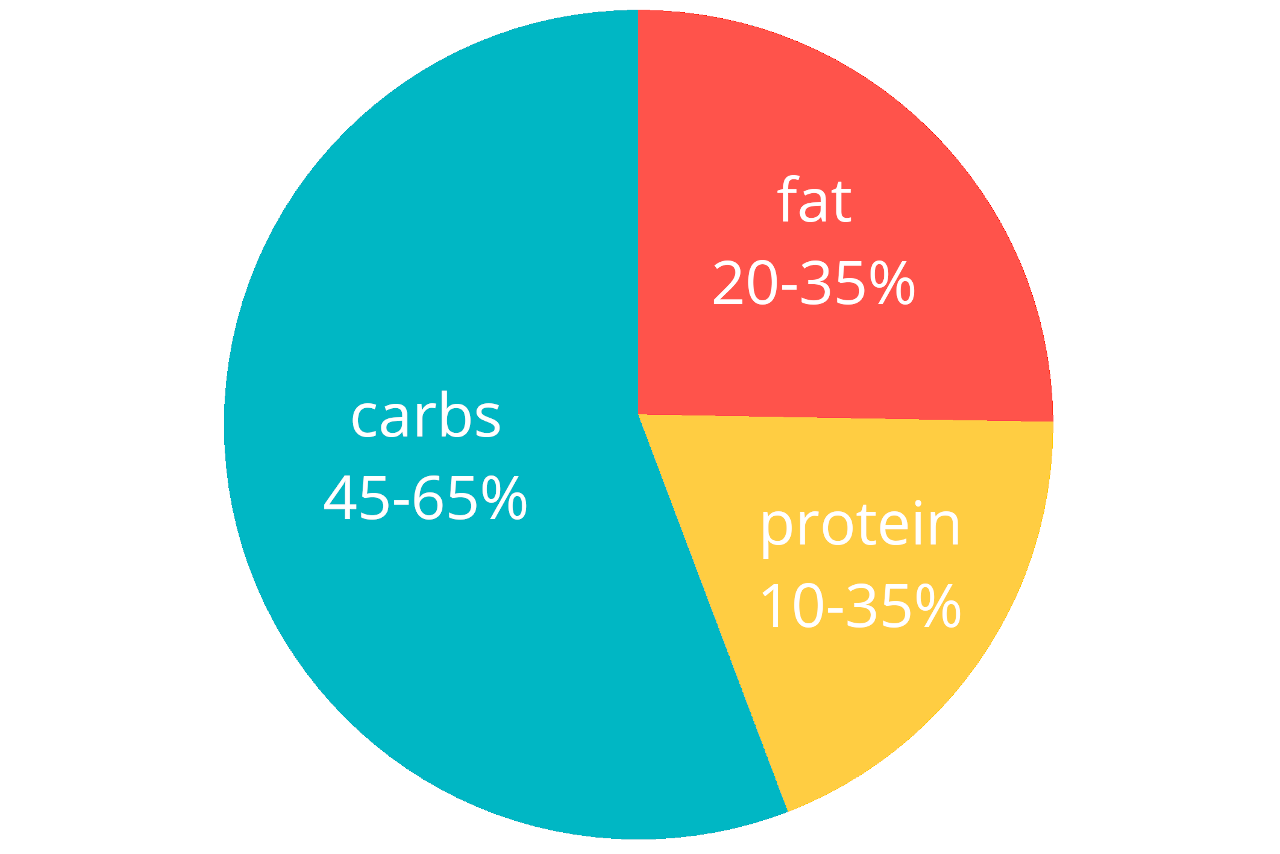
Choose the carbohydrate percentage with intent. The broad acceptable macronutrient distribution range for carbohydrate is often listed as 45% to 65% of calories for many healthy people. Some people choose less based on appetite, blood sugar goals, or food preference. Endurance athletes may choose more because training volume increases carbohydrate use. The calculator allows a wide range, but a very low or very high percentage should be chosen carefully.
Do not treat the result as a command to hit the same number perfectly every day. Nutrition works across patterns. If the target is 250 grams, a day with 235 grams and another with 265 grams may both fit the plan. Consistency, food quality, fiber, protein, total calories, and how you feel matter. Exact carbohydrate precision is most important for people with medical carb-counting needs, and those users should follow individualized professional guidance.
If you are also planning protein and fat, use related tools alongside this one. The protein intake calculator can help set protein targets, and the fat intake calculator or advanced fat intake calculator can help estimate dietary fat ranges. Carbohydrate planning works best when the full daily pattern is balanced rather than isolated.
Carbohydrate Percentage Ranges
Carbohydrate percentage is the share of total calories that comes from carbohydrate. A 50% carbohydrate diet means half of total calories come from carbohydrate. It does not say anything by itself about food quality, fiber, added sugar, meal timing, or total calorie intake. A 50% carbohydrate plan built from oats, beans, fruit, vegetables, potatoes, and whole grains is very different from a 50% carbohydrate plan built mostly from sweetened drinks and refined snacks.
| Carb style | Typical percentage | Example at 2,000 calories | Best interpreted as |
|---|---|---|---|
| Very low carb | 5% to 15% | 25 g to 75 g | Specialized pattern that needs careful planning. |
| Lower carb | 20% to 35% | 100 g to 175 g | May suit some appetite or blood sugar goals. |
| Moderate carb | 40% to 50% | 200 g to 250 g | Common flexible range for mixed diets. |
| Higher carb | 55% to 65% | 275 g to 325 g | Often used by active people or high-volume training plans. |
| Very high carb | Above 65% | Above 325 g | Usually requires intentional food selection and training context. |
A moderate range is often easiest to sustain because it leaves room for grains, fruit, starchy vegetables, beans, dairy, protein foods, and fats. Lower-carbohydrate approaches can work for some people, but the lower the carbohydrate target, the more important it becomes to protect fiber, micronutrients, training energy, and food enjoyment. Very low-carbohydrate plans can be difficult to follow and may not fit endurance training, pregnancy, breastfeeding, or some medical situations without professional guidance.
Higher-carbohydrate patterns can support athletes, active jobs, high step counts, and long training sessions. However, higher carbohydrate is not automatically better. If total calories are too high, body weight may increase. If carbohydrate quality is poor, fiber and micronutrient intake may still be weak. Percentage is only one dimension of diet quality.
When comparing percentages, always convert them to grams. Forty-five percent of 1,600 calories is 180 grams. Forty-five percent of 3,000 calories is 338 grams. The same percentage can produce very different daily gram targets because calorie intake is different. This is why calculators are helpful: they make the actual gram target visible.
Carb Quality: Total Carbs Are Not All the Same
Total carbohydrate includes starch, sugar, and fiber. These categories behave differently in the body and come packaged in different foods. Whole grains, lentils, beans, fruit, vegetables, and plain dairy can contribute carbohydrate along with fiber, vitamins, minerals, and other food components. Sweetened drinks, candy, pastries, and many refined snack foods can contribute carbohydrate with much less fiber and fewer nutrients per calorie.
A useful question is not only “How many carbs?” but “What kind of carbs?” A bowl of oatmeal with berries may contain a meaningful amount of carbohydrate, but it also provides fiber and micronutrients. A large soda may contain carbohydrate mostly as added sugar and provide little satiety. A baked potato, a banana, and a cup of beans are carbohydrate-rich foods, yet they differ in fiber, potassium, protein, and meal role.
Complex carbohydrate generally refers to starches and fibers made from longer chains of sugar units. Simple carbohydrate generally refers to sugars. These terms are helpful but imperfect. Some whole foods contain natural sugars and still support a healthy pattern. Some starches are refined and low in fiber. Food source, processing, portion size, and meal composition matter more than a single label.
Pairing carbohydrate with protein, fat, and fiber can make meals more satisfying and may slow digestion. For example, rice with beans and vegetables is different from plain white rice alone. Fruit with yogurt or nuts is different from fruit juice. A sandwich on whole grain bread with lean protein and vegetables is different from refined bread eaten by itself. The calculator gives grams; meal structure determines how those grams feel.
For education on carbohydrate chemistry and biological macromolecules, RevisionTown also has biology resources such as Carbohydrates and Lipids and Human Nutrition. Those learning pages explain concepts that are useful when you want to understand what carbohydrate is, not only how many grams to eat.
Fiber, Net Carbs, and Added Sugars
Fiber is listed under total carbohydrate on nutrition labels, but it is not digested like sugar or starch. Fiber supports digestive regularity, helps with fullness, and is associated with healthier dietary patterns. A common planning target is about 14 grams of fiber per 1,000 calories. For 2,000 calories, that is about 28 grams per day. Some adults need more or less depending on age, sex, gastrointestinal tolerance, and medical conditions.
Increasing fiber too quickly can cause gas, bloating, or discomfort. If your current fiber intake is low, increase gradually and drink enough fluids. Good sources include beans, lentils, oats, barley, vegetables, fruit, nuts, seeds, and whole grains. A high-fiber target is easier to reach when fiber-rich foods are spread across meals rather than saved for one large serving.
Net carbs are commonly calculated as total carbohydrate minus fiber, and sometimes minus some sugar alcohols. This concept is popular in low-carbohydrate eating patterns, but it is not the main number on standard nutrition labels. For general nutrition planning, total carbohydrate and fiber are usually clearer. For medical carb counting, follow the method taught by your diabetes educator, dietitian, or clinician.
Added sugars are different from naturally occurring sugars in whole fruit and plain dairy. Added sugars are sugars added during processing or preparation, such as table sugar, syrups, honey used as a sweetener, and concentrated fruit or vegetable juice sweeteners. A common general limit is less than 10% of total calories from added sugars. On 2,000 calories, 10% is 200 calories, or 50 grams of added sugar.
The calculator shows an added-sugar context number because it is easy to hit a carbohydrate target while still overdoing added sugars. For example, 250 grams of carbohydrate from oats, beans, fruit, potatoes, and vegetables is very different from 250 grams from sweetened drinks, candy, and desserts. Carb quantity and carb quality should be evaluated together.
Carbohydrates by Goal
For weight maintenance, a carbohydrate target should fit your maintenance calories, protein needs, fat needs, appetite, and preferred foods. Many people do well with moderate carbohydrate intake, especially when most carbohydrate comes from fiber-rich foods. If your body weight is stable, energy is good, digestion is comfortable, and blood markers are appropriate, the target may be reasonable.
For fat loss, carbohydrate grams usually decrease when total calories decrease, unless protein or fat is reduced instead. A calorie deficit can be created with different macro distributions. Some people prefer lower carbohydrate because it reduces snack foods or appetite. Others feel better keeping carbohydrate moderate and reducing fats or portions. The best plan is one that creates a sustainable calorie pattern while preserving protein, fiber, training performance, and food satisfaction.
For muscle gain, carbohydrate can support training volume and recovery. A mild calorie surplus often increases carbohydrate grams because carbohydrate is a practical fuel for resistance training and high-volume exercise. Protein remains important, but carbohydrate helps fill glycogen stores and can make hard sessions feel better. The lean body mass calculator and body fat calculator can provide body-composition context when tracking progress.
For endurance training, carbohydrate needs may rise significantly. Long runs, cycling sessions, team sports, and high step counts can use substantial glycogen. Some athletes plan higher carbohydrate before, during, and after long or intense sessions. A daily percentage can be useful, but training-day periodization may be better: more carbohydrate on long or hard days, less on rest days if preferred.
For blood sugar management, carbohydrate planning should be individualized. Total carbohydrate, meal timing, fiber, food type, medication, physical activity, and glucose response can all matter. People with diabetes, prediabetes, reactive hypoglycemia, or other glucose-related conditions should follow medical guidance. A calculator can help count grams, but it cannot decide the right medical plan.
Carbs, Exercise, and Daily Activity
Carbohydrate is an important fuel for moderate and high-intensity activity. During hard exercise, the body relies heavily on muscle glycogen and blood glucose. Low carbohydrate availability can make intense training feel harder, especially for intervals, tempo runs, sports, and high-volume lifting. Lower-intensity activity can use more fat as fuel, but that does not mean carbohydrate is unnecessary.
If you train lightly a few times per week, moderate carbohydrate may be enough. If you train hard, train daily, or have an active job, a higher carbohydrate target may support performance and recovery. If you are using the calculator after estimating calories, remember that activity multipliers are rough. The calories burned calculator can help estimate exercise energy for individual sessions, but wearable and formula estimates still have error.
Pre-workout carbohydrate can help if the session is long, intense, or performed after a long gap without food. A banana, oats, toast, rice, potatoes, fruit, or other familiar foods may work depending on tolerance. During long endurance sessions, some athletes use carbohydrate drinks, gels, or food. Post-workout carbohydrate can help replenish glycogen, especially when another session is coming soon.
Not every workout needs special carbohydrate timing. A short walk or easy session may fit normal meals. The more demanding the training, the more timing matters. If a person repeatedly feels flat, dizzy, unusually fatigued, or unable to complete planned sessions, total calories, carbohydrate intake, hydration, sleep, and recovery should all be reviewed.
The calculator can distribute carbs evenly across meals, but athletes may prefer uneven distribution. For example, more carbohydrate before and after training and less at meals far from training. This approach can preserve total daily grams while making energy available when it is most useful.
How to Read Carbs on Nutrition Labels
On a Nutrition Facts label, total carbohydrate includes dietary fiber, total sugars, and added sugars. The total carbohydrate line is the broadest number. If you are counting total carbohydrate, start there. If you are evaluating quality, also look at fiber and added sugars. A food with 30 grams of total carbohydrate and 8 grams of fiber is different from a food with 30 grams of total carbohydrate and 0 grams of fiber plus high added sugar.
Serving size matters. If a label lists 25 grams of carbohydrate per serving and you eat two servings, you consumed 50 grams. Many carb-counting errors come from ignoring serving size. Weighing or measuring for a short learning period can help you understand what a serving looks like, but long-term tracking does not have to be obsessive for most people.
Look for fiber in grain products, cereals, breads, beans, fruit, and vegetables. A grain product with at least a few grams of fiber per serving is usually more filling than a refined product with little fiber. However, one label number does not determine the entire diet. A low-fiber food can still fit if the rest of the day includes enough fiber.
Added sugar is listed separately under total sugars. This helps distinguish naturally occurring sugars from sugars added during processing or preparation. If a yogurt contains milk sugar and added sweetener, the label shows total sugars and added sugars. Choosing lower added-sugar versions can help keep carbohydrate quality higher while still allowing room for fruit, grains, and other carbohydrate foods.
Ingredient lists provide additional context. Whole grains, beans, lentils, vegetables, fruit, milk, and yogurt indicate different sources than sugar, corn syrup, refined flour, and sweetened fillings. A calculator can tell you how many grams fit the day; labels help you decide which foods are worth those grams.
Meal Distribution Examples
Once you have a daily carbohydrate target, the next practical question is distribution. Some people prefer evenly spread carbs. Others prefer more at breakfast, lunch, or around workouts. There is no single best pattern for everyone. The best distribution supports appetite, energy, blood glucose, training, digestion, and routine.
| Daily carb target | 3 meals | 3 meals plus snack | Training-focused example |
|---|---|---|---|
| 150 g | 50 g each | 40 g meals plus 30 g snack | 45 g before or after training, smaller portions elsewhere. |
| 200 g | 67 g each | 50 g meals plus 50 g snack | 70 g around training, 130 g across other meals. |
| 250 g | 83 g each | 65 g meals plus 55 g snack | 100 g near training, 150 g across other meals. |
| 300 g | 100 g each | 75 g meals plus 75 g snack | 120 g near training, 180 g across other meals. |
Even distribution can be useful for people who like routine. It can also help people who become overly hungry when one meal is too low in carbohydrate. Training-focused distribution can be useful for athletes or active people. Lower-carb distribution may be preferred by people who feel better with higher protein and fat at certain meals. The calculator's meal split is a starting point, not a rule.
Common Mistakes When Calculating Carbs
The first mistake is choosing a percentage without checking grams. Fifty percent may sound moderate, but at 3,000 calories it equals 375 grams. At 1,400 calories it equals 175 grams. Always look at the gram result, not only the percentage.
The second mistake is ignoring protein and fat. If carbohydrate percentage is high, fat and protein percentages must fit into the remaining calories. If carbohydrate percentage is very low, protein and fat must rise or calories will fall. A daily eating pattern needs all three macronutrients, not only carbohydrate.
The third mistake is treating all carbohydrate as added sugar. Whole fruits, vegetables, beans, oats, rice, potatoes, corn, milk, yogurt, and whole grains can all contribute carbohydrate. A useful plan usually prioritizes minimally processed sources and keeps added sugars in context.
The fourth mistake is cutting carbs too aggressively while training hard. Some people can train well with lower carbohydrate, but many notice reduced performance, poor recovery, irritability, sleep disruption, or cravings when carbohydrate is too low for their activity level. If training quality matters, monitor performance and recovery, not only body weight.
The fifth mistake is making medical decisions from a general calculator. Diabetes management, kidney disease, pregnancy, gastrointestinal disease, eating disorder recovery, and medication interactions require individualized care. Use this page for education and arithmetic; use qualified professionals for medical nutrition therapy.
Worked Carb Target Scenarios
Worked scenarios make the calculator easier to interpret because the same formula can produce very different targets. A person eating 1,600 calories at 45% carbohydrate gets \(1600 \times 0.45 \div 4 = 180\) grams. A person eating 2,800 calories at the same 45% gets \(2800 \times 0.45 \div 4 = 315\) grams. The percentage is identical, but the gram target differs by 135 grams because total calories differ.
Consider a maintenance example. A person has tracked food and body weight for several weeks and believes maintenance is close to 2,200 calories. They choose 50% carbohydrate. The calculator gives \(2200 \times 0.50 \div 4 = 275\) grams per day. If this person eats 4 carb occasions, the even split is about 69 grams each. If training happens after lunch, a practical distribution might put more carbohydrate at lunch and after training, with smaller amounts at breakfast and dinner.
Consider a fat-loss example. A person maintains around 2,200 calories but chooses a mild reduction to 1,950 calories. At 40% carbohydrate, the result is \(1950 \times 0.40 \div 4 = 195\) grams per day. This is lower than the maintenance target because calories and percentage are both lower. If hunger becomes difficult, the person could raise fiber-rich carbohydrate, change meal timing, or adjust fat intake rather than assuming carbohydrate must keep dropping.
Consider a muscle-gain example. A person estimates maintenance around 2,600 calories and chooses a mild surplus to 2,850 calories. At 50% carbohydrate, the result is \(2850 \times 0.50 \div 4 = 356\) grams per day. That might look high for someone used to lower intake, but it can be reasonable for a larger, active person training hard. Protein and fat still matter, and the surplus should be monitored through body-weight trend, strength performance, and body-composition changes.
Consider an endurance-training example. A runner or cyclist with high weekly volume may use 55% carbohydrate at 3,000 calories. The result is \(3000 \times 0.55 \div 4 = 413\) grams per day. This target may be useful on long-session days but unnecessary on rest days. Athletes often periodize carbohydrate: higher on demanding days, moderate on easy days, and still enough overall to support recovery.
Consider a lower-carb example. A person eating 2,000 calories at 30% carbohydrate gets \(2000 \times 0.30 \div 4 = 150\) grams per day. This is lower than many mixed diets but not necessarily very low. If the person wants high fiber, those 150 grams should come mostly from vegetables, beans or lentils if tolerated, berries, whole grains in smaller portions, and other nutrient-dense choices. Lower carbohydrate targets leave less room for refined grains and sweets.
Food Sources That Make Carb Targets Easier
The easiest carb target to follow is one built from foods you enjoy, digest well, and can prepare consistently. A plan that looks perfect on paper but does not match your schedule or culture will usually fail. Carbohydrate foods exist across many cuisines: rice, oats, wheat, corn, potatoes, cassava, beans, lentils, fruit, milk, yogurt, noodles, bread, tortillas, and many vegetables. The goal is not to make every meal identical; it is to understand what contributes to the daily total.
| Food group | Typical carb role | Planning advantage | Watch point |
|---|---|---|---|
| Oats, barley, whole grains | Starch plus fiber | Useful for breakfast, satiety, and steady energy. | Portions can be calorie-dense when toppings are added. |
| Rice, pasta, bread, tortillas | Main starch serving | Easy to measure and adapt around training. | Refined versions may be lower in fiber. |
| Beans, lentils, peas | Carb plus protein and fiber | High satiety and useful in mixed meals. | Increase gradually if fiber intake is currently low. |
| Fruit | Natural sugars plus fiber and micronutrients | Convenient snack and pre-workout option. | Juice is easier to overconsume than whole fruit. |
| Starchy vegetables | Potatoes, sweet potatoes, corn, squash | Filling carbohydrate with potassium and other nutrients. | Preparation method changes calories significantly. |
| Non-starchy vegetables | Lower carb, high volume | Supports fiber, micronutrients, and meal volume. | Usually not enough alone for high training fuel needs. |
| Sweets and sweetened drinks | Mostly added sugar | Can fit occasionally if total pattern is solid. | Easy to exceed added-sugar targets and low in satiety. |
Many people improve carbohydrate quality by changing sources before changing total grams. Replacing sweetened drinks with water or unsweetened options can reduce added sugars without removing meals. Replacing a low-fiber cereal with oats or a higher-fiber grain can improve fullness. Adding beans to a meal can increase both carbohydrate and fiber while also adding plant protein.
Portion awareness matters because healthy carbohydrate foods still count. A large bowl of rice, a smoothie with several fruits, or multiple pieces of bread can push carbohydrate intake above the intended target. That is not automatically bad, especially for active people, but it should be intentional. If your target is 220 grams per day, knowing whether a meal contains 45 grams or 110 grams helps you plan the rest of the day.
How to Adjust Your Carb Target Over Time
The first target is a starting estimate. After using it for one to three weeks, evaluate what happened. Look at energy, hunger, digestion, training performance, body-weight trend, sleep, cravings, and how easy the plan was to follow. If the target is mathematically correct but miserable in practice, it is not a good plan. Nutrition targets should be useful enough to repeat.
If energy is low and workouts feel flat, carbohydrate may be too low, total calories may be too low, sleep may be poor, or training load may be too high. Do not assume one variable explains everything. If calories are adequate but high-intensity training is suffering, shifting more carbs toward pre-workout and post-workout meals may help before raising total daily intake.
If hunger is high, check fiber and protein first. A 200 gram carbohydrate target from white bread, sweets, and juice will feel different from 200 grams from oats, beans, fruit, potatoes, vegetables, and yogurt. The protein target also matters. If protein is low, the protein calculator can provide a separate estimate. If total calories are too low, carbohydrate changes alone may not solve hunger.
If body weight is rising faster than intended, review total calories before blaming carbohydrate. Carbohydrate can increase water weight because glycogen is stored with water, especially after a high-carb day or a return to training. A short-term scale jump is not always fat gain. Look at multi-week trends. For calorie context, the calorie calculator and BMR calculator can help compare estimates.
If digestion is uncomfortable, review fiber type and pace of change. Jumping from 10 grams to 35 grams of fiber overnight can cause discomfort. Beans, bran, raw vegetables, and some sugar alcohols can be difficult for some people. Increase gradually and personalize food sources. A lower fiber day is not failure; the goal is a sustainable average.
If the plan is hard socially, consider flexible ranges. Instead of one exact target such as 238 grams, use a range such as 220 to 255 grams. Ranges make room for restaurants, family meals, holidays, and training days. Precision is valuable when it helps; it becomes counterproductive when it makes normal eating stressful.
Carb Timing: When Grams Matter More
Carb timing matters most when activity is demanding, meals are far apart, or blood glucose management is part of a medical plan. For a sedentary day with normal meals, timing may be less important than total intake and food quality. For a long run, team sport, hard lifting session, or two-a-day training schedule, timing can affect performance and recovery.
Before exercise, carbohydrate can provide readily available energy. The amount depends on session length, intensity, and how recently you ate. Some people do well with a small fruit serving or toast before training. Others need a full meal a few hours earlier. Foods should be familiar and well tolerated; a theoretically perfect pre-workout meal is not useful if it causes stomach upset.
During exercise, carbohydrate becomes more relevant as duration increases. Many easy sessions under an hour do not need carbohydrate during the activity. Longer or harder endurance sessions may benefit from carbohydrate intake during the session. Athletes should practice this in training rather than trying a new fueling strategy during an important event.
After exercise, carbohydrate helps replenish glycogen, especially when the next session is soon. Pairing carbohydrate with protein can support recovery. The exact urgency depends on training schedule. If you train once per day or less, normal meals may be enough. If you train again within several hours, post-workout timing becomes more important.
For people who do not train intensely, spreading carbohydrate across meals can support energy and appetite. Very large carb servings at one meal and very low carb at another may work for some people but cause energy swings for others. Use your own response as feedback.
Special Situations and Professional Guidance
Some situations require more than a general calculator. Diabetes management is the clearest example. Total carbohydrate, insulin or medication timing, glucose monitoring, meal composition, physical activity, and individual response all interact. A calculator can compute grams, but it cannot replace a diabetes care plan.
Pregnancy and breastfeeding also change nutrition needs. Carbohydrate, fiber, energy, and micronutrient needs should support both parent and baby, and nausea or food aversions can make planning harder. Very restrictive carbohydrate targets should not be used in these situations without qualified care.
Kidney disease, gastrointestinal conditions, eating disorder recovery, bariatric surgery, and some medications can change nutrition priorities. In those cases, the right carbohydrate intake may depend on labs, symptoms, medication timing, tolerance, and clinical goals. A registered dietitian or physician can adapt the math to the person.
For teenagers, athletes in growth phases, and highly active students, calorie and carbohydrate needs can be higher than adults expect. Restricting carbohydrate too aggressively can affect training, concentration, mood, and recovery. When in doubt, involve a qualified professional, especially if weight concerns, performance pressure, or disordered eating signs are present.
For general fitness planning, the health and fitness calculators hub can help connect carbohydrate targets with body weight, body composition, calories burned, and other estimates. Use those tools as arithmetic aids, then make decisions based on long-term patterns and appropriate care.
Carb Target Checklist Before You Use the Number
Before turning the calculator result into a daily rule, check whether the target passes a few practical tests. First, does it fit your calorie target? A carbohydrate number cannot be evaluated by itself because it is part of the total calorie budget. If calories are too low, carbohydrate may feel low even when the percentage looks normal. If calories are too high, carbohydrate may look high simply because the whole intake is high.
Second, does it leave enough room for protein? Protein supports satiety, training adaptation, and lean tissue maintenance. If a high carbohydrate percentage pushes protein too low, the plan may not fit your goal even if the carbohydrate math is correct. This is why athletes, people dieting, and people focused on body composition usually set protein first, then distribute remaining calories between carbohydrate and fat.
Third, does it leave enough room for dietary fat? Fat supports essential fatty acid intake, meal satisfaction, and absorption of fat-soluble vitamins. A very high carbohydrate target can accidentally drive fat too low if calories are fixed. A very low carbohydrate target can push fat very high. Neither is automatically wrong, but the tradeoff should be intentional.
Fourth, does it support fiber? A carbohydrate target that includes too little fiber may be less filling and less supportive of digestive health. If your carb grams are moderate or high but fiber is low, improve food sources before changing the target. Add vegetables, fruit, beans, lentils, oats, whole grains, nuts, or seeds as tolerated. If your carb target is low, fiber planning becomes more deliberate because there are fewer total carbohydrate grams available.
Fifth, does it match your training week? A rest day, an easy walk day, a heavy lifting day, and a long endurance day may not need the same carbohydrate intake. Some people prefer the same target every day for simplicity. Others do better with more carbs on hard days and fewer on rest days. Both approaches can work if the weekly pattern supports the goal.
Sixth, does it match your real food life? A target that requires foods you dislike, cooking you cannot sustain, or timing that conflicts with work and family will not last. The best target is one you can execute repeatedly with normal foods. Use the calculator to create the number, then adapt the meals to your culture, budget, schedule, and appetite.
Finally, does it produce the intended trend? If the goal is maintenance, body weight and energy should be broadly stable over time. If the goal is fat loss, the trend should move gradually while training and mood remain manageable. If the goal is performance, training quality and recovery should improve or remain strong. The right carbohydrate target is the one that works in the full pattern, not just the one that looks precise on the screen.
Practice Examples
- A person eats 2,000 calories and wants 50% from carbohydrate. How many grams is that?
- A person eats 1,800 calories and wants 40% from carbohydrate. How many grams is that?
- A person eats 2,500 calories and wants 55% from carbohydrate. How many grams is that?
- A 2,000 calorie plan uses the 14 grams per 1,000 calories fiber guide. What fiber target does that suggest?
- A person wants to keep added sugars below 10% of 2,400 calories. What is the gram limit?
Show answers
1. \(2000 \times 0.50 \div 4 = 250\) grams. 2. \(1800 \times 0.40 \div 4 = 180\) grams. 3. \(2500 \times 0.55 \div 4 = 343.75\), about 344 grams. 4. \(2000 \div 1000 \times 14 = 28\) grams of fiber. 5. \(2400 \times 0.10 \div 4 = 60\) grams of added sugar as an upper context number.
Carbs Calculator Questions and Answers
How do I calculate carbs from calories?
Multiply daily calories by the carbohydrate percentage, then divide by 4. For example, 2,000 calories at 50% carbohydrate gives \(2000 \times 0.50 \div 4 = 250\) grams of carbohydrate.
How many calories are in one gram of carbohydrate?
Carbohydrate provides 4 calories per gram. Protein also provides 4 calories per gram, while fat provides 9 calories per gram.
What percentage of calories should come from carbs?
Many general dietary references list 45% to 65% of calories from carbohydrate as a broad range for healthy people, but individual needs vary by activity, health status, appetite, goals, and food preferences.
Are net carbs the same as total carbs?
No. Total carbohydrate includes starch, sugar, and fiber. Net carbs are usually estimated as total carbohydrate minus fiber, and sometimes minus some sugar alcohols. For general label reading, total carbohydrate and fiber are clearer.
Should athletes eat more carbs?
Many athletes need more carbohydrate than sedentary people because training uses glycogen. The amount depends on sport, duration, intensity, body size, total calories, and recovery needs.
Can this calculator be used for diabetes carb counting?
It can do arithmetic, but diabetes carb counting should follow individualized guidance from a qualified clinician or diabetes educator because medication, glucose response, timing, and medical history matter.
Practical takeaway: Use this calculator to turn calories and carbohydrate percentage into daily grams. Then judge the result by food quality, fiber, added sugars, protein, fat, activity, appetite, and health context rather than treating one number as the whole plan.