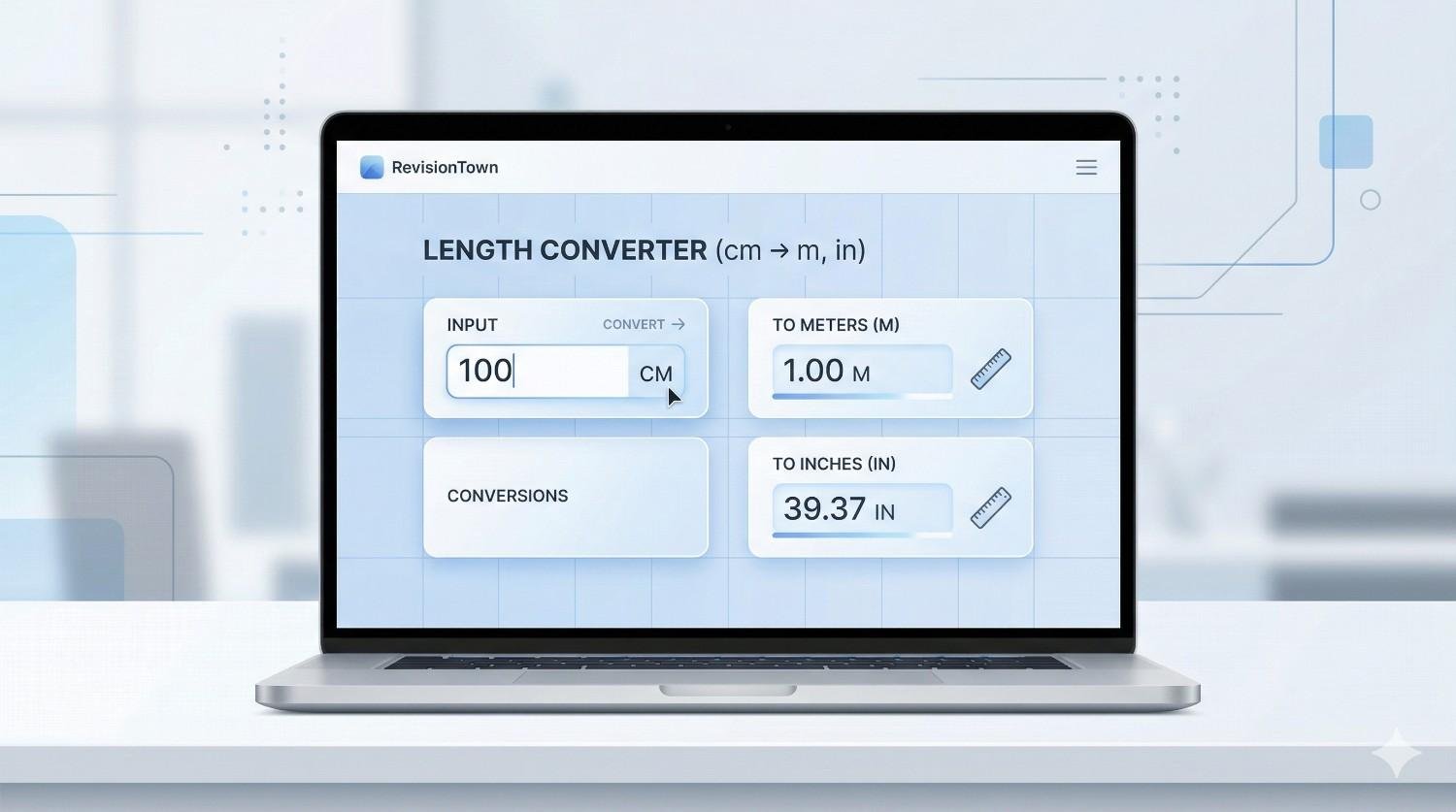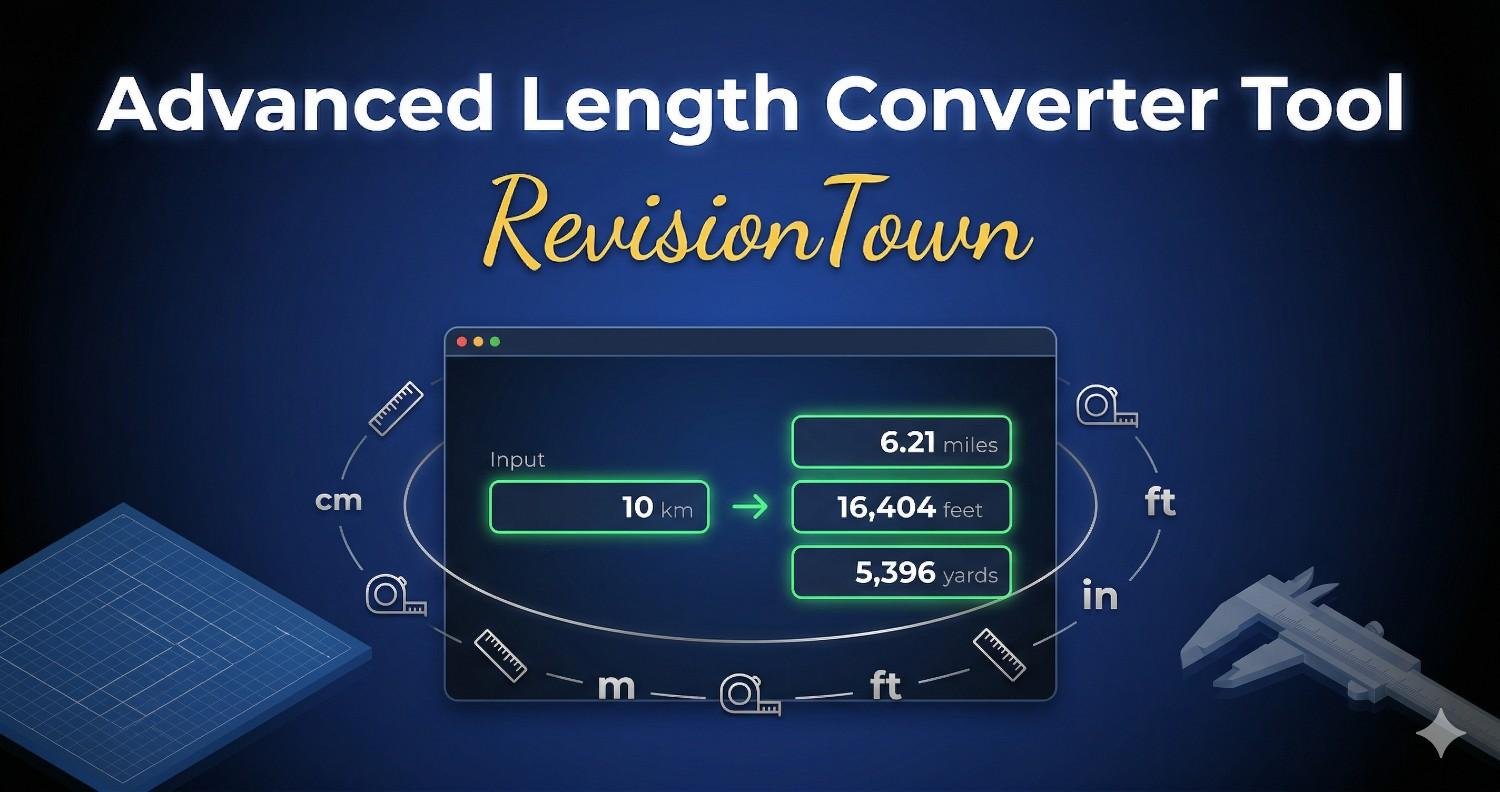
Convert metric, imperial, survey, nautical, astronomical, scientific, typographic, and historical length units through a precise meter-based converter.
Quick answers: 1 inch = 2.54 cm exactly, 1 foot = 0.3048 m exactly, 1 mile = 1,609.344 m, and 1 nautical mile = 1,852 m.
Enter a value and choose units to convert length across common and advanced measurement systems.
Converted Unit Cards
About This Advanced Length Converter
Best use: convert between everyday units like meters, feet, inches, yards, miles, centimeters, and kilometers, then switch to specialist units such as nautical miles, survey feet, astronomical units, light-years, parsecs, angstroms, Bohr radii, Planck lengths, picas, points, cubits, rods, chains, and furlongs.
Why this advanced page exists: simple length converters usually cover only 8 to 12 units. This page is designed for students, engineers, surveyors, map readers, science users, typography workflows, astronomy examples, and historical-unit checks where less common length units matter.
The calculator does not store entered values. It runs in the browser and converts every value through meters, which reduces inconsistent direct-conversion formulas.
Length Conversion Formulas
The meter is the base unit used by this converter. To convert from any unit to another, first multiply by that unit's meter factor, then divide by the target unit's meter factor. This approach keeps the method consistent whether the target is centimeters, inches, nautical miles, astronomical units, or Planck lengths.
Example: 12 inches x 0.0254 m per inch = 0.3048 m. Divide by 0.3048 m per foot to get 1 foot.
These exact relationships are useful for construction, manufacturing, height conversion, engineering drawings, and classroom problems.
Common Length Conversion Table
Use this table for quick checks. The converter above should be used when you need a custom value, scientific notation, survey variants, astronomy units, or a less common historical unit.
| Unit | Symbol | Equivalent in Meters | Typical Use |
|---|---|---|---|
| Millimeter | mm | 0.001 m | Engineering, product dimensions, machine parts |
| Centimeter | cm | 0.01 m | Human height, classroom work, everyday metric measurements |
| Meter | m | 1 m | SI base length unit for general measurement |
| Kilometer | km | 1,000 m | Road distance, maps, athletics, geography |
| Inch | in | 0.0254 m | Screen sizes, parts, clothing, imperial dimensions |
| Foot | ft | 0.3048 m | Height, construction, room dimensions |
| Yard | yd | 0.9144 m | Sports fields, fabric, short land distances |
| Mile | mi | 1,609.344 m | Road distance in countries using imperial units |
| Nautical mile | nmi | 1,852 m | Marine and aviation navigation |
| Astronomical unit | AU | 149,597,870,700 m | Solar-system distances |
Advanced Unit Guide
Advanced length conversion is not just about large unit lists. It is about knowing which family of units is appropriate. A survey foot is a legacy mapping unit, a nautical mile belongs to navigation, an angstrom belongs to atomic-scale measurement, a parsec belongs to astronomy, and a pica belongs to typography. Converting them through meters makes the math consistent, but the context still matters.
- Metric SI prefixes: use these for science, engineering, manufacturing, and classroom calculations.
- Imperial and US customary: use inches, feet, yards, and miles for everyday measurements in imperial contexts.
- Survey units: use only for legacy geospatial data that explicitly names US survey units.
- Nautical units: use nautical miles and nautical leagues for marine and aviation navigation.
- Astronomy units: use AU, light-year, parsec, kiloparsec, and megaparsec for large space distances.
- Atomic and scientific units: use angstrom, Bohr radius, femtometer, and Planck length for small-scale physics.
- Typographic units: use picas, points, and twips for print and document layout references.
- Historical units: treat cubits, rods, chains, arpent, vara, aln, and famn as context-specific unless a source defines the exact variant.
Worked Length Conversion Examples
Step 1: 6 x 0.3048 = 1.8288 m
Step 2: 1.8288 m x 100 = 182.88 cm
Result: 6 ft = 182.88 cm.
Step 1: 5 km = 5,000 m
Step 2: 5,000 / 1,609.344 = 3.10686 mi
Result: 5 km is about 3.107 miles.
Step 1: 1 AU = 149,597,870,700 m
Step 2: divide by 1,000 to convert meters to kilometers
Result: 1 AU = 149,597,870.7 km.
Measurement Context and Rounding
Rounding should match the job. A classroom answer may round to two decimal places, a machining drawing may require millimeters or micrometers, and a map or legal boundary may require exact unit definitions and coordinate-system context. Do not round too early. Convert through meters first, then round the final answer.
Survey and mapping units require special caution. The international foot is exactly 0.3048 meter. The older US survey foot was used in legacy geospatial data and is slightly different. Since January 1, 2023, US federal guidance superseded the US survey foot with the international foot for applications going forward. Use survey variants only when a legacy dataset, plan, plat, or coordinate system explicitly requires them.
Astronomical units can be exact or conventional depending on the unit. The astronomical unit is defined as 149,597,870,700 meters. Light-year values depend on the year convention used; this calculator uses the Julian year convention commonly used for educational conversion. Historical units can vary by country and time period, so treat them as reference conversions unless your source specifies a different local definition.
Common Length Conversion Mistakes
- Confusing inch and foot factors: inches use 0.0254 m; feet use 0.3048 m.
- Mixing meters and centimeters: 1 m is 100 cm, not 1,000 cm.
- Using survey feet by default: use international feet unless the data explicitly says US survey foot.
- Rounding before the final step: early rounding can create visible errors in engineering or mapping work.
- Treating historical units as universal: cubits, vara, ell, and similar units have regional variants.
- Using astronomical units for precise mission data: high-precision scientific work may require source-specific constants and uncertainty handling.
Related RevisionTown Tools
Use these related RevisionTown pages when a length conversion is part of a larger measurement or geometry workflow:
Source Notes and Calculation Limits
Source note: This page uses the meter as the base unit, standard SI metric prefixes, exact international inch/foot/yard definitions, the international nautical mile of 1,852 meters, the astronomical unit of 149,597,870,700 meters, and legacy survey factors for historical or mapping data. Historical units may vary by source, region, and era.
Results are browser-calculated and rounded for readable display. For legal surveying, engineering tolerances, manufacturing drawings, scientific publication, or property-boundary work, confirm the unit definition, datum, coordinate system, and required significant figures before relying on a rounded result.
Frequently Asked Questions About Length Conversion
Final Notes
An advanced length converter should do more than list units. It should make the base meter calculation clear, separate everyday units from specialist families, explain legacy and survey caveats, and provide examples that match real student, engineering, construction, mapping, science, and astronomy use cases. This optimized RevisionTown page puts the converter first, then supports it with formulas, tables, examples, FAQs, internal links, and structured data.