⚖️ Pounds + Ounces to Kilograms Converter
📊 Common Baby Weight & Body Weight Conversions
📚 Complete Guide to Pounds+Ounces to Kilograms Conversion
Understanding Mixed Imperial Weight Measurements
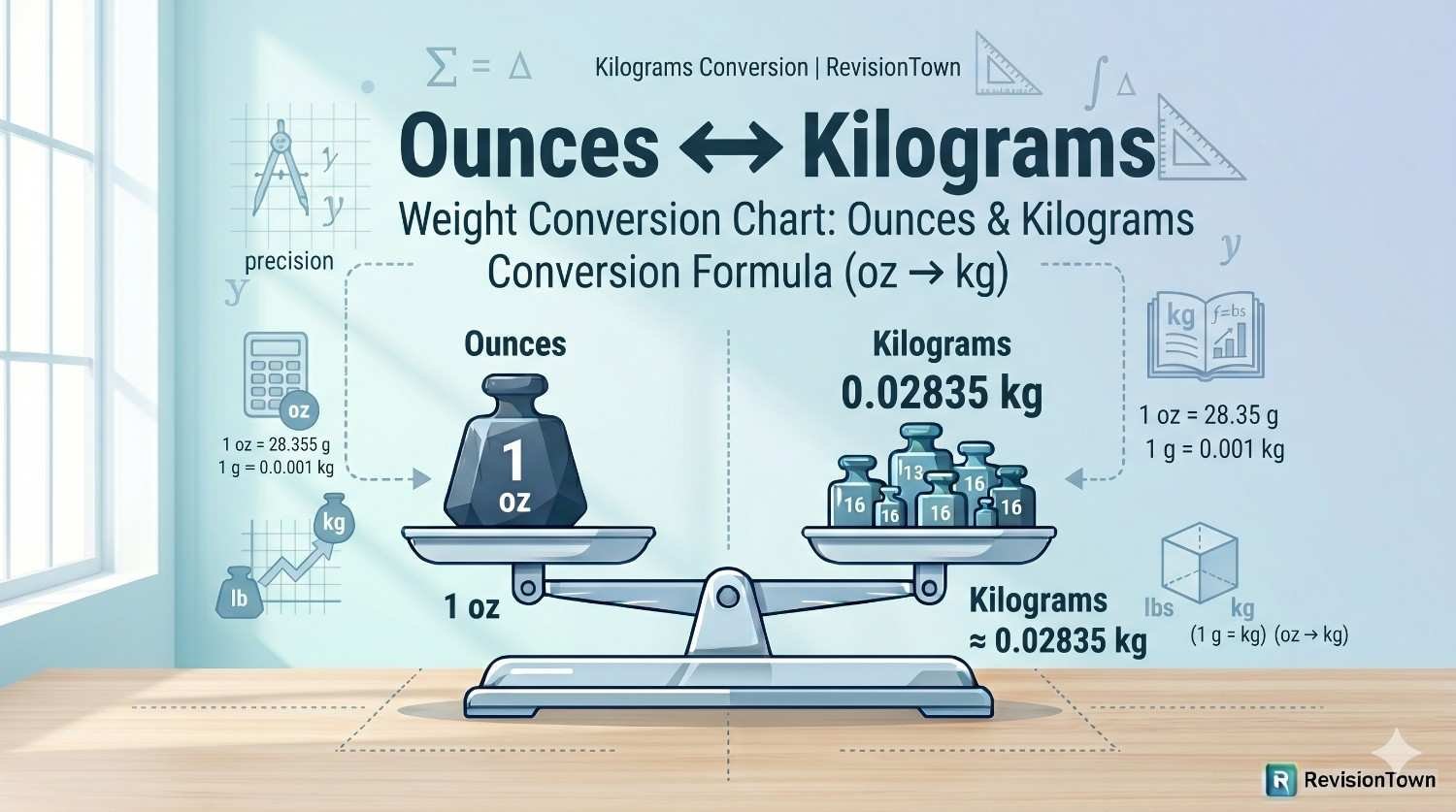
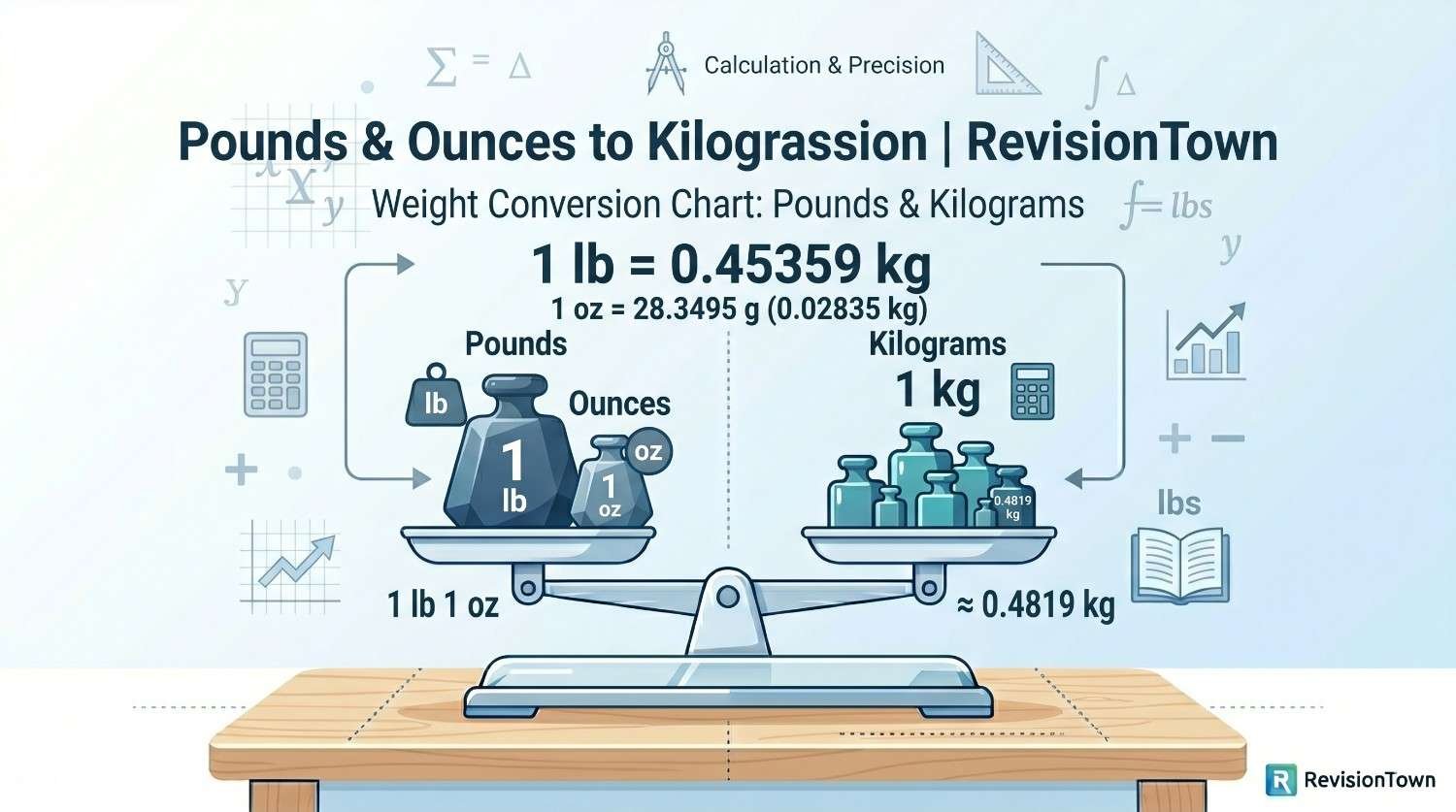
Pounds and ounces are Imperial/US customary weight units frequently used together to provide precise weight measurements, particularly in healthcare, cooking, and fitness contexts. In the Imperial system, 1 pound equals exactly 16 ounces. This relationship allows expressing weights in mixed format—whole pounds plus remaining ounces—for greater precision than pounds alone. For example, a newborn baby might weigh "7 pounds 8 ounces" (written "7 lb 8 oz"), which is more precise than rounding to "7 pounds" or "8 pounds." Kilograms are the metric system standard used internationally for medical measurements, scientific calculations, recipe specifications, and most countries worldwide. The conversion factors are: 1 pound = 0.45359237 kilograms and 1 ounce = 0.028349523125 kilograms. Understanding how to convert combined pounds+ounces to kilograms is essential for pediatric healthcare (tracking infant and child growth on WHO growth charts, which use kilograms), international recipe conversions (adapting US/UK recipes using lb oz to metric recipes using kg), medical documentation (healthcare providers converting patient weights to kg for medication dosing calculations), fitness tracking (when scales show lb oz but apps require kg), and international communication about weight measurements.
The Precise Conversion Formula and Methods
Converting pounds and ounces to kilograms can be accomplished using two mathematically equivalent methods, both producing identical results. Method 1: Direct Component Conversion. Convert each component separately, then add: kg = (lb × 0.45359237) + (oz × 0.028349523125). Example: 7 lb 8 oz = (7 × 0.45359237) + (8 × 0.028349523125) = 3.175146590 + 0.226796185 = 3.401942775 kg ≈ 3.40 kg. This method is most intuitive and clearly shows each unit's contribution to the total weight. Method 2: Convert to Decimal Pounds First. Convert ounces to decimal pounds by dividing by 16, then convert total pounds to kg: Total pounds = lb + (oz ÷ 16), then kg = total pounds × 0.45359237. Example: 7 lb 8 oz: First, 8 ÷ 16 = 0.5, so 7 + 0.5 = 7.5 lb total. Then 7.5 × 0.45359237 = 3.401942775 kg ≈ 3.40 kg. Both methods are mathematically equivalent and produce exact results. Method 1 is clearer for understanding unit relationships; Method 2 is often faster for mental calculations. For reverse conversion (kg to lb oz): Convert kg to total pounds (kg ÷ 0.45359237 or kg × 2.20462262), separate whole pounds, then convert the decimal remainder to ounces by multiplying by 16.
Common Baby Weight Conversions
| Pounds + Ounces | Kilograms (kg) | Context |
|---|---|---|
| 5 lb 8 oz | 2.495 kg | Low birth weight threshold |
| 6 lb 0 oz | 2.722 kg | Small newborn |
| 6 lb 12 oz | 3.062 kg | Lower average birth weight |
| 7 lb 8 oz | 3.402 kg | Average birth weight |
| 8 lb 0 oz | 3.629 kg | Above average newborn |
| 8 lb 13 oz | 4.000 kg | High birth weight threshold |
| 10 lb 0 oz | 4.536 kg | Large newborn |
| 15 lb 0 oz | 6.804 kg | Typical 4-month-old |
Applications in Pediatric Healthcare and Baby Weight Tracking
Pounds+ounces to kilogram conversions are critically important in pediatric healthcare for accurate infant and child growth monitoring. Birth Weight Documentation: In the United States and UK, hospitals typically record newborn birth weights in pounds and ounces because that's what parents understand best. However, medical professionals also need kilograms for international WHO (World Health Organization) growth charts, which use metric exclusively. Accurate conversion ensures proper documentation in both systems. Growth Chart Plotting: WHO growth standards, used globally as the reference for healthy infant growth, plot weight in kilograms against age. Pediatricians must convert US scale readings (in lb oz) to kg to accurately plot growth trajectories and identify potential developmental issues. Medication Dosing: Pediatric medication dosages are calculated in milligrams per kilogram of body weight (mg/kg). Converting infant weight from lb oz to kg ensures accurate, safe medication dosing. A dosing error from inaccurate conversion could be dangerous. Feeding Guidelines: Infant formula feeding guidelines often reference weight in kilograms for international standardization. Vaccination Schedules: Some vaccine dosing considers body weight in kg. Hospital Protocols: Many medical protocols and clinical guidelines reference weight in kg, requiring conversion from the lb oz measurements familiar to US parents.
Cooking and Recipe Conversions
Converting pounds and ounces to kilograms is essential for adapting recipes between Imperial (US/UK) and metric (international) measurement systems. International Recipe Adaptation: American and British recipes commonly specify ingredient weights in pounds and ounces (especially for meats, produce, baking ingredients), while European, Asian, and Australian recipes use kilograms and grams exclusively. Converting accurately ensures recipe success. Professional Baking: Professional bakeries worldwide use metric weight measurements for precision and consistency. Converting home recipe measurements (often in lb oz) to kg/grams allows accurate scaling and professional production. Bulk Cooking: When scaling recipes for large events or commercial production, metric measurements simplify calculations. Converting base recipe weights from lb oz to kg enables easier mathematical scaling. Nutritional Calculations: Nutrition databases and food composition tables typically reference nutrients per 100 grams or per kilogram. Converting recipe ingredient weights to kg facilitates accurate nutritional analysis. Kitchen Scale Settings: Many digital kitchen scales can display both Imperial (lb oz) and metric (kg), but understanding the conversion allows verification and prevents measurement errors that could ruin expensive recipes.
Body Weight Tracking and Fitness Applications
Fitness enthusiasts, athletes, and individuals tracking body weight often need pounds+ounces to kilogram conversions for accurate progress monitoring. Fitness App Compatibility: Many fitness and nutrition tracking apps (MyFitnessPal, Cronometer, Lose It) default to kilograms in international versions or offer both units. US users with scales displaying lb oz must convert to kg for accurate app data entry. Athletic Performance: Competitive sports like weightlifting, boxing, wrestling, and rowing use weight classes defined in kilograms internationally (though US federations may use pounds). Athletes must convert their body weight accurately for competition eligibility. Medical BMI Calculations: Body Mass Index (BMI) calculation uses metric: BMI = weight(kg) ÷ height(m)². Converting body weight from lb oz to kg enables accurate BMI calculation for health assessment. Progress Tracking Precision: When monitoring small weight changes (important for body composition tracking), the precision of ounces (1 oz ≈ 28 grams) provides finer resolution than rounding to nearest pound, making lb oz to kg conversion valuable for detailed tracking. International Communication: Sharing fitness progress with international friends, online communities, or coaches requires metric conversions for understanding across measurement systems.
Medical and Healthcare Conversions
Medical professionals in the United States frequently work with both Imperial (lb oz) and metric (kg) weight measurements, requiring accurate conversion skills. Medication Dosing Calculations: Most drug dosing protocols use mg/kg (milligrams per kilogram of body weight). Nurses and pharmacists must convert patient weights from lb oz (how most US scales report) to kg for accurate dose calculations. Errors can cause underdosing (ineffective treatment) or overdosing (toxicity). Anesthesia: Anesthesiologists calculate medication doses based on body weight in kg. Accurate conversion from lb oz is critical for patient safety during surgery. Clinical Research: Medical research and clinical trials use metric measurements exclusively for international standardization. US clinical sites must convert patient weights from lb oz to kg for research documentation. Medical Records: Electronic health records (EHR systems) in US hospitals often store weights in both lb oz and kg for different clinical purposes. Accurate conversion ensures data integrity. Pediatric Cardiology: Heart medication dosing for children requires precise weight in kg. Emergency Medicine: Rapid medication dosing in emergency situations uses kg-based protocols, making quick, accurate conversion essential.
Understanding Precision and Rounding in Conversions
Different applications require different levels of precision when converting pounds+ounces to kilograms, affecting how results should be rounded. Medical/Medication Dosing: Use exact conversion factors (0.45359237 and 0.028349523125) and round to 2 decimal places minimum (0.01 kg = 10 grams) for drug dosing calculations where precision affects patient safety. Example: 7 lb 8 oz = 3.40 kg (not 3.4 kg). Pediatric Growth Monitoring: WHO growth charts recommend precision to 0.01 kg (10 grams) for infants under 2 years, as small weight changes are clinically significant. For older children, 0.1 kg precision is typically sufficient. Cooking and Baking: Round to 0.01 kg (10 grams) for professional baking where precision matters, or 0.1 kg for home cooking where slight variations are acceptable. Example: 1 lb 4 oz = 0.57 kg is sufficient for most recipes. Body Weight Tracking: For fitness tracking, 0.1 kg precision is standard, matching typical scale resolution. Quick Mental Estimates: For rough approximations, remember that 1 lb ≈ 0.45 kg and 1 oz ≈ 0.03 kg. Example: 8 lb ≈ 3.6 kg quickly estimated. Always use exact conversions for medical, legal, or scientific purposes.
Common Conversion Mistakes and How to Avoid Them
Mistake 1: Forgetting to Convert Ounces. Converting only the pounds and ignoring ounces produces significant errors. Example: Converting 7 lb 8 oz as "7 lb" gives 3.18 kg instead of correct 3.40 kg—a 220-gram error clinically significant for infant weights. Solution: Always convert both components. Mistake 2: Using 16 Instead of 0.028349523125 for Ounces. Confusing the pound-ounce relationship (16 oz = 1 lb) with the ounce-kilogram conversion. Solution: Remember 1 oz = 0.028349523125 kg (approximately 0.0283 kg or about 28 grams). Mistake 3: Incorrect Order of Operations. Adding pounds and ounces before converting instead of converting each separately. Solution: Follow proper formula order: convert each unit to kg, then add results. Mistake 4: Rounding Too Early. Rounding intermediate calculations causes compound errors. Solution: Use full precision (6+ decimal places) in calculations, round only final result. Mistake 5: Confusing Units. Mixing up lb/kg conversion factor (0.45359237) with oz/kg factor (0.028349523125). Solution: Memorize: 1 lb = 0.454 kg (approximately), 1 oz = 0.028 kg (approximately). Use this converter to avoid manual calculation errors.
Why Choose RevisionTown's Pounds+Ounces to Kilograms Converter?
Our advanced converter provides comprehensive, accurate conversions by: (1) Using exact international standard conversion factors (0.45359237 kg/lb and 0.028349523125 kg/oz) for maximum precision; (2) Offering bidirectional conversion—lb oz to kg and kg to lb oz—for complete flexibility; (3) Handling separate pound and ounce inputs for intuitive mixed-unit entry; (4) Supporting bulk conversions for multiple baby weights or recipe ingredients simultaneously; (5) Providing quick reference tables for common baby weights, body weights, and cooking measurements; (6) Displaying conversion formulas with clear mathematical notation for educational transparency; (7) Including comprehensive content about pediatric healthcare, cooking applications, and medical dosing; (8) Offering instant, real-time calculations without page reloads for efficiency; (9) Mobile-responsive design optimized for use in hospitals, kitchens, and gyms; (10) Completely free with no registration or payment required. Whether you're a parent tracking your baby's growth, a pediatric nurse calculating medication doses, a home cook adapting international recipes, a fitness enthusiast monitoring body composition, or a healthcare professional requiring accurate weight conversions, RevisionTown provides the precision, reliability, and educational resources you need for confident conversions between pounds+ounces and kilograms across all applications.
❓ Frequently Asked Questions - Pounds+Ounces to Kilograms
To convert pounds and ounces to kilograms, use the formula: kg = (lb × 0.45359237) + (oz × 0.028349523125). Example: 7 lb 8 oz = (7 × 0.45359237) + (8 × 0.028349523125) = 3.175 + 0.227 = 3.402 kg. Alternative method: Convert ounces to decimal pounds first by dividing by 16, then multiply total pounds by 0.45359237. For 7 lb 8 oz: 8÷16 = 0.5, so 7.5 × 0.45359237 = 3.402 kg. Both methods produce identical results and are mathematically equivalent.
7 pounds 8 ounces equals exactly 3.401942775 kilograms, commonly rounded to 3.40 kg or 3.4 kg. Calculation: (7 × 0.45359237) + (8 × 0.028349523125) = 3.175146590 + 0.226796185 = 3.401942775 kg. This weight is particularly significant as it represents the average newborn birth weight globally, making this conversion frequently needed in pediatric healthcare for plotting infant growth on WHO growth charts (which use kilograms) and for medical documentation.
10 pounds 12 ounces equals 4.876 kilograms (rounded to 3 decimal places) or 4.88 kg (rounded to 2 decimal places). Precise calculation: (10 × 0.45359237) + (12 × 0.028349523125) = 4.5359237 + 0.34019428 = 4.87611798 kg. This conversion is common for tracking baby growth milestones (a healthy weight for 2-3 month old infants), cooking measurements for larger meat portions, and body weight applications where mixed Imperial units need metric conversion for international standardization or medical documentation.
Baby weights use pounds and ounces together in US/UK healthcare because: (1) Precision—newborns and infants have small weights where ounces provide necessary detail for tracking growth (a 7 lb baby differs significantly from 7 lb 8 oz—that's 227 grams difference, clinically meaningful); (2) Cultural tradition—Imperial measurements persist in US/UK healthcare despite metric adoption elsewhere; (3) Parent familiarity—US/UK parents understand lb oz better than kilograms for their baby's weight; (4) Scale design—most US baby scales display lb oz format as primary measurement. However, medical professionals often convert to kilograms because WHO growth charts, medication dosing calculations, and international medical standards use kilograms exclusively for consistency and safety.
To convert kilograms to pounds and ounces: (1) Convert kg to total pounds by dividing by 0.45359237 or multiplying by 2.20462262; (2) Separate whole pounds from the decimal; (3) Multiply the decimal remainder by 16 to get ounces. Example: 3.5 kg = 3.5 ÷ 0.45359237 = 7.7162 lb total. Whole pounds = 7, decimal remainder = 0.7162. Ounces = 0.7162 × 16 = 11.46 oz, rounded to 11 oz. Result: 3.5 kg = 7 lb 11 oz. This reverse conversion is useful when medical records show kg but parents want to understand weight in familiar lb oz format.
Normal baby birth weight ranges from 2.5 kg to 4.0 kg (5 lb 8 oz to 8 lb 13 oz) according to World Health Organization standards. Average birth weight is approximately 3.4 kg (7 lb 8 oz) globally, though this varies by genetics, maternal health, and ethnicity. Low birth weight is defined as under 2.5 kg (5 lb 8 oz), requiring special medical attention and monitoring. High birth weight is over 4.0 kg (8 lb 13 oz), sometimes indicating gestational diabetes or other maternal conditions. Pediatricians track baby weight in kilograms using WHO growth charts for consistent international standards and accurate growth monitoring throughout infancy and childhood.
Choice depends on location, context, and purpose: Use pounds (or pounds+ounces for precision): In the United States for everyday weight tracking, as most US scales and cultural references use pounds. Use kilograms: Internationally (Europe, Asia, Australia, most of world) where metric is standard; For medical contexts regardless of location—medication dosing, BMI calculations, and clinical guidelines use kg-based formulas globally; For scientific research and academic contexts requiring international standardization. For fitness tracking: Many apps support both units, but kilograms provide easier mathematical calculations for tracking progress percentages, ratios, and body composition changes. Understanding both systems and conversion between them ensures flexibility across contexts.
Medical conversion accuracy requirements vary by context: (1) Medication dosing—use exact conversion factors with minimum 2 decimal places (0.01 kg = 10 grams) as drug doses calculate mg per kg body weight, where precision affects patient safety; (2) Pediatric care (infants under 2 years)—round to 0.01 kg (10 grams) for accurate growth chart plotting, as small weight changes are clinically significant indicators of health; (3) Older children and adults—round to 0.1 kg sufficient for most clinical purposes and BMI calculations; (4) Birth weight documentation—record to 0.001 kg (1 gram) or nearest ounce for official medical records; (5) Emergency medicine—0.1 kg precision acceptable for rapid medication dosing calculations. Always use precise conversion factors (0.45359237 for pounds, 0.028349523125 for ounces) rather than approximations in healthcare contexts to ensure patient safety and accurate medical documentation.