
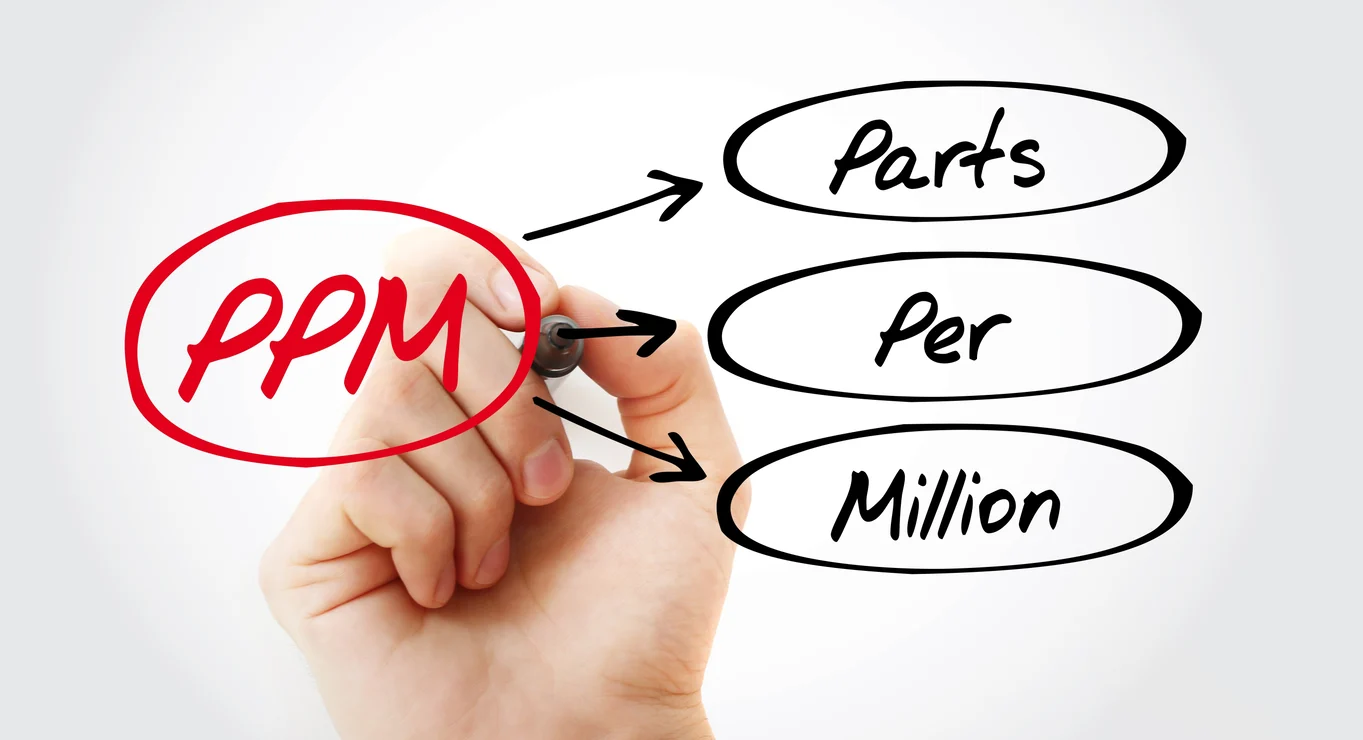
PPM Meaning: What Is PPM, What Does PPM Stand For, and How Parts Per Million Works
As of March 22, 2026, the core meaning of PPM is still the same simple idea people have searched for over and over: PPM stands for parts per million. It is a way of describing very small concentrations by showing how much of one substance exists inside a much larger total. If a liquid contains 5 PPM of a dissolved substance, that means 5 parts of that substance are present for every 1,000,000 parts of the full mixture.
That direct definition matters because your Bing query data is extremely clear. Most impressions are not coming from niche industrial searches. They are coming from broad, high-intent definition queries such as ppm, what is ppm, ppm meaning, what does ppm stand for, what is a ppm, and what does ppm mean. In other words, users do not mainly want a long environmental essay first. They want the acronym decoded, the measurement explained plainly, and the math made usable.
Quick answer: PPM means parts per million. It measures tiny concentrations. One PPM means one part of something in one million parts of the total. In many water-style calculations, 1 PPM is treated approximately as 1 mg/L or 1 mg/kg, depending on the context.
This page is built around that exact search intent. It starts with the meaning, then explains what PPM measures, how to calculate it, what 1 PPM really looks like, how it differs from percent and PPB, and why the unit shows up in water, air quality, chemistry, agriculture, manufacturing, and quality control. If you searched for a plain-language explanation, that is what this guide is designed to provide first. If you came for formulas and applications, those are here too.
PPM meaning at a glance
The reason PPM gets searched so often is that it shows up in many different fields while sounding technical enough to feel unfamiliar. Once you strip away the jargon, though, the core idea is straightforward: PPM is just a very small ratio written in a readable form.
| Question | Short answer | What it means in practice |
|---|---|---|
| What does PPM stand for? | Parts per million | It describes how much of one substance exists in one million parts of the whole. |
| What does PPM measure? | Concentration | It is used when the amount is too small to describe comfortably with percentages. |
| What is 1 PPM? | 1 part in 1,000,000 | In water-like solutions, it is often treated approximately as 1 mg/L. |
| Is PPM a unit? | Yes, in practical use | More precisely, it is a ratio-based concentration expression rather than a base SI unit. |
| Where is PPM used? | Water, air, chemistry, manufacturing, agriculture | It helps describe trace substances and defect rates clearly. |
If all you wanted was a snippet answer, you could stop here with a correct summary: PPM means parts per million and is used to express tiny concentrations of a substance within a larger mixture. But most low-CTR searches happen because users want the next layer too: what that means mathematically, how to visualize it, and why it matters in everyday life.
What does PPM stand for?
PPM stands for parts per million. The phrase tells you exactly how the number works. It compares one part of a substance to one million parts of a total mixture, solution, or population of units. Instead of saying a concentration is 0.0001%, which many people find harder to interpret at a glance, we often say it is 1 PPM. That makes very small amounts easier to communicate and compare.
The phrase is built on the same logic as percentage. A percentage means parts per hundred. PPM simply zooms much further down the scale. That is why it is useful in fields where tiny amounts matter, such as dissolved minerals in water, gas concentrations in air, impurities in chemicals, or defect rates in manufacturing. A substance can be present in a very small quantity and still matter a great deal, especially if it affects health, safety, product quality, or environmental performance.
This also explains why searchers ask both what does ppm stand for and what does ppm mean. The first question asks for the expanded phrase. The second asks for the practical interpretation. A good answer needs both. The expanded phrase is parts per million. The practical meaning is that the number tells you how much of something exists at a very dilute or very low frequency level.
What is PPM?
PPM is a concentration expression for very small amounts. It is used when the ordinary percent scale is too coarse or awkward. Saying “0.002% lead” may technically work, but saying “20 PPM lead” is often easier to read, compare, and act on. The same idea applies whether the context is water chemistry, soil contamination, industrial gas monitoring, or quality-control statistics.
The word “part” in PPM depends on the context. In some cases it means mass compared with mass. In other cases it means volume compared with volume. In manufacturing, it can even mean defective units compared with total units produced. The context changes the physical interpretation, but the ratio idea stays the same.
That is why a definition-only answer is not quite enough. PPM is not tied to a single material state. It can be used for liquids, gases, solids, and counts. The reason it keeps appearing across so many search queries is that people encounter it in many different settings and want to know whether the meaning changes. The safest explanation is this: the scale stays the same, but what counts as a “part” depends on the application.
What does PPM measure?
PPM measures concentration or rate at a very fine scale. In chemistry and environmental science, it usually describes how much of a substance is present in a larger mixture. In quality control, it may describe how many defective units appear per one million units made. In both cases, the concept is the same: a rare amount measured against a large total.
That is why the query what does ppm measure shows up in the report. Users are not always asking for the acronym alone. They want to know what kind of quantity the acronym is actually talking about. The answer is concentration when dealing with substances, and defect rate or occurrence rate when dealing with manufacturing counts.
Examples help:
- Water: PPM may describe minerals, contaminants, or dissolved solids.
- Air: PPM may describe the concentration of a gas in a larger air sample.
- Soil: PPM may describe the amount of a trace metal in the solid material.
- Manufacturing: PPM may describe defective items per million units produced.
- Agriculture: PPM may describe nutrient concentration in a solution or irrigation mix.
What PPM does not do is tell you automatically whether a number is safe, dangerous, good, or bad. It only gives the concentration or rate. Whether a particular PPM level matters depends on the substance, the setting, the regulatory standard, and the question being asked.
What is 1 PPM?
One PPM means one part in one million parts. That is the pure definition. But many readers want a more intuitive way to think about it, because the ratio is so small that it can feel abstract. The most useful way to understand 1 PPM is to compare it with more familiar scales.
Core relationships:
\( 1 \text{ PPM} = \frac{1}{1{,}000{,}000} = 10^{-6} \)
\( 1 \text{ PPM} = 0.0001\% \)
\( 1\% = 10{,}000 \text{ PPM} \)
In water-like solutions, 1 PPM is often treated approximately as 1 milligram per liter. In solids, 1 PPM often corresponds approximately to 1 milligram per kilogram. Those are not universal rules for every scenario, but they are extremely common approximations in practical laboratory, environmental, and industrial work.
The question what is 1ppm shows up in the report because users often want a concrete sense of scale. A simple way to say it is this: 1 PPM is tiny. It is far smaller than 1%. It is the kind of scale you use when very small traces still matter.
How to calculate PPM
At the core, the calculation is simple. You divide the amount of the substance you care about by the total amount of the mixture, then multiply by one million. The key is to make sure the units are compatible before you calculate.
Basic PPM formula:
\( \text{PPM} = \frac{\text{Amount of substance}}{\text{Total amount of mixture}} \times 1{,}000{,}000 \)
If you are measuring mass against mass, use the same mass unit in both places. If you are using volume against volume, use the same volume unit in both places. If you are working with water-like solutions and a mg/L approximation is appropriate, the process may be even simpler. But the underlying logic does not change.
Example 1: Simple mass-based PPM
Problem: A solution contains 4 milligrams of a substance in 2 kilograms of total mixture. What is the PPM?
Solution: Convert 2 kilograms to 2,000,000 milligrams. Then calculate:
\( \text{PPM} = \frac{4}{2{,}000{,}000} \times 1{,}000{,}000 = 2 \)
Answer: The concentration is 2 PPM.
Example 2: Water-style approximation
Problem: A lab reports 8 milligrams of dissolved material in 8 liters of water-like solution. What is the approximate PPM?
Solution: Using the common water approximation, 8 mg in 8 L is 1 mg/L.
Answer: The concentration is approximately 1 PPM.
Example 3: Manufacturing defect rate
Problem: A factory finds 125 defective units in a production run of 1,000,000 units.
Solution:
\( \text{PPM} = \frac{125}{1{,}000{,}000} \times 1{,}000{,}000 = 125 \)
Answer: The process is running at 125 PPM defects.
These examples show why PPM is useful. It gives a consistent, readable way to express either very small concentrations or very small defect rates.
Why PPM is easier than percent for tiny numbers
When values are very small, percentages become awkward to read. A concentration of 0.0003% is mathematically fine, but many people read it less easily than 3 PPM. The PPM scale compresses tiny decimal values into a number that is easier to speak, report, compare, and remember.
This is why the search cluster includes both ppm and ppm meaning alongside more technical variants. Users are often encountering the unit in a place where the numbers are already hard enough to interpret. PPM reduces cognitive friction. Instead of asking people to parse a long string of zeros, it turns the concentration into a small whole number or a short decimal on a dedicated trace scale.
That does not make PPM better in every situation. It makes it better when the concentration is very low. Once the amounts become larger, percent or other units may be more natural. But for trace quantities, PPM hits a useful middle ground between precision and readability.
PPM vs percent, PPB, PPT, mg/L, and mg/kg
Many users who search what is parts per million quickly discover that they also need to compare PPM with other concentration units. That is where confusion often starts. The relationships are consistent, but only if you keep the scale in mind.
| Unit | Meaning | Relationship to PPM |
|---|---|---|
| Percent | Parts per hundred | 1% = 10,000 PPM |
| PPM | Parts per million | Base unit in this guide |
| PPB | Parts per billion | 1 PPM = 1,000 PPB |
| PPT | Parts per trillion | 1 PPM = 1,000,000 PPT |
| mg/L | Milligrams per liter | Often approximately equal to PPM in water-like solutions |
| mg/kg | Milligrams per kilogram | Often approximately equal to PPM in solids or mass-based systems |
Useful conversions:
\( \text{PPM to percent} = \frac{\text{PPM}}{10{,}000} \)
\( \text{Percent to PPM} = \text{Percent} \times 10{,}000 \)
\( \text{PPM to PPB} = \text{PPM} \times 1{,}000 \)
\( \text{PPB to PPM} = \frac{\text{PPB}}{1{,}000} \)
These conversions are especially useful if you want to move between the PPM explanation page and more task-specific tools such as our PPM converter, PPM to PPB converter, PPB to PPM converter, PPM to percent converter, and percent to PPM converter.
Is PPM actually a unit?
This is a subtle but important question, especially for students and technical readers. In everyday use, people talk about PPM as a unit because it behaves like one in reports, dashboards, meters, lab sheets, and specification tables. But more strictly, PPM is a ratio-based concentration expression rather than a base unit like meter, gram, or second. It tells you the relationship between a part and a total, not a standalone physical dimension.
That distinction matters because it explains why PPM can be used in different ways without changing its basic idea. In one setting, the “part” may be milligrams in a kilogram. In another, it may be liters of gas in a million liters of air. In manufacturing, it may be defective parts in one million parts produced. The physical basis changes, but the scale does not. That is why PPM is so flexible and also why it sometimes confuses readers who expect it to behave like a single fixed laboratory unit.
The safest practical answer to what unit is ppm or is ppm a unit is this: PPM is a standard concentration notation built on a one-in-a-million ratio. In daily work, it is treated like a unit because that is how people report and compare results. In deeper technical language, it is better understood as a dimensionless ratio or concentration expression.
When should you use PPM instead of percent, mg/L, or another format?
PPM is most useful when the amount you are describing is small enough that percent becomes awkward, but you still want a number that is easy to read. If you write 0.0008%, many users need to stop and count zeros. If you write 8 PPM, the scale becomes clearer immediately. That is one of the biggest reasons PPM appears so often in science and industry. It gives you a human-friendly way to discuss trace quantities.
Use percent when the amount is large enough that parts per hundred feels natural. Use PPM when the amount is small and trace-focused. Use mg/L or mg/kg when the context requires the physical unit to be explicit, especially in lab work, soil reports, or detailed chemical documentation. In many water-related contexts, users will move back and forth between PPM and mg/L because the approximation is convenient. In more precise work, people may prefer the explicit unit notation because it states the measurement basis directly.
The right choice is not about which label sounds more scientific. It is about which expression makes the number easiest to interpret without losing meaning. That is why a definition page that stops at “PPM means parts per million” is incomplete. Users also need help understanding when that scale is the right one to use at all.
What does PPM look like in real life?
One reason definition pages underperform is that they explain the math but skip the human-scale intuition. Users often understand the formula intellectually and still do not feel what the number means. Real-world framing helps bridge that gap.
PPM is the kind of unit you use when:
- You are tracking trace contaminants that exist in tiny amounts but still matter.
- You are dealing with dissolved substances in water or another solution.
- You are measuring gas concentrations where the absolute amounts are small but still meaningful.
- You are reporting defect frequency in very large production runs.
The key insight is that PPM is not a sign that something is automatically dangerous or automatically negligible. It simply tells you that the amount is being measured on a one-in-a-million scale. Whether that is high or low depends entirely on what is being measured and why.
PPM in water quality
Water is one of the most common places ordinary people encounter PPM. Total dissolved solids meters often display results in PPM. Home water filters, hydroponics systems, aquariums, and lab reports frequently use the same notation. That is one reason searchers ask not only what is ppm but also what does ppm stand for in water or what does ppm measure.
In water contexts, PPM is often used to describe the amount of dissolved material relative to the total water sample. This can include minerals, nutrients, salts, or contaminants. The approximation that 1 PPM is about 1 mg/L is especially common in water-like solutions because the density is close enough to make the shortcut practical in many everyday and lab situations.
That said, not every water-related number is best expressed in PPM. Some substances are so tightly regulated or so small in concentration that they may be discussed in PPB instead. The important idea is not to memorize one universal safety number for every substance. It is to understand that PPM gives the concentration scale, while the substance itself determines what counts as acceptable, concerning, or dangerous.
Why water professionals like PPM
- It makes dissolved substances easier to report than tiny percentages.
- It aligns well with mg/L thinking in many water-style measurements.
- It is easy to compare across samples, sources, and test dates.
- It works well with meters, lab reports, and filter specifications.
For users who land on this page from a water context, the most important takeaway is simple: PPM in water usually means how much dissolved stuff is present at a trace scale.
PPM in air quality and gas measurements
PPM is also used for gases, especially when people want to describe how much of one gas exists relative to the total air mixture. This is why terms like indoor air quality, gas detection, ventilation, combustion, and industrial safety often come with PPM readings attached.
In gas measurement, PPM is often interpreted on a volume-per-volume basis rather than a mass-per-mass basis. That difference matters because it shows why the unit is flexible but not automatically interchangeable across every context. The word “part” still means “share of the total,” but the physical basis of that share depends on the system.
People also search phrases like what does ppm stand for in air quality because they see the same acronym used in climate discussions, gas monitors, and ventilation guidance. The direct explanation is this: PPM tells you how concentrated a gas is relative to all the air around it. It is used because gases in air are often present at concentrations much smaller than 1%.
What matters here is not memorizing one universal gas threshold from a single page. Different gases behave differently, and different guidelines apply in different settings. The useful concept is that PPM lets professionals describe trace gas levels precisely enough to monitor safety, performance, and environmental conditions.
PPM in chemistry and laboratory work
Chemistry is where many students first meet PPM formally. In labs, the unit is used because real measurements often involve dilute solutions. If a chemist wants to describe a tiny amount of solute in a much larger solvent volume, PPM becomes a practical language for that relationship.
That is why the keyword set contains phrases like what is ppm in chemistry, what does ppm mean chemistry, and what is ppm measurement in chemistry examples in real life. Students are not just asking for a dictionary answer. They are trying to understand how the term behaves in actual scientific work.
In chemistry, the most important habits are:
- Keep units consistent before calculating.
- Know whether your basis is mass, volume, or an approximation tied to density.
- State clearly what the PPM refers to: solute in solution, impurity in material, or something else.
- Do not assume 1 mg/L equals 1 PPM unless the context supports that approximation.
Those habits make the difference between simply memorizing the acronym and actually understanding how the measurement works.
PPM in manufacturing and quality control
One of the most useful extensions of PPM is outside chemistry entirely: manufacturing. In quality control, PPM often means defective parts per million parts produced. This is a rate expression, not a chemical concentration. But the logic is exactly the same. It still describes how many “bad” parts exist per million total opportunities or units.
If a factory reports 100 PPM defects, it means that on average 100 units out of every 1,000,000 units are defective. That is a tiny fraction, but in large-scale manufacturing it can still matter a great deal. PPM gives businesses a way to compare quality performance across lines, suppliers, and time periods.
This is one reason broad searches like ppm meaning can have poor CTR. Users sometimes see the acronym in a production or supplier context and do not know whether the page they are clicking will explain that version too. A good page needs to make it clear that PPM is not only a chemistry word. It is also a very common quality metric.
| Defect rate | Meaning | Interpretation |
|---|---|---|
| 10 PPM | 10 defects per million | Extremely low defect rate |
| 100 PPM | 100 defects per million | Still a small fraction, but meaningful in large-scale production |
| 1,000 PPM | 1,000 defects per million | 0.1% defect rate |
| 10,000 PPM | 10,000 defects per million | 1% defect rate |
This table also helps users see the connection between PPM and percent. A defect rate of 10,000 PPM is the same as 1%. That makes the scale easier to interpret when you are switching between industrial and general math language.
PPM in agriculture, hydroponics, and nutrient control
Growers, greenhouse operators, and hydroponics users often deal with PPM because nutrient solutions need to be managed carefully. In this setting, PPM is a practical way to talk about how much dissolved nutrient is in the water or feed solution. Even if the chemistry behind the solution is more complex, PPM gives a quick operational number that people can use to monitor and adjust.
This is a strong example of why PPM matters beyond textbook science. A hydroponic grower may not care about the phrase “dimensionless concentration ratio.” They care that the PPM reading is a fast way to judge whether the nutrient solution is too weak, too strong, or moving in the wrong direction over time. In that sense, PPM acts as a management language, not just a theoretical unit.
The same applies in agriculture and irrigation. Water quality, dissolved nutrient load, and solution preparation often rely on PPM-style thinking because the amounts are small enough that percent would be awkward, but still large enough to affect plant performance directly.
How to read PPM without making mistakes
The biggest misunderstandings about PPM are usually not about the acronym itself. They happen when people try to use the number without checking the context. A good definition page should help prevent that.
Common mistake 1: assuming all PPM values mean the same thing
A PPM number only becomes meaningful when you know what is being measured and what kind of “parts” are being compared. A 50 PPM dissolved solid reading in water and a 50 PPM defect rate in manufacturing share the same scale idea, but they are not the same kind of measurement.
Common mistake 2: confusing PPM with percent
PPM is much smaller than percent. Since 1% equals 10,000 PPM, a seemingly small percent can still be a very large PPM number. That is why converting carefully matters.
Common mistake 3: treating 1 mg/L = 1 PPM as universal
This approximation is widely used and extremely helpful, especially for water-like solutions, but it is not a magic rule for every liquid, gas, or solid system. Density and context matter.
Common mistake 4: forgetting unit consistency in the formula
If you divide milligrams by kilograms, liters by grams, or any other mixed setup without controlling the basis, your PPM result can be wrong even if the arithmetic is clean. Compatible units come first.
Common mistake 5: assuming a PPM number by itself tells you whether something is safe
PPM tells you concentration. It does not tell you the biological effect, regulatory meaning, or operational suitability without the substance and context attached.
Interactive PPM Calculator
Calculate PPM Concentration
Enter the values below to calculate parts per million:
Convert PPM to Other Units
Practical PPM conversion examples
Readers often understand the idea once they see the numbers move between scales. These examples connect the formula to real conversion questions.
Example 1: Convert PPM to percent
Problem: Convert 250 PPM to percent.
Solution: Divide by 10,000.
\( \frac{250}{10{,}000} = 0.025\% \)
Answer: 250 PPM = 0.025%.
Example 2: Convert percent to PPM
Problem: Convert 0.5% to PPM.
Solution: Multiply by 10,000.
\( 0.5 \times 10{,}000 = 5{,}000 \)
Answer: 0.5% = 5,000 PPM.
Example 3: Convert PPM to PPB
Problem: Convert 3.5 PPM to PPB.
Solution: Multiply by 1,000.
\( 3.5 \times 1{,}000 = 3{,}500 \)
Answer: 3.5 PPM = 3,500 PPB.
Related RevisionTown tools for PPM and concentration work
If you are moving from definition to calculation, these sitemap-based internal links are the most relevant next steps.
- PPM Converter for fast general conversions.
- PPM to PPB Converter for smaller-scale trace values.
- PPB to PPM Converter for converting back to the larger scale.
- PPM to PPT Converter for ultra-trace concentration work.
- PPT to PPM Converter when you need to move from trillion-scale values to million-scale values.
- PPM to Percent Converter for comparing trace concentrations with ordinary percent values.
- Percent to PPM Converter when the starting number is already written as a percent.
- PPM to mg/L Conversion for common water-style calculations.
- How to Calculate Percentage if you want a broader explanation of how PPM connects to percent logic.
- Percentage Calculator for quick percent checks during conversion work.
Frequently Asked Questions
PPM means parts per million. It is a way of describing very small concentrations by showing how many parts of a substance exist in one million parts of the total mixture, solution, gas, or batch.
PPM stands for parts per million. The phrase is used because percentages are often too broad for trace amounts, while PPM gives a clearer scale for small concentrations.
PPM means that a substance is being measured on a one-in-a-million scale. If a sample contains 5 PPM of something, that means there are 5 parts of it in every 1,000,000 parts of the total.
Divide the amount of the substance by the total amount of the mixture, then multiply by 1,000,000. Make sure the units are compatible before calculating.
One PPM equals one part in one million. In many water-like solutions, it is treated approximately as 1 milligram per liter. In many solids, it is treated approximately as 1 milligram per kilogram.
PPM measures concentration or trace frequency. In science it usually describes how much of a substance is present in a total mixture. In quality control it often describes defective units per million total units.
PPM means parts per million, PPB means parts per billion, and PPT means parts per trillion. Each step is 1,000 times smaller than the previous scale, so 1 PPM equals 1,000 PPB and 1,000,000 PPT.
Not always, but in many water-like solutions 1 PPM is treated approximately as 1 mg/L because the density is close to 1. This shortcut does not automatically apply in every liquid, gas, or solid system.
Conclusion: why PPM still matters
PPM remains one of the most useful small-scale measurement ideas in science, engineering, environmental monitoring, and quality control because it solves a simple communication problem. It gives us a readable way to talk about amounts that are too small to express comfortably as percentages but too important to ignore. That is why the acronym shows up in water testing, air monitoring, laboratory work, manufacturing reports, nutrient solutions, and conversion tools.
If you came here asking what is ppm, ppm meaning, or what does ppm stand for, the answer is now straightforward: PPM means parts per million, and it tells you how much of something exists in one million parts of the total. If your next question was how to calculate it, compare it with percent, or interpret it in real life, you now have those tools too.
The most important long-term takeaway is not just the acronym. It is the pattern behind it. When you see PPM, think tiny concentration, large total, one-in-a-million scale. That single framework makes the unit far easier to understand wherever you meet it next.