Period Calculator
Track Your Menstrual Cycle, Predict Periods & Fertile Window
Period & Ovulation Calculator
Enter Your Cycle Information
Menstrual Cycle Phases
| Phase | Days | Description |
|---|---|---|
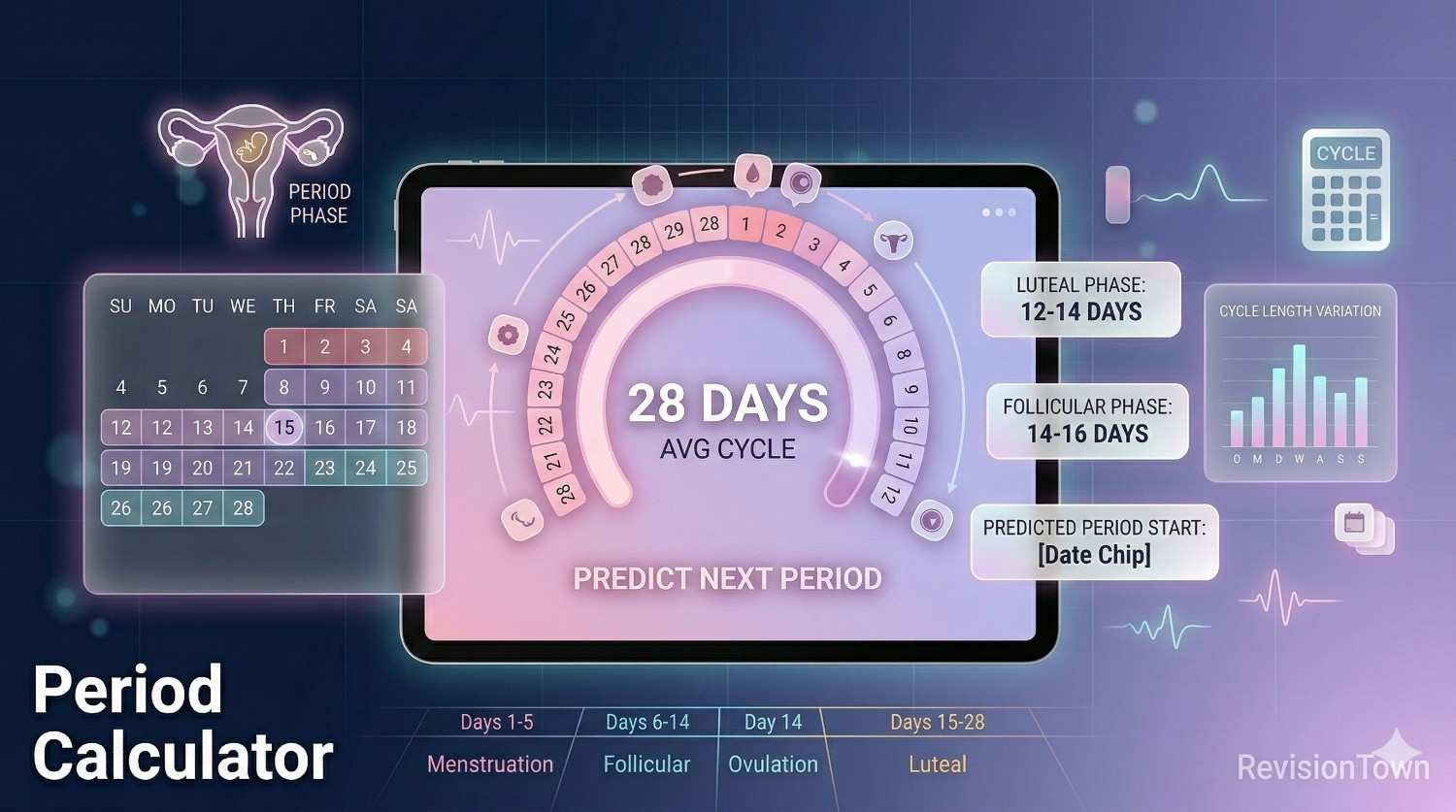
| Menstrual Phase | 1-5 | Period - uterine lining sheds |
| Follicular Phase | 1-13 | Egg matures in ovary |
| Ovulation | 14 | Egg released (most fertile) |
| Luteal Phase | 15-28 | Uterus prepares for pregnancy |
Understanding the Menstrual Cycle
The menstrual cycle is the monthly hormonal process preparing the female body for potential pregnancy. It averages 28 days but normal cycles range from 21-35 days. The cycle begins on the first day of menstruation (period) and ends the day before the next period starts. Understanding your cycle helps track fertility, plan or prevent pregnancy, identify irregularities, and monitor overall reproductive health.
The cycle consists of four distinct phases controlled by hormones (estrogen, progesterone, FSH, LH): Menstrual phase (days 1-5) when uterine lining sheds as period blood; Follicular phase (days 1-13) when follicles containing eggs mature in ovaries; Ovulation (around day 14) when a mature egg releases from the ovary; and Luteal phase (days 15-28) when the uterus prepares for possible implantation. If pregnancy doesn't occur, hormone levels drop, triggering the next period.
Cycle length varies significantly between individuals and can fluctuate month-to-month due to stress, illness, weight changes, exercise, medications, or hormonal conditions like PCOS. Tracking cycles for 3-6 months reveals personal patterns. Irregular cycles (varying by >7-9 days), very short (<21 days), very long (>35 days), or absent periods warrant medical evaluation. This calculator provides estimates based on average cycles—actual ovulation and fertile windows vary individually.
The Four Phases of the Menstrual Cycle
Phase 1: Menstrual Phase (Days 1-5)
The menstrual phase is your period—when the uterine lining (endometrium) sheds through the vagina. This occurs when pregnancy doesn't happen and progesterone levels drop, triggering breakdown of the thickened uterine lining built during the previous cycle. Bleeding typically lasts 3-7 days, averaging 5 days. Blood loss ranges from 30-80 mL (2-5 tablespoons) total. Heavier flow occurs in first 2-3 days. Symptoms include cramping (dysmenorrhea), fatigue, mood changes, headaches, and lower back pain from prostaglandin release causing uterine contractions.
Phase 2: Follicular Phase (Days 1-13)
The follicular phase overlaps with menstruation, starting day 1 of period and lasting until ovulation. The pituitary gland releases follicle-stimulating hormone (FSH), stimulating ovaries to develop 5-20 follicles, each containing an immature egg. Usually one dominant follicle matures while others dissolve. The maturing follicle produces increasing estrogen, which thickens the uterine lining, creating nutrient-rich environment for potential embryo. Cervical mucus becomes thin, clear, and stretchy (like egg whites) to facilitate sperm transport. Energy and mood typically improve as estrogen rises.
Phase 3: Ovulation (Around Day 14)
Ovulation occurs when a mature egg releases from the ovary, triggered by luteinizing hormone (LH) surge 24-36 hours prior. In a 28-day cycle, ovulation typically happens around day 14, but varies: for a 21-day cycle, ovulation occurs around day 7; for a 35-day cycle, around day 21. The general rule: ovulation happens approximately 14 days before the next period. The egg survives 12-24 hours, but sperm can live 5 days in fertile cervical mucus, creating a 6-day fertile window (5 days before ovulation + ovulation day). Some women feel ovulation pain (mittelschmerz) as a sharp twinge on one side.
Phase 4: Luteal Phase (Days 15-28)
The luteal phase follows ovulation and lasts until the next period—typically 12-14 days (luteal length is more consistent than follicular length). The empty follicle becomes the corpus luteum, producing progesterone and some estrogen. Progesterone maintains and thickens uterine lining for embryo implantation. If fertilization occurs, the developing embryo produces hCG hormone maintaining the corpus luteum and preventing period. Without pregnancy, the corpus luteum degrades after 10-12 days, progesterone/estrogen plummet, and the cycle restarts with menstruation. Premenstrual syndrome (PMS) symptoms—bloating, breast tenderness, mood swings, acne, food cravings—occur late luteal phase due to hormonal fluctuations.
Fertile Window & Conception
Understanding the Fertile Window
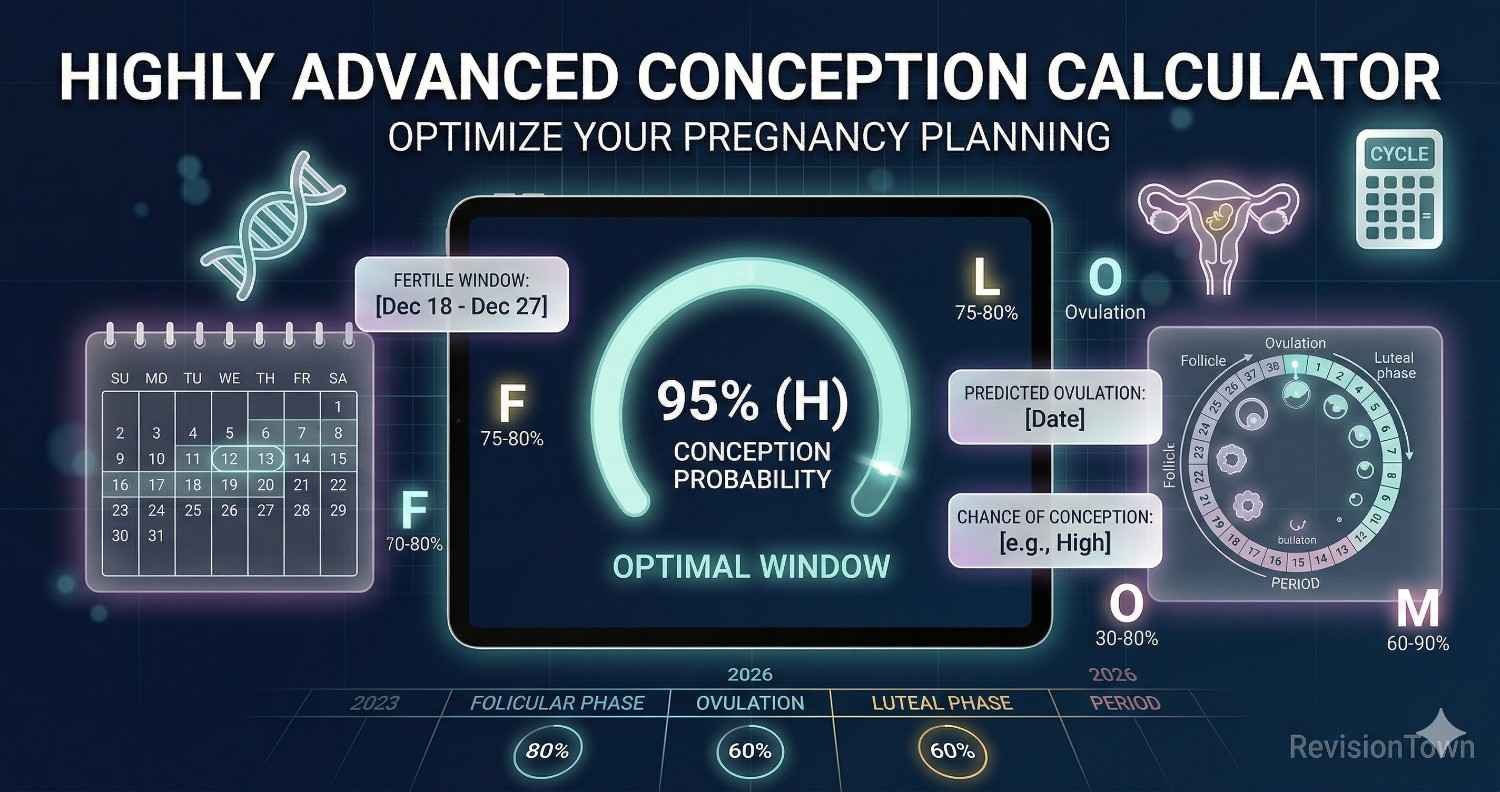
The fertile window is the 6-day period when pregnancy is possible: the 5 days before ovulation plus ovulation day itself. Although the egg survives only 12-24 hours after ovulation, sperm can remain viable in the reproductive tract for up to 5 days when cervical mucus is fertile (thin, clear, stretchy). This creates a 6-day window. The most fertile days are the 2-3 days immediately before ovulation and ovulation day—intercourse during this time has approximately 20-30% conception probability per cycle for healthy couples.
Predicting Ovulation
Ovulation prediction uses several methods: Calendar method (subtract 14 days from expected next period—least accurate for irregular cycles); Cervical mucus monitoring (fertile mucus is clear, stretchy, slippery like raw egg white); Basal body temperature (BBT rises 0.5-1°F after ovulation—measure first thing morning before getting out of bed); Ovulation predictor kits (OPKs detect LH surge 24-36 hours before ovulation—most accurate home method); and Physical symptoms (ovulation pain, increased libido, light spotting). Combining multiple methods improves accuracy.
Conception Timing
For couples trying to conceive, intercourse every 1-2 days during the fertile window maximizes chances. Having sex before ovulation is more effective than after because sperm needs time to reach the egg. Studies show highest pregnancy rates with intercourse 1-2 days before ovulation. Daily sex slightly increases odds but isn't necessary—sperm count remains adequate with every-other-day frequency. After ovulation, the egg rapidly degrades, so sex after ovulation has minimal conception probability. Most healthy couples conceive within 6 months of trying; seek medical evaluation if under 35 and trying for 12+ months, or over 35 and trying for 6+ months.
Natural Contraception (Fertility Awareness)
Fertility awareness methods (FAM) use cycle tracking to prevent pregnancy by avoiding intercourse during fertile window. This requires meticulous tracking of cycle length, cervical mucus, BBT, and possibly OPKs. With perfect use, FAM can be 95-99% effective, but typical use effectiveness drops to 76-88% due to human error, irregular cycles, and difficulty identifying fertile days. FAM is not recommended as sole contraception for women with irregular cycles, recent childbirth/breastfeeding, perimenopause, or PCOS. It requires partner cooperation and consistent tracking. More reliable contraception methods (IUD, pill, implant) have >99% effectiveness with typical use.
Period Tracking & When to See a Doctor
Why Track Your Period?
Period tracking provides valuable health insights: Identifies personal cycle patterns and predicts future periods; Helps plan or prevent pregnancy by identifying fertile windows; Alerts to irregularities indicating potential health issues (PCOS, thyroid disorders, endometriosis); Monitors menstrual symptoms (PMS, cramps, mood changes) to discuss with healthcare providers; Assists doctors in diagnosing reproductive conditions; Provides data for pregnancy planning. Track period start/end dates, flow intensity, symptoms, cervical mucus, and any spotting. Apps like Clue, Flo, or Period Tracker simplify logging, or use paper calendars.
Irregular Periods & Causes
Irregular periods include cycles varying by >7-9 days month-to-month, cycles <21 or >35 days, missed periods (amenorrhea), or very heavy/light bleeding. Common causes: Polycystic ovary syndrome (PCOS)—leading cause of irregular cycles in reproductive-age women; Thyroid disorders (hypothyroidism/hyperthyroidism); Stress and mental health conditions; Significant weight loss/gain or eating disorders; Excessive exercise (athletic amenorrhea); Perimenopause (transition to menopause); Certain medications (antidepressants, antipsychotics); Hormonal contraception changes; Chronic conditions (diabetes, celiac disease). Track irregularities for 2-3 cycles before medical consultation to provide useful data.
Heavy Periods (Menorrhagia)
Heavy menstrual bleeding is defined as soaking through pads/tampons every 1-2 hours, periods lasting >7 days, passing large blood clots (>quarter-size), or losing >80 mL blood total. Causes include uterine fibroids, endometriosis, adenomyosis, bleeding disorders (von Willebrand disease), IUDs, hormonal imbalances, or polyps. Heavy bleeding causes iron-deficiency anemia (fatigue, weakness, pale skin, shortness of breath). See a doctor if experiencing heavy bleeding—treatments include hormonal contraception (pill, IUD), tranexamic acid, NSAIDs, or surgical options (endometrial ablation, hysterectomy).
When to See a Doctor
Seek medical evaluation for: Periods occurring more frequently than every 21 days or less than every 35 days; Periods lasting longer than 7 days; Soaking through pads/tampons every hour; Severe pain interfering with daily activities (possible endometriosis); Bleeding between periods or after sex; Three or more missed periods without pregnancy; Sudden irregular periods after previously regular cycles; Periods that haven't started by age 15 or within 3 years of breast development; Symptoms of anemia (extreme fatigue, dizziness, rapid heartbeat). These may indicate hormonal imbalances, PCOS, fibroids, endometriosis, thyroid disorders, or other conditions requiring treatment. Don't ignore persistent menstrual changes.
Tips for Healthy Menstrual Cycles
- Maintain healthy weight: Both underweight and overweight can disrupt hormones and cause irregular periods. Aim for BMI 18.5-24.9.
- Manage stress: Chronic stress elevates cortisol, disrupting reproductive hormones. Practice meditation, yoga, deep breathing, or therapy.
- Exercise moderately: Regular moderate exercise (150 min/week) supports hormone balance. Avoid excessive training (>10 hrs/week) causing amenorrhea.
- Eat balanced diet: Include iron-rich foods (red meat, spinach, beans) to prevent anemia, omega-3s for inflammation, and complex carbs for hormone production.
- Get adequate sleep: 7-9 hours nightly supports hormone regulation. Poor sleep disrupts reproductive hormones and worsens PMS symptoms.
- Limit alcohol and caffeine: Excessive alcohol disrupts estrogen levels; high caffeine may worsen PMS symptoms and breast tenderness.
- Take supplements if needed: Iron during/after periods if anemic; magnesium and vitamin B6 for PMS; vitamin D for overall reproductive health.
- Use heat for cramps: Heating pads, hot water bottles, or warm baths relax uterine muscles and reduce menstrual pain naturally.
- Track symptoms consistently: Note period dates, flow intensity, pain levels, mood, cervical mucus for 3-6 months to identify patterns.
- Consult doctor for irregularities: Don't ignore persistent cycle changes—early intervention prevents complications from conditions like PCOS or endometriosis.
Medical Disclaimer
This period calculator provides estimates based on average menstrual cycle patterns and cannot account for individual variations, irregular cycles, or medical conditions affecting menstruation. Predicted ovulation dates and fertile windows are approximations—actual ovulation timing varies individually and monthly. This calculator is NOT a reliable contraception method; do not use for pregnancy prevention. Women with irregular cycles, PCOS, thyroid disorders, perimenopause, recent childbirth/breastfeeding, or hormonal contraception may have unpredictable ovulation not captured by standard calculations. This tool cannot diagnose pregnancy, reproductive conditions, or fertility issues. If experiencing irregular periods, severe pain, heavy bleeding, missed periods without pregnancy, or difficulty conceiving after 6-12 months of trying, consult gynecologists or reproductive endocrinologists for proper evaluation. This calculator is for educational and tracking purposes only, not medical advice, diagnosis, or treatment. Always consult healthcare providers for personalized reproductive health guidance.
About the Author
Adam
Co-Founder @ RevisionTown
Math Expert specializing in various curricula including IB, AP, GCSE, IGCSE, and more
Menstrual cycle
The menstrual cycle is a series of changes that occur in a woman’s body as part of the preparation for the possibility of pregnancy occurring. It is a cycle that usually begins between 12 and 15 years of age that continues up until menopause, which, on average, occurs at the age of 52. The menstrual cycle is typically counted from the first day of one period to the first day of the next. It is controlled by the rise and fall of hormones. The length of a woman’s menstrual cycle varies. A regular menstrual cycle is considered to be a menstrual cycle where the longest and shortest cycles vary by less than 8 days. The average menstrual cycle lasts 28 days.
As part of the menstrual cycle, the lining of the uterus thickens, and an egg, which is required for pregnancy to occur, is produced. The egg is released from the ovaries in a process called ovulation, which corresponds with the time during which a woman is most fertile (~5 days before ovulation, up through 1-2 days after ovulation). If the egg is not fertilized, pregnancy cannot happen, and the lining of the uterus will shed during a menstrual period, after which the cycle restarts.
A period, a commonly used term for referring to menstruation, is a woman’s regular discharge of blood and mucosal tissue that occurs as part of the menstrual cycle. Bleeding and discharge of the mucosal lining of the uterus, through the vagina, usually lasts between 2 and 7 days. It occurs in the early phases of the menstrual cycle, referred to as the menstrual phase, which begins when the egg from a previous cycle is not fertilized. Periods stop during pregnancy, and typically do not resume during the early stages of breastfeeding. Periods also eventually stop permanently during menopause, usually between the ages of 49 and 52, and can be defined as having no vaginal bleeding for a year.
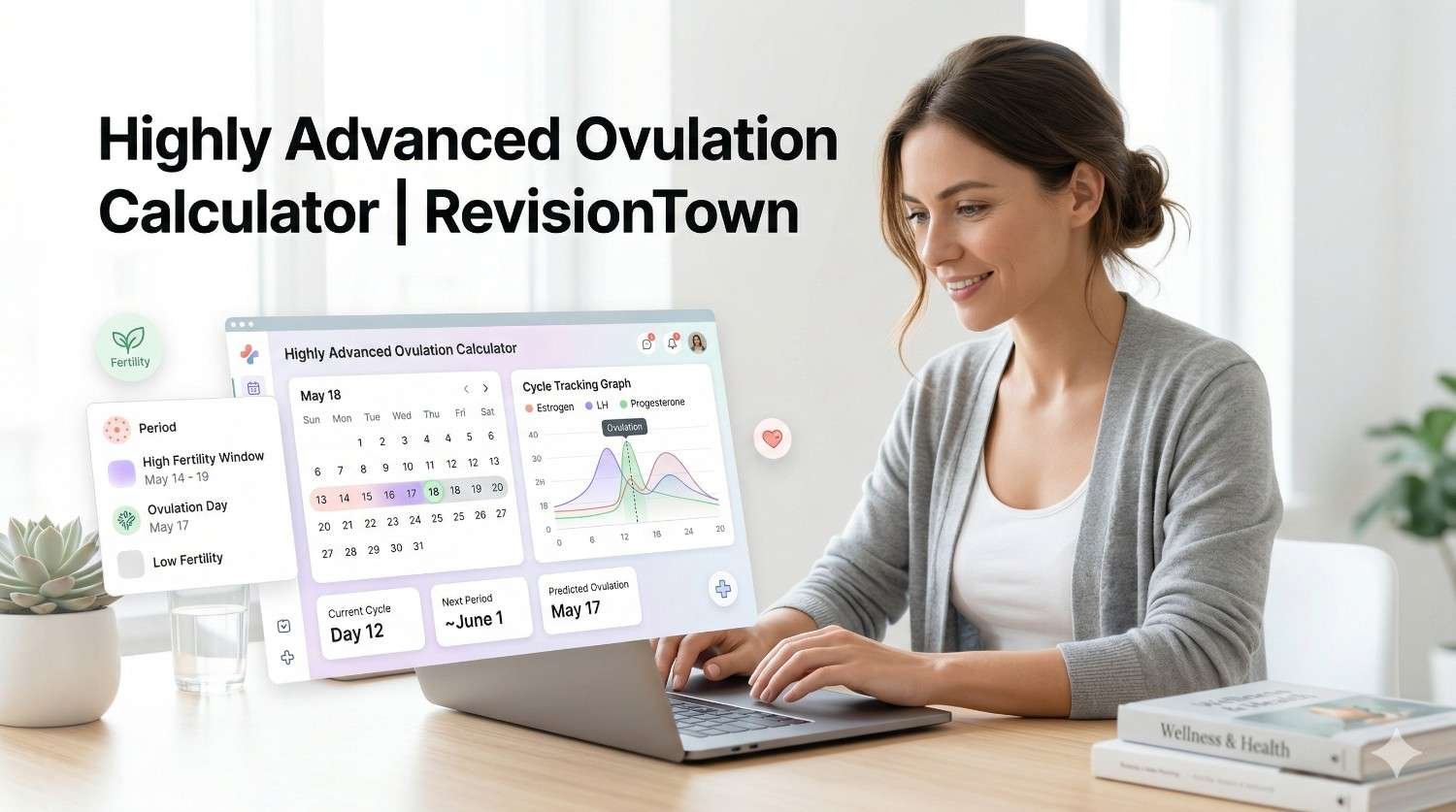
The Period Calculator estimates period days and the most probable ovulation days in calendar form. Period days are the days during which bleeding and discharge occur. The most probable ovulation days are the days during which a woman is most likely to ovulate.