Ideal Weight Calculator
Calculate Your Ideal Body Weight Using Multiple Formulas
Ideal Body Weight Calculator
Calculate Your Ideal Weight
Ideal Weight Formulas
| Formula | Male | Female |
|---|---|---|
| Hamwi (1964) | 48kg + 2.7kg per inch over 5ft | 45.5kg + 2.2kg per inch over 5ft |
| Devine (1974) | 50kg + 2.3kg per inch over 5ft | 45.5kg + 2.3kg per inch over 5ft |
| Robinson (1983) | 52kg + 1.9kg per inch over 5ft | 49kg + 1.7kg per inch over 5ft |
| Miller (1983) | 56.2kg + 1.41kg per inch over 5ft | 53.1kg + 1.36kg per inch over 5ft |
Understanding Ideal Body Weight
Ideal body weight (IBW) is a theoretical weight range considered optimal for health, longevity, and disease risk reduction based on height, gender, and sometimes age. IBW differs from actual weight, healthy weight range, or goal weight—it represents a statistical estimate derived from population studies correlating weight with lowest mortality rates. Various formulas calculate IBW differently, each developed from different datasets and clinical contexts. No single formula is universally "correct"—IBW is a guideline, not an absolute target that applies to everyone regardless of body composition, muscle mass, or frame size.
The concept of ideal weight emerged in the 1940s-1960s from life insurance actuarial tables, which identified weight ranges associated with lowest mortality risk. The Metropolitan Life Insurance Company published influential height-weight tables that became medical references for decades. Modern IBW formulas (Hamwi, Devine, Robinson, Miller) were developed primarily for clinical purposes—calculating medication dosages, nutritional requirements, and ventilator settings—rather than defining optimal health weights. These formulas are linear equations based on height, assuming 2-3 kg weight increase per inch above 5 feet (152 cm). They don't account for body composition, muscle mass, bone density, or frame size, which significantly affect healthy weight ranges.
IBW formulas have significant limitations and should not be used in isolation for health assessment. They ignore body composition—a muscular athlete may exceed IBW by 10-20 kg while having low body fat and excellent health markers. Conversely, someone at IBW with high body fat percentage and low muscle mass (sarcopenic obesity) faces metabolic health risks. Frame size matters: small-framed individuals may be healthiest 5-10% below calculated IBW; large-framed individuals 5-10% above. Age, ethnicity, and genetics influence optimal weight—Asian populations have higher disease risk at lower BMIs; older adults benefit from slightly higher weights to preserve muscle and bone. IBW is a starting point for discussion, not a rigid target. Body composition, waist circumference, metabolic health markers, and functional fitness are better health indicators than hitting a specific number on the scale.
The Four Main IBW Formulas
Hamwi Formula (1964)
The Hamwi formula was developed by Dr. G.J. Hamwi for quickly estimating caloric requirements. It's one of the most widely used IBW equations in clinical settings. Men: 48 kg for first 152 cm (5 ft) + 2.7 kg per additional inch (106 lbs for 5 ft + 6 lbs per inch). Women: 45.5 kg for first 152 cm + 2.2 kg per additional inch (100 lbs for 5 ft + 5 lbs per inch). The Hamwi formula tends to produce slightly higher IBW estimates than other formulas, particularly for taller individuals. It's considered appropriate for adults of average build and doesn't account for frame size variations.
Devine Formula (1974)
The Devine formula was created by Dr. B.J. Devine for calculating medication dosages, particularly for drugs requiring weight-based dosing. Men: 50 kg for first 152 cm + 2.3 kg per additional inch (110 lbs for 5 ft + 5 lbs per inch). Women: 45.5 kg for first 152 cm + 2.3 kg per additional inch (100 lbs for 5 ft + 5 lbs per inch). Devine formula is most commonly referenced in medical literature and clinical practice. It's the basis for calculating ideal body weight in many clinical contexts, including anesthesia, nephrology, and critical care. Results are similar to Hamwi but slightly lower for men and identical for women at the base height.
Robinson Formula (1983)
The Robinson formula was developed by J.D. Robinson as a modification of Devine's equation to better match modern population data. Men: 52 kg for first 152 cm + 1.9 kg per additional inch (115 lbs for 5 ft + 4.2 lbs per inch). Women: 49 kg for first 152 cm + 1.7 kg per additional inch (108 lbs for 5 ft + 3.7 lbs per inch). Robinson formula produces higher base weights but lower incremental increases per inch compared to Hamwi and Devine. It tends to yield mid-range estimates and is considered appropriate for modern populations. This formula is less commonly used clinically but provides a useful comparison point.
Miller Formula (1983)
The Miller formula was proposed by Dr. D.R. Miller in the same year as Robinson, also aiming to refine IBW calculations. Men: 56.2 kg for first 152 cm + 1.41 kg per additional inch (124 lbs for 5 ft + 3.1 lbs per inch). Women: 53.1 kg for first 152 cm + 1.36 kg per additional inch (117 lbs for 5 ft + 3 lbs per inch). Miller formula produces the highest base weights of all formulas but the smallest incremental increases, making it unique. For shorter individuals, Miller predicts higher IBW; for very tall individuals, it may predict lower IBW than other formulas. Less commonly used in clinical practice but provides an alternative perspective on ideal weight estimation.
BMI-Based Ideal Weight
An alternative approach calculates ideal weight using Body Mass Index (BMI), the ratio of weight to height squared: BMI = weight (kg) / height (m)². The WHO defines healthy BMI as 18.5-24.9, with an optimal BMI around 21-23 for lowest disease risk. Calculating ideal weight from BMI involves rearranging the formula: Ideal Weight = Target BMI × height (m)². Using BMI 22 (middle of healthy range): a 175 cm (1.75 m) person would have ideal weight of 22 × 1.75² = 67.4 kg (149 lbs). This method is height-dependent and doesn't require gender-specific equations.
The BMI method has similar limitations to traditional IBW formulas: it doesn't account for muscle mass, bone density, or body composition. Athletes and highly muscular individuals often have BMI >25 (technically "overweight") while having low body fat and excellent health. Conversely, individuals with low muscle mass may have "normal" BMI while having high body fat percentage (sarcopenic obesity). BMI also doesn't distinguish fat distribution—visceral (belly) fat carries higher health risks than subcutaneous fat. Asian populations show increased diabetes and cardiovascular risk at lower BMIs (>23), leading to adjusted BMI cutoffs. Despite limitations, BMI is useful for population-level health assessments and provides a simple ideal weight estimation method.
Adjusting for Body Frame Size
Body frame size refers to skeletal structure—bone thickness and density—which significantly affects healthy weight range independent of height. Frame size is categorized as small, medium, or large based on wrist or elbow breadth measurements. People with larger frames have heavier skeletons and naturally weigh more at the same height and body fat percentage compared to small-framed individuals. Traditional IBW formulas don't account for frame size, making adjustments necessary for accuracy.
Frame Size Determination Methods
Wrist circumference method: Measure around the smallest part of wrist (just beyond the wrist bone toward the hand). Women: Small frame <5.5 inches (14 cm), Medium 5.5-6.5 inches (14-16.5 cm), Large >6.5 inches. Men: Small frame <6.5 inches (16.5 cm), Medium 6.5-7.5 inches (16.5-19 cm), Large >7.5 inches. Elbow breadth method: Extend arm forward at 90° angle with fingers pointing up. Measure the distance between the two prominent bones on either side of the elbow using calipers or fingers. Compare measurements to published tables based on height and gender.
Adjusting IBW for Frame Size
Small frame: Subtract 10% from calculated IBW. Medium frame: Use calculated IBW without adjustment. Large frame: Add 10% to calculated IBW. For example, if Devine formula calculates 70 kg IBW: Small frame = 63 kg, Medium frame = 70 kg, Large frame = 77 kg. This creates a 14 kg healthy weight range for the same height depending on skeletal structure. Frame size adjustments make IBW more individualized and realistic. However, frame size can be difficult to accurately assess, and some individuals fall between categories. Body composition analysis (DEXA scan, bioelectrical impedance) provides more precise assessment than frame-adjusted IBW formulas.
Better Alternatives to Ideal Weight
- Body composition analysis: DEXA scan, bioelectrical impedance, or skinfold measurements determine body fat percentage, muscle mass, and bone density—far more informative than weight alone. Men: 10-20% body fat is healthy; women: 20-30%. These ranges vary by age and activity level.
- Waist circumference & waist-to-hip ratio: Central obesity (belly fat) predicts cardiovascular and metabolic disease better than BMI or weight. Men: waist <94 cm (37 in) healthy, >102 cm (40 in) high risk. Women: <80 cm (31.5 in) healthy, >88 cm (35 in) high risk.
- Metabolic health markers: Blood pressure, fasting glucose, HbA1c, lipid panel, and inflammatory markers (CRP) assess cardiometabolic health independent of weight. Metabolically healthy obesity exists—some overweight individuals have excellent metabolic profiles.
- Functional fitness: Ability to perform daily activities, exercise capacity (VO2 max), strength, flexibility, and balance indicate health better than weight. A heavier person who exercises regularly is healthier than thin sedentary person.
- Personal health history: Weight at which you feel best, have stable energy, sleep well, maintain regular menstrual cycles (women), and have optimal lab values is more relevant than formulas. Some thrive at IBW-10%; others at IBW+10%.
- Set point weight theory: The body naturally regulates weight within a ~5-10 kg range through hormonal and metabolic adaptations. Fighting against set point weight through chronic dieting often backfires. Focus on behaviors (nutrition, exercise, sleep, stress) rather than specific weight targets.
Medical Disclaimer
This ideal weight calculator provides estimates based on historical formulas (Hamwi, Devine, Robinson, Miller) developed for clinical medication dosing and population statistics, not personalized health assessment. Calculated ideal weights are statistical averages that do not account for individual body composition, muscle mass, bone density, frame size, genetics, ethnicity, age-related changes, or health status. These formulas were developed primarily from Caucasian populations and may not apply equally to all ethnicities—Asian populations have different healthy weight ranges; different adjustments may be needed for Black, Hispanic, or other populations. People with high muscle mass (athletes, bodybuilders) or large skeletal frames may be healthy at weights 10-30% above calculated IBW. Conversely, those with low muscle mass may have metabolic health risks even at or below IBW. Ideal weight formulas should never be used as sole determinants of health, weight loss targets, or eating disorder recovery goals. Body composition, waist circumference, metabolic health markers, functional fitness, and overall well-being are superior health indicators to hitting a specific weight number. People with eating disorders, disordered eating patterns, body dysmorphia, or history of unhealthy weight control behaviors should not use ideal weight calculators without professional guidance. Pregnant and breastfeeding women, children, adolescents, older adults (>65), and people with chronic medical conditions require individualized weight assessment by healthcare providers. Weight loss or gain should only be pursued under medical supervision when medically necessary. This calculator is for educational purposes only, not medical advice, diagnosis, treatment, or weight management prescription. Always consult physicians, registered dietitians, or healthcare providers for personalized health and weight assessments, especially when managing medical conditions, considering weight changes, or addressing body image concerns.
About the Author
Adam
Co-Founder @ RevisionTown
Math Expert specializing in various curricula including IB, AP, GCSE, IGCSE, and more
How Much Should I Weigh?
Most everyone has at some point tried to lose weight, or at least known somebody who has. This is largely due to the perception of an “ideal” body weight, which is often based on what we see promoted through various media such as social media, TV, movies, magazines, etc. Although ideal body weight (IBW) today is sometimes based on perceived visual appeal, IBW was actually introduced to estimate dosages for medical use, and the formulas that calculate it are not at all related to how a person looks at a given weight. It has since been determined that the metabolism of certain drugs is more based on IBW than it is total body weight. Today, IBW is also used widely throughout sports, since many sports classify people based on their body weight.
Note that IBW is not a perfect measurement. It does not consider the percentages of body fat and muscle in a person’s body. This means that it is possible for highly fit, healthy athletes to be considered overweight based on their IBW. This is why IBW should be considered with the perspective that it is an imperfect measure and not necessarily indicative of health, or a weight that a person should necessarily strive toward; it is possible to be over or under your “IBW” and be perfectly healthy.
How much a person should weigh is not an exact science. It is highly dependent on each individual. Thus far, there is no measure, be it IBW, body mass index (BMI), or any other that can definitively state how much a person should weigh to be healthy. They are only references, and it’s more important to adhere to making healthy life choices such as regular exercise, eating a variety of unprocessed foods, getting enough sleep, etc. than it is to chase a specific weight based on a generalized formula.
That being said, many factors can affect the ideal weight; the major factors are listed below. Other factors include health conditions, fat distribution, progeny, etc.
Age
In theory, age shouldn’t be a large determinant of an IBW past the ages of 14-15 for girls and 16-17 for boys, after which most people stop growing. It is actually expected that human males and females lose 1.5 and 2 inches in height respectively by age 70. It is important to remember that as people age, lean muscle mass decreases and it is easier to accumulate excess body fat. This is a natural process, though it is possible to lessen the effects of aging by adopting various habits such as monitoring diet, exercise, stress, and sleep.
Gender
Generally, females weigh less than males even though they naturally have a higher percentage of body fat. This is because the male body generally has higher muscle mass, and muscle is heavier than fat. Not only that, but women generally have lower bone density. Last but not least, males tend to be taller than females.
Height
The taller the person, the more muscle mass and body fat they have, which results in more weight. A male at a similar height to a female should weigh about 10-20% heavier.
Body Frame Size
Body frame size is another factor that can have a significant impact on the measurement of ideal weight. Body frame size is typically categorized as small, medium, or large boned. It is measured based on the circumference of a person’s wrist in relation to their height, as shown below.
For women:
- Height under 5’2″
- Small boned = wrist size less than 5.5″
- Medium boned = wrist size 5.5″ to 5.75″
- Large boned = wrist size over 5.75″
- Height between 5’2″ and 5′ 5″
- Small boned = wrist size less than 6″
- Medium boned = wrist size 6″ to 6.25″
- Large boned = wrist size over 6.25″
- Height over 5′ 5″
- Small boned = wrist size less than 6.25″
- Medium boned = wrist size 6.25″ to 6.5″
- Large boned = wrist size over 6.5″
For men:
- Height over 5′ 5″
- Small boned = wrist size 5.5″ to 6.5″
- Medium boned = wrist size 6.5″ to 7.5″
- Large boned = wrist size over 7.5″
A person who is large boned will naturally weigh more than someone who is small boned, even at the same height, making body frame size a factor that can affect measurements such as IBW and BMI.
Formulas for Finding the Ideal Weight
IBW formulas were developed mainly to facilitate drug dosage calculations. All of the formulas have the same format of a base weight given a height of 5 feet with a set weight increment added per inch over the height of 5 feet. For example, if you are a 5’10” male estimating your ideal weight with the Devine formula, you would add (2.3 × 10) kg to 50 kg to get 73 kg, or ~161 lbs.
The formulas differ in the values used based on the research of the scientists involved in their development, and their findings. The Devine formula is the most widely used formula for the measurement of IBW.
G. J. Hamwi Formula (1964)
| Male: | 48.0 kg + 2.7 kg per inch over 5 feet |
| Female: | 45.5 kg + 2.2 kg per inch over 5 feet |
Invented for medicinal dosage purposes.
B. J. Devine Formula (1974)
| Male: | 50.0 kg + 2.3 kg per inch over 5 feet |
| Female: | 45.5 kg + 2.3 kg per inch over 5 feet |
Similar to the Hamwi Formula, it was originally intended as a basis for medicinal dosages based on weight and height. Over time, the formula became a universal determinant of IBW.
J. D. Robinson Formula (1983)
| Male: | 52 kg + 1.9 kg per inch over 5 feet |
| Female: | 49 kg + 1.7 kg per inch over 5 feet |
Modification of the Devine Formula.
D. R. Miller Formula (1983)
| Male: | 56.2 kg + 1.41 kg per inch over 5 feet |
| Female: | 53.1 kg + 1.36 kg per inch over 5 feet |
Modification of the Devine Formula.
Healthy BMI Range
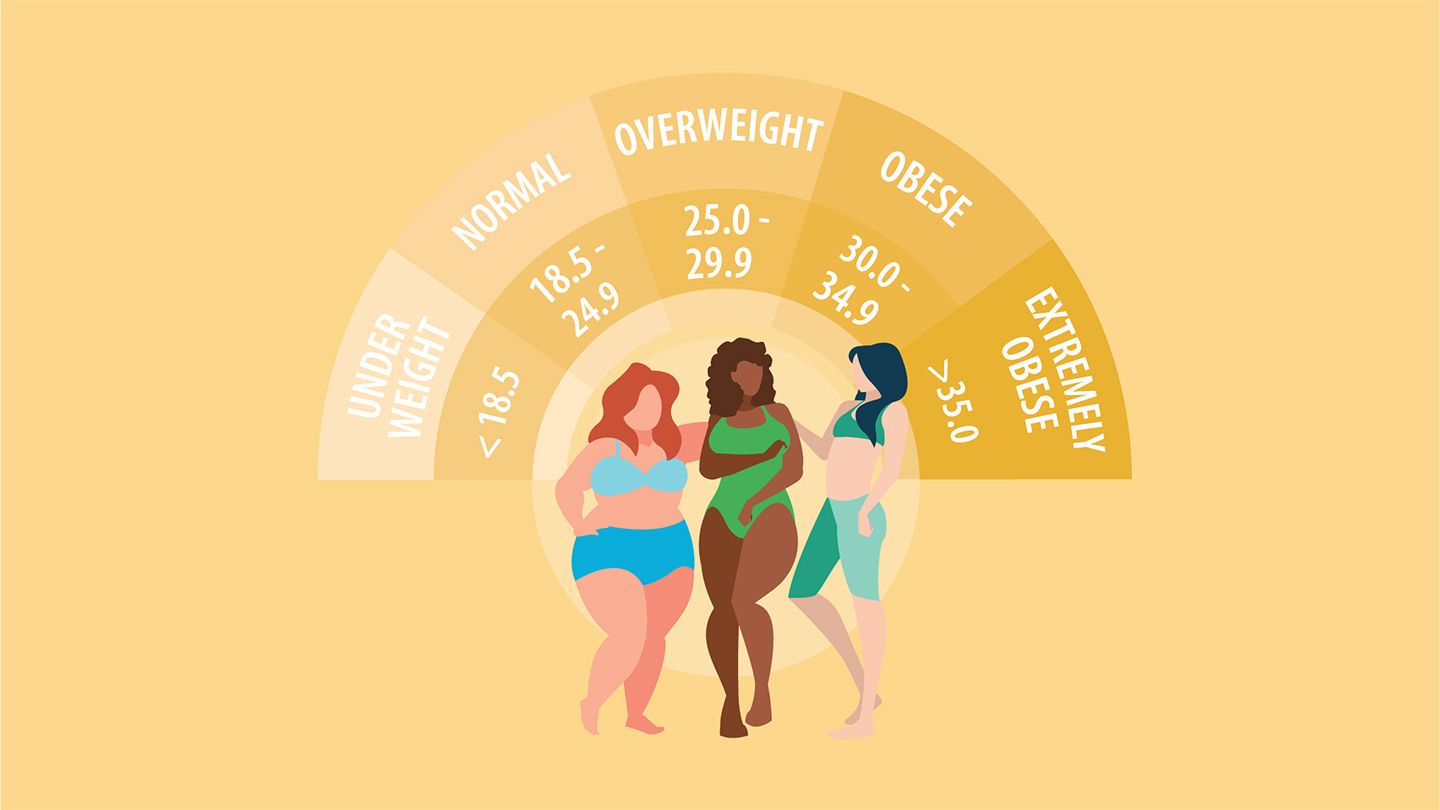
The World Health Organization’s (WHO) recommended healthy BMI range is 18.5 – 25 for both males and females. Based on the BMI range, it is possible to find out a healthy weight for any given height.
BMI is a commonly used metric for determining IBW. It is widely used in the medical field as a quick indicator of possible health complications. Generally, the higher the BMI, the higher the chance a person will suffer from health problems such as obesity, diabetes, heart disease, and many more. It is an indicator used by doctors to advise their patients of potential health problems, especially if there is a noticeable progressive increase in their BMI, and is currently the official metric for classifying individuals according to different obesity levels.
Healthy BMI Range for Children
All the formulas above are for adults age 18 or older. For children and teens, please refer to the following BMI charts published by the Centers for Disease Control and Prevention (CDC). The CDC recommends that children maintain a BMI between the 5th and 85th percentile based on their age.
Limitations of our IBW calculator
There are limitations to all the formulas and methods. Because the formulas are designed to be as applicable to as wide a range of people as possible, they cannot be highly accurate for every single individual. The formulas factor only height and gender, and there are no considerations for physical handicaps, people on the extreme ends of the spectrum, activity levels, or muscle mass to body fat ratios, otherwise known as body composition. Our Ideal Weight Calculator is meant to be used as a general guideline based on popular formulas, and its results are not intended as strict values that a person must achieve to be considered an “ideal weight.”