Reasons for Starting Up a Business
Starting a business is rarely about one single reason. Entrepreneurs may want independence, profit, flexibility, social impact, a solution to a real customer problem, personal growth, or control over their working life. This complete RevisionTown guide explains the major reasons for business start-ups, connects them to exam-style business studies answers, and includes a practical decision tool to help students evaluate whether a start-up idea has a strong purpose.
Quick Answer: Why Do People Start Businesses?
People start businesses because they want to create value for customers and capture part of that value as income, profit, freedom, reputation, growth, or impact. In business studies, the best answer does not simply say “to make money.” A stronger answer explains the entrepreneur’s motive, the customer problem, the market opportunity, the resources required, the risks involved, and the likely objectives of the new business.
A start-up is a newly created business that begins operations by selling goods or services. It may be run by a sole trader, a partnership, a private limited company, a franchisee, a social enterprise, or another structure. The reason for starting up affects almost every decision: the product, price, marketing, location, staffing, finance, risk level, growth target, and legal form. For example, a person who starts a business to earn a stable family income may keep it small and local. A founder who starts a business because they have discovered a scalable technology may seek investors, hire staff, and aim for rapid expansion.
Interactive Start-up Reason Strength Checker
Use this simple revision tool to test whether a business start-up reason is commercially strong. It does not replace a full business plan, but it helps students think like entrepreneurs. Rate each factor from 1 to 5, where 1 is weak and 5 is strong.
The tool uses this weighted formula: \[ \text{Start-up Reason Score} = (0.25M + 0.20P + 0.20R + 0.15S + 0.10F + 0.10I) \times 20 \] where \(M\) is market need, \(P\) is personal motivation, \(R\) is realistic resources, \(S\) is skill fit, \(F\) is financial potential, and \(I\) is impact or innovation.
Main Reasons for Starting Up a Business
Entrepreneurs start businesses for many overlapping reasons. In real life, a founder may want freedom, income, impact, recognition and growth at the same time. In examinations, these reasons should be explained clearly and linked to benefits, risks and objectives. The following sections give a complete student-friendly breakdown.
To Earn Profit
Profit is one of the most common reasons for starting a business. Profit is the financial reward left after business costs have been paid. A person may believe that they can sell a product or service for more than it costs to produce, buy, market and deliver it. Profit gives the owner income, savings, expansion funds and a reward for taking risk.
The basic formula is: \[ \text{Profit} = \text{Total Revenue} - \text{Total Costs} \] If a new bakery earns \( \$8,000 \) in sales and has \( \$5,500 \) in total costs, then profit is: \[ \$8,000 - \$5,500 = \$2,500 \]
However, profit should not be treated as guaranteed. Many start-ups face high early costs, low awareness, cash-flow pressure and strong competition. A strong exam answer should mention that profit is a motive but also explain that new businesses may need time before they become profitable.
To Be Independent
Independence means the owner wants control over their work, decisions, time and direction. Some people start a business because they do not want to work under a manager. They may want to choose their own products, opening hours, brand style, pricing method, suppliers and customer experience.
This reason is common among sole traders, freelancers, consultants, designers, developers, tutors, creators and local service providers. The benefit is freedom. The risk is responsibility. The owner cannot blame another department if sales fall, customers complain, or cash runs out. Independence gives control, but it also increases pressure.
To Turn a Hobby into Income
Many businesses begin from hobbies. A person who enjoys baking, coding, photography, teaching, fitness, crafts, gaming, design, gardening or repairing devices may discover that other people are willing to pay for the outcome. Turning a hobby into a business can increase motivation because the founder already enjoys the activity.
The challenge is that a hobby and a business are not the same. A hobby is done for enjoyment. A business must satisfy customers, control costs, promote itself, meet deadlines and handle records. A good start-up reason becomes stronger when the owner combines passion with business discipline.
To Fill a Gap in the Market
A market gap exists when customers have a need that existing businesses are not meeting well. This could be a missing product, poor quality, high prices, slow service, inconvenient location, weak customer support or lack of personalisation. Entrepreneurs often notice these problems because they experience them personally.
For example, a student may start an online revision business because existing notes are expensive, confusing or not aligned with the syllabus. A parent may start a healthy lunch service because local schools do not offer suitable vegetarian options. A developer may create an app because current tools are too complicated for small businesses.
To Use Skills and Experience
Some entrepreneurs start businesses because they already have valuable skills. A chef may open a catering service. A teacher may start tutoring. A mechanic may open a repair garage. A full-stack developer may build software products for clients. Skills reduce start-up risk because the owner understands the work, customer expectations and quality standards.
Skill alone is not enough. A business owner also needs marketing, pricing, record-keeping, customer service, financial planning and decision-making ability. In exam answers, explain both sides: relevant experience can help the business succeed, but weak management may still cause failure.
To Create Social Impact
Not every business is started only for private profit. Social enterprises are created to achieve a social or environmental purpose while still operating in a business-like way. Examples include affordable education, recycling, accessible healthcare support, rural employment, fair-trade products, disability inclusion, sustainable fashion and community food projects.
Social impact can become a powerful start-up reason because it creates emotional commitment and public trust. However, the business still needs revenue. A social mission does not remove the need for cash flow, cost control and operational efficiency.
To Achieve Flexibility
Flexibility means the founder wants more control over working hours, location and lifestyle. A parent may start an online store to work from home. A tutor may choose flexible lesson times. A designer may work with clients remotely. Flexible work is especially attractive when traditional employment does not fit a person’s family responsibilities, health needs, travel plans or preferred lifestyle.
The limitation is that start-ups often demand more hours at the beginning. A founder may hope for flexibility but end up working evenings, weekends and holidays until the business becomes stable.
To Build Wealth and Long-Term Value
Some entrepreneurs start businesses because they want to build an asset. A job usually provides income while the person works. A successful business may create long-term value through brand reputation, customer lists, software, intellectual property, property, contracts, systems and trained employees. The business may later be sold, franchised or expanded.
This motive is different from short-term profit. A founder may accept low early profit if the business is building a valuable brand or scalable system. In analysis questions, this can be linked to growth, reinvestment and market share.
To Respond to Redundancy or Lack of Jobs
Some businesses are started because the founder cannot find suitable employment or has lost a job. This is sometimes called necessity entrepreneurship. It may be less planned than opportunity-based entrepreneurship, but it can still succeed if the founder identifies a real customer need and manages resources carefully.
This reason is important in business studies because it shows how external conditions influence start-up activity. Economic downturns, unemployment, automation, migration and local job shortages may push people into self-employment.
To Innovate or Commercialise an Invention
Innovation means creating or improving products, services, processes or business models. A founder may start a business because they have developed a new app, device, teaching method, recipe, design, production process or service idea. Innovation can create competitive advantage because the business offers something different from existing competitors.
The challenge is uncertainty. Customers may not understand the idea immediately. Development costs may be high. Competitors may copy the idea. Strong innovation needs market research, protection of intellectual property where possible, testing, finance and clear communication.
To Serve a Local Community
Some businesses begin because a community lacks an essential service. A village may need a small grocery store, repair service, pharmacy delivery, local transport, childcare, tuition centre or digital support office. The motive may combine profit with service. Local start-ups often rely on trust, personal relationships and repeat customers.
This reason is useful in case-study answers because it connects clearly to location, target market, customer loyalty and small-scale operation.
To Continue a Family Business Tradition
Some entrepreneurs start or take over a business because their family has experience, reputation, contacts or assets in a particular trade. Family support can reduce risk because the founder may receive advice, finance, equipment, premises, supplier links or customer trust. However, family businesses can also face conflict, outdated practices and unclear decision-making.
A strong answer should show balance: family experience may help start-up survival, but the business still needs modern management, market research and financial control.
Reasons, Benefits, Risks and Exam Links
| Reason | Main Benefit | Possible Risk | Useful Exam Link |
|---|---|---|---|
| Profit and income | Owner receives financial reward and may reinvest profits. | Profit may be low or negative in the early stage. | Business objectives, revenue, costs, break-even, cash flow. |
| Independence | Founder controls decisions and working style. | Owner carries more responsibility and stress. | Sole trader, leadership, risk, unlimited liability. |
| Market gap | Customers may respond strongly if their need is unmet. | The gap may be too small or competitors may respond quickly. | Market research, target market, competition, marketing mix. |
| Social impact | Creates community value and may build trust. | Mission may be difficult to fund without enough revenue. | Social enterprise, stakeholder objectives, ethics. |
| Skill use | Founder has knowledge and can offer quality. | Technical skill does not guarantee business management skill. | Enterprise, management, training, quality control. |
| Flexibility | Owner may control working hours and location. | Start-ups often require long hours at first. | Entrepreneur motivation, opportunity cost, workload. |
| Innovation | Business may differentiate itself and charge premium prices. | High development cost and uncertain customer acceptance. | Competitive advantage, product life cycle, research and development. |
Important Business Formulas for This Topic
Even though “reasons for starting up a business” is mostly a theory topic, strong business students use numerical evidence when evaluating whether a reason is realistic. The following formulas help connect motives to business viability.
1. Profit
\[ \text{Profit} = \text{Total Revenue} - \text{Total Costs} \] Profit matters because it shows whether the start-up can reward the owner after paying expenses.
2. Revenue
\[ \text{Total Revenue} = \text{Price per Unit} \times \text{Quantity Sold} \] A founder may have a strong reason, but the business still needs enough paying customers.
3. Total Cost
\[ \text{Total Cost} = \text{Fixed Costs} + \text{Variable Costs} \] Start-ups must understand both costs that stay the same and costs that rise with output.
4. Break-even Output
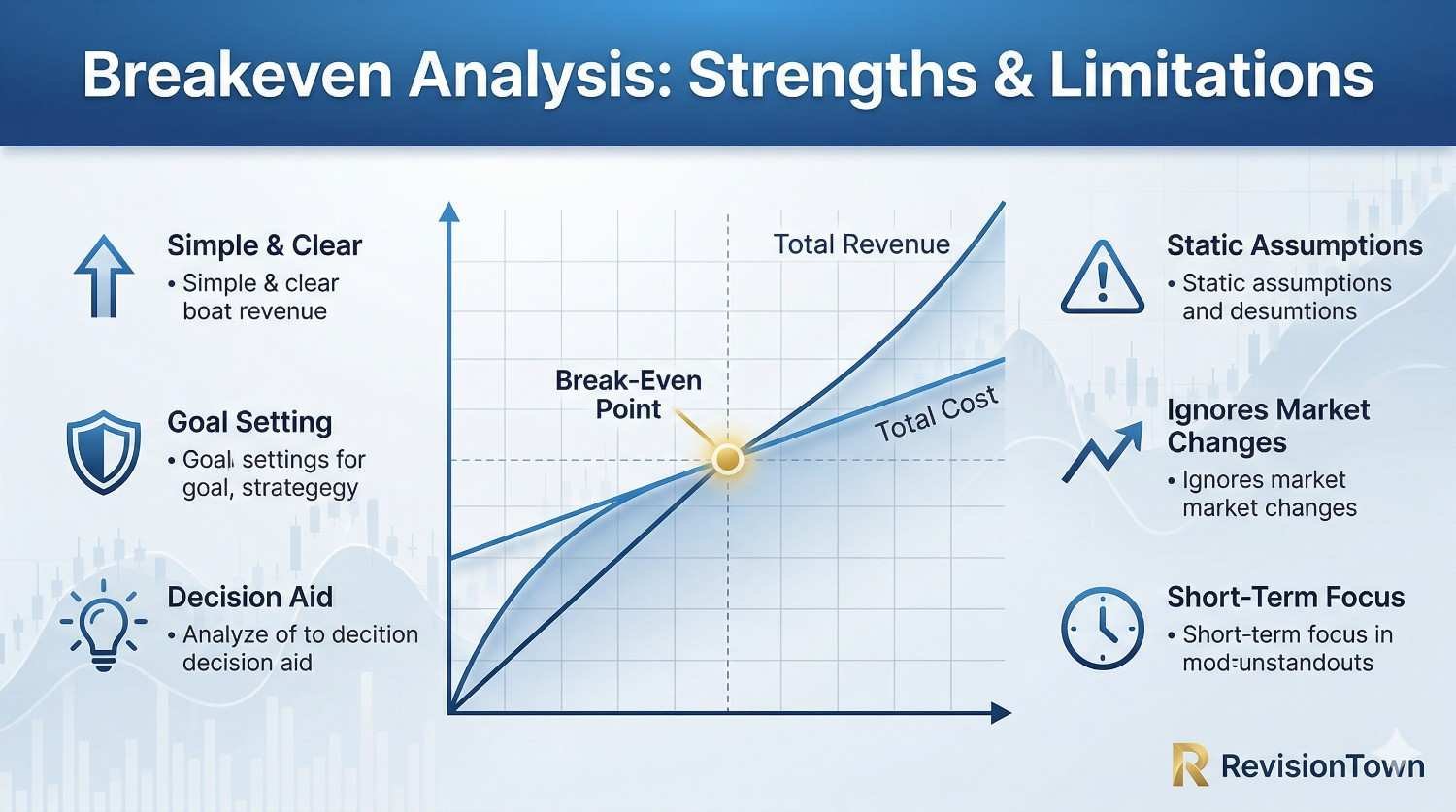
\[ \text{Break-even Output} = \frac{\text{Fixed Costs}}{\text{Selling Price per Unit} - \text{Variable Cost per Unit}} \] Break-even helps an entrepreneur judge whether the sales target is realistic.
5. Market Share
\[ \text{Market Share} = \frac{\text{Business Sales}}{\text{Total Market Sales}} \times 100 \] A founder who wants growth may measure success by market share, not only profit.
6. Return on Investment
\[ \text{ROI} = \frac{\text{Net Profit}}{\text{Investment}} \times 100 \] ROI helps compare whether starting the business is worth the money invested.
How Reasons Connect to Business Objectives
A reason is the founder’s motive for starting. An objective is the target the business wants to achieve. These are connected, but they are not identical. A person may start a business for independence, but the first objective may be survival. Another person may start because they spotted a market gap, but the objective may be rapid growth or high market share.
| Start-up Reason | Likely First Objective | Later Objective | Example |
|---|---|---|---|
| Need income after losing a job | Survival and cash flow | Stable profit | A driver starts a local delivery service. |
| Turn a hobby into income | Test demand | Profit and customer loyalty | A baker sells cakes online before opening a shop. |
| Fill a market gap | Launch product and win customers | Growth and market share | A student creates affordable digital revision notes. |
| Create social impact | Serve target group | Financial sustainability and impact scale | A social enterprise provides low-cost tutoring. |
| Commercialise innovation | Prototype and test | Investment, expansion and brand protection | A developer launches an AI study-planning app. |
In Cambridge-style Business Studies answers, this link matters because candidates are often expected to move beyond definitions. A high-quality answer explains the reason, applies it to the business, analyses the likely effect and then makes a justified judgement. For example, if a business is started for social impact, the student could explain that the founder may accept lower profit margins in order to keep prices affordable. However, the business still needs enough revenue to cover costs, otherwise it may fail to continue helping the community.
Opportunity Entrepreneurs vs Necessity Entrepreneurs
Opportunity Entrepreneurship
Opportunity entrepreneurs start businesses because they see a promising market opportunity. They may have a new idea, a better product, a cheaper method, a stronger brand, a new technology or a clearer understanding of customer needs. Their reason is often proactive: they choose to start because they believe the idea can succeed.
Common examples include a new app, an online tutoring platform, a premium food brand, a local delivery service, a sustainable clothing shop or a specialist repair business.
Necessity Entrepreneurship
Necessity entrepreneurs start businesses because other options are limited. They may be unemployed, underemployed, dissatisfied with available jobs or unable to find work that fits their situation. Their reason is often defensive: they need income or independence because employment is not available or suitable.
This type of start-up can still succeed, but the founder must avoid rushing. Market research, cash-flow planning and cost control remain essential.
Exam Course Guidance: Cambridge IGCSE Business Studies 0450
This topic fits strongly within “Understanding business activity,” especially enterprise, entrepreneurs, business objectives, business growth, business size and forms of business organisation. Students should understand why people start businesses, why some businesses remain small, why some grow, and why some fail. They should also connect motives to risk, reward, ownership, finance and decision-making.
| Course Area | What Students Should Know | How This Page Helps |
|---|---|---|
| Enterprise and entrepreneurs | Reasons for starting up, risk-taking, initiative, independence and innovation. | Explains motives and gives practical examples. |
| Business objectives | Survival, profit, growth, market share and social objectives. | Links motives to short-term and long-term objectives. |
| Business size and growth | Why owners expand or remain small; problems linked to growth. | Shows how personal motives affect growth decisions. |
| Business failure | Liquidity problems, weak management, poor research and external changes. | Explains why strong reasons still need planning. |
| Forms of organisation | Sole trader, partnership, limited companies, franchises and public sector organisations. | Connects start-up reason to legal structure choice. |
Assessment Structure
Cambridge IGCSE Business Studies 0450 uses two externally assessed papers. Paper 1 is Short Answer and Data Response. Paper 2 is Case Study. Each paper is 1 hour 30 minutes, worth 80 marks, and contributes 50% of the qualification. Students should practise both short knowledge questions and longer applied judgement questions.
| Paper | Time | Marks | Weight | Question Style |
|---|---|---|---|---|
| Paper 1 | 1 hour 30 minutes | 80 marks | 50% | Short answers and structured data response questions. |
| Paper 2 | 1 hour 30 minutes | 80 marks | 50% | Case study questions based on a business insert. |
Grade and Score Guidance
Cambridge reports grades from A* to G for this syllabus. Exact grade thresholds are not fixed in advance because they may vary by paper difficulty and exam series. Therefore, students should not rely on a single raw-mark prediction. A practical revision target is to aim for secure understanding, accurate definitions, strong application to case context, clear analysis and justified evaluation.
| Practice Performance Band | What It Usually Shows | Improvement Focus |
|---|---|---|
| Basic | Definitions are partly correct, but answers are general and lack context. | Learn key terms and add specific business examples. |
| Developing | Some application is present, but analysis is short or repeated. | Use “because”, “therefore” and “this means” to build chains of reasoning. |
| Secure | Answers explain effects on the business and stakeholders. | Add balance, limitations and relevant calculations where possible. |
| Excellent | Answers are contextual, analytical and end with justified decisions. | Practise judgement questions under timed conditions. |
Next Exam Timetable Guidance
Cambridge Business Studies 0450 is available in the June and November series, and also in the March series in India. Exact paper dates vary by administrative zone. Students should check the timetable for their centre’s zone and confirm final dates with the school exams officer. For a live website page, the safest wording is: “Check the official Cambridge timetable for your administrative zone before planning final revision dates.”
How to Answer Exam Questions on This Topic
Questions about reasons for starting a business may appear as definition, explanation, analysis or judgement questions. The command word changes the level of detail required. A student who treats every question like a definition will lose marks on analysis and evaluation questions.
| Command Word | What to Do | Example Answer Starter |
|---|---|---|
| Identify | Name one reason clearly. | One reason is to earn profit. |
| Define | Give a precise meaning. | A start-up is a new business that begins trading. |
| Outline | Give the main point with brief detail. | A person may start a business to be independent, meaning they can make their own decisions. |
| Explain | Make the relationship clear and support with relevant evidence. | The owner may want independence because this allows them to choose products and opening hours. |
| Justify | Support a decision using evidence and argument. | This is the best reason because the market gap is clear and customers are likely to pay. |
| Consider | Review options and make a balanced judgement. | Although profit is important, survival may be the more realistic first objective. |
Sample 6-Mark Style Answer
Question: Explain two reasons why a person may start a small business.
A person may start a small business to earn profit. If the owner has found a product that customers want and can sell it for more than the cost of making or buying it, the business can provide income. This may be attractive because the owner receives the financial reward from their own effort.
Another reason is independence. The owner may want to make their own decisions about opening hours, prices, products and customer service instead of working for an employer. This can increase motivation because the owner has control over the business direction, although it also means they carry more risk.
Sample 8-Mark Judgement Answer
Question: Do you think making profit is always the most important reason for starting a business? Justify your answer.
Profit is important because a business needs enough revenue to cover its costs and reward the owner. Without profit, the owner may not be able to continue trading, repay loans or reinvest in equipment and marketing. For many entrepreneurs, profit is the main reason because they need personal income and want a return for taking risk.
However, profit may not always be the most important reason. Some entrepreneurs start a business for independence, social impact, flexibility or to solve a customer problem. For example, a social enterprise may prioritise affordable prices and community benefits, while a family business may focus on long-term survival and reputation. In the early stage, survival and positive cash flow may be more urgent than high profit.
Overall, profit is usually essential for long-term survival, but it is not always the only or most important start-up reason. The best judgement depends on the owner’s aims, the market, the legal form and the business stage.
Why Start-up Reasons Affect Business Decisions
The reason for starting a business influences practical decisions. A founder who wants independence may prefer a sole trader structure, even if this limits growth. A founder who wants rapid expansion may form a limited company to raise finance and reduce personal risk. A founder who wants social impact may choose a social enterprise model and measure success through both financial and social results.
Finance Decisions
A lifestyle business may use personal savings and grow slowly. A technology start-up may need investors, loans, grants or crowdfunding. The more ambitious the reason, the more carefully finance must be planned.
Marketing Decisions
A business started to fill a market gap must communicate the gap clearly. Marketing should explain why the new product is better, cheaper, faster, more ethical, more convenient or more specialised.
Human Resource Decisions
A small independence-focused business may avoid hiring staff at first. A growth-focused business may need employees early, creating recruitment, training and leadership responsibilities.
Operations Decisions
A start-up based on quality may choose premium materials and slower production. A start-up based on low price may focus on efficiency, bulk buying and cost control.
Common Mistakes Students Make
- Writing only “to make money”: this is too basic unless it is explained with revenue, costs, risk and reward.
- Ignoring the case study: answers must link to the business type, owner, product, market or problem given.
- Confusing reason and objective: a reason is why the business starts; an objective is what it aims to achieve.
- Forgetting risk: entrepreneurship includes uncertainty, possible losses and responsibility.
- No evaluation: longer answers should compare reasons and make a justified judgement.
- No financial logic: even passion-based businesses need cash flow, sales and cost control.
Complete Revision Summary
The reasons for starting up a business include profit, independence, flexibility, personal interest, using skills, filling a market gap, innovation, social impact, job creation, family tradition, dissatisfaction with employment and community service. These reasons are important because they shape business objectives and decisions. A founder who wants profit may focus on pricing and cost control. A founder who wants independence may remain small. A founder who wants growth may seek finance and hire staff. A founder who wants social impact may balance revenue with ethical goals.
The strongest business studies answers explain not only the reason but also the consequence. For example, if a business is started because the owner has found a market gap, this may increase the chance of sales because customers are not fully satisfied by existing competitors. However, market research is needed to prove that the gap is large enough and that customers are willing to pay. This balanced style shows knowledge, application, analysis and evaluation.
Students should also connect the topic to business survival. Many start-ups fail because the founder has weak management skills, poor cash-flow control, limited finance, inadequate market research or strong competition. A good reason creates motivation, but motivation alone is not enough. A start-up needs a clear customer problem, a realistic product, enough finance, suitable pricing, strong promotion, reliable operations and continuous learning.
For revision, remember this simple structure: reason, context, benefit, limitation, judgement. First, name the reason. Second, apply it to the business. Third, explain the benefit. Fourth, mention a possible risk or limitation. Fifth, make a judgement if the question asks for one. This structure helps students move from simple statements to higher-quality examination answers.
How to Use This Page for Revision
- Read the quick answer and learn the difference between a start-up reason and a business objective.
- Revise the twelve main reasons and write one real-world example for each.
- Use the interactive checker to test whether a start-up idea has a strong purpose.
- Memorise the key formulas for profit, revenue, costs, break-even, market share and ROI.
- Practise the sample 6-mark and 8-mark answers, then rewrite them using a different business example.
- Use the command-word table before attempting past-paper questions.
- Check your final answer for context, analysis and judgement.
Frequently Asked Questions
What is the main reason for starting a business?
The most common reason is to earn profit or income, but it is not the only reason. Entrepreneurs may also start businesses for independence, flexibility, social impact, innovation, personal interest or to fill a gap in the market.
Is profit always the most important start-up reason?
No. Profit is essential for long-term survival, but some founders prioritise independence, social mission, flexibility or customer problem-solving. The importance of profit depends on the owner’s aims and the business model.
What is a market gap?
A market gap is an unmet or poorly met customer need. It may exist because current products are too expensive, low quality, inconvenient, unavailable or not suitable for a specific customer group.
Why do start-ups fail?
Common reasons include weak management, poor market research, lack of cash, high costs, strong competition, poor location, low demand, pricing mistakes and changes in the external business environment.
How should I answer an exam question about start-up reasons?
Name the reason, explain it, apply it to the business context, analyse the effect and add a justified judgement for longer questions. Avoid short generic answers.
Which formulas are useful for this topic?
Useful formulas include profit, revenue, total cost, break-even output, market share and return on investment. These formulas help judge whether a start-up reason is financially realistic.