
⚠️ Disclaimer: The information provided in this article is for educational purposes only and does not constitute medical advice. RevisionTown does not provide diagnosis, treatment, or medical recommendations. Always consult a qualified healthcare professional regarding any medical condition, symptoms, or concerns.
Read More – 🏥 Medical Disclaimer
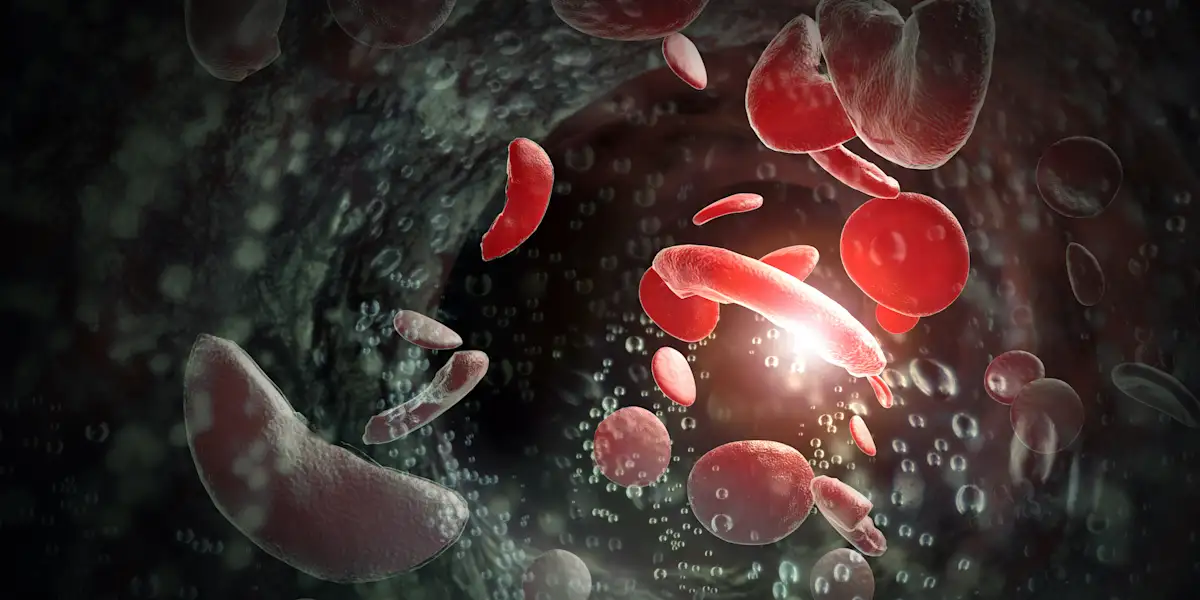
Sickle cell disease (SCD) is a group of inherited red blood cell disorders characterized by abnormal hemoglobin (called hemoglobin S or sickle hemoglobin). In this condition, the red blood cells become rigid, sticky, and are shaped like sickles or crescent moons rather than the normal disc shape. These irregularly shaped cells can get stuck in small blood vessels, which can slow or block blood flow and oxygen delivery to parts of the body.
SCD primarily affects the red blood cells, but due to its impact on blood flow and oxygen delivery, it can affect virtually every organ system in the body, including:
- Brain
- Lungs
- Heart
- Kidneys
- Liver
- Spleen (particularly vulnerable to damage)
- Bones and joints
SCD is one of the most common genetic diseases worldwide, affecting millions of people globally. It predominantly affects individuals with ancestry from sub-Saharan Africa, South America, the Caribbean, Central America, Saudi Arabia, India, and Mediterranean countries. In the United States, SCD affects approximately 100,000 Americans, occurring in about 1 out of every 365 African-American births and 1 out of every 16,300 Hispanic-American births.
The disease has significant global prevalence and impact. According to the Global Burden of Disease Study 2021, the number of people living with sickle cell disease worldwide increased by 41.4% from 5.46 million in 2000 to 7.74 million in 2021. Each year, approximately 515,000 babies are born with SCD globally, with the highest numbers in Africa, India, and the Caribbean.
The mortality burden is substantial, with an estimated 376,000 total deaths globally in 2021, placing it as the 12th leading cause of death in children under 5 years old worldwide. The reduced life expectancy in affected individuals is significant – in the United States, people with SCD live approximately 20-30 years less than the general population.
2. History & Discoveries
Sickle cell disease was first formally described in the medical literature in 1910 by Dr. James B. Herrick, a Chicago physician. Herrick observed peculiar elongated and crescent-shaped red blood cells in a blood sample from Walter Clement Noel, a 20-year-old dental student from Grenada who was experiencing symptoms of anemia.
However, it’s worth noting that the condition had been recognized in African populations long before Herrick’s formal medical description. Traditional medical practitioners in Africa had identified families with similar patterns of symptoms consistent with what we now know as SCD.
Major discoveries in the understanding of SCD include:
- 1949: Linus Pauling and colleagues demonstrated that SCD was caused by an abnormal protein in hemoglobin, establishing it as the first “molecular disease”
- 1956: Vernon Ingram identified the exact genetic mutation responsible – a single amino acid substitution (valine instead of glutamic acid) at position 6 in the beta-globin chain of hemoglobin
- 1970s: Prenatal diagnosis became possible
- 1984: First successful bone marrow transplant for SCD
- 1995: Hydroxyurea became the first FDA-approved drug for treating SCD
- 1998: FDA approved prophylactic penicillin for children with SCD to prevent pneumococcal infection
- 2017: FDA approved L-glutamine oral powder (Endari) as the second drug for SCD
- 2019: FDA approved two new drugs: voxelotor (Oxbryta) and crizanlizumab (Adakveo)
- 2023: FDA approved two gene therapies for SCD, marking a significant advancement toward curative approaches
The evolution of medical understanding has progressed from initial observation and description to molecular characterization, and now to targeted therapies and potential cures.
3. Symptoms
Early Symptoms:
- Painful swelling of the hands and feet (dactylitis), often the first symptom in infants
- Fatigue and irritability from anemia
- Jaundice (yellowing of the skin and eyes)
- Frequent infections
- Delayed growth and development
Common Symptoms:
- Pain episodes or crises (acute, severe pain occurring suddenly when sickled cells block blood flow)
- Chronic pain in various body parts
- Fatigue and weakness due to anemia
- Shortness of breath
- Dizziness
- Headaches
- Cold hands and feet
- Pale skin and mucous membranes
Rare or Advanced Symptoms:
- Priapism (painful, prolonged erection)
- Leg ulcers
- Aseptic necrosis (death of bone tissue due to lack of blood supply)
- Retinopathy and vision problems
- Delayed puberty
- Hyposplenism (reduced spleen function) or autosplenectomy (self-destruction of the spleen)
Progression Over Time: Symptoms typically appear in the first year of life, often after 4 months of age when fetal hemoglobin levels decrease. The severity and frequency of symptoms can vary greatly among individuals.
The disease typically follows a chronic course with acute exacerbations:
- Early childhood: Dactylitis, splenic sequestration, and increased susceptibility to infections are common
- Later childhood and adolescence: Pain crises become more frequent, and chronic organ damage begins to manifest
- Adulthood: Chronic organ damage progresses, affecting the kidneys, heart, lungs, and other systems
- With age, chronic pain may become more prominent than acute pain crises
The pattern and severity of symptoms depend on the specific type of SCD, with sickle cell anemia (HbSS) typically being more severe than other forms like HbSC or HbS beta-thalassemia.
4. Causes
Biological Causes: Sickle cell disease is caused by mutations in the HBB gene, which provides instructions for making beta-globin, a protein component of hemoglobin. Hemoglobin is the molecule in red blood cells that carries oxygen from the lungs to tissues throughout the body.
The most common mutation in SCD leads to the production of abnormal hemoglobin S (HbS) instead of normal adult hemoglobin (HbA). When oxygen levels are low, HbS molecules can polymerize (stick together), causing the red blood cell to become rigid and assume a sickle or crescent shape.
Genetic and Hereditary Factors: SCD is an autosomal recessive disorder, meaning an individual must inherit two abnormal copies of the gene (one from each parent) to have the disease.
There are several types of SCD, depending on the specific mutations inherited:
- Sickle cell anemia (HbSS): Inherit two sickle cell genes (“S”), one from each parent. This is usually the most severe form.
- Sickle-hemoglobin C disease (HbSC): Inherit one sickle cell gene (“S”) from one parent and one abnormal hemoglobin C gene (“C”) from the other. This is typically a milder form.
- Sickle beta-plus thalassemia: Inherit one sickle cell gene and one gene for beta-thalassemia. Severity varies.
- Sickle beta-zero thalassemia: Inherit one sickle cell gene and one gene for a type of beta-thalassemia that prevents any normal hemoglobin production. This is usually severe.
When only one sickle cell gene is inherited (along with a normal gene), the condition is called sickle cell trait (HbAS). People with sickle cell trait are generally healthy carriers who don’t experience symptoms but can pass the gene to their children.
Triggers and Environmental Factors: While the genetic mutation is present from birth, certain triggers can precipitate sickling of red blood cells and symptoms:
- Low oxygen levels (high altitude, strenuous exercise, anesthesia)
- Dehydration
- Extreme temperatures (especially cold)
- Infections and illnesses
- Stress
- Alcohol consumption
- Certain medications
These triggers can vary among individuals, and over time, patients often learn their personal triggers and how to avoid them.
5. Risk Factors
Demographic Risk Factors:
- Ancestry: SCD predominantly affects people with ancestry from regions where malaria is or was common, including:
- Sub-Saharan Africa (highest prevalence in Nigeria, Democratic Republic of Congo, and Tanzania)
- South America and the Caribbean
- Middle East (particularly Saudi Arabia)
- Mediterranean countries (Turkey, Greece, Italy)
- India (has a large SCD population)
- Age: While SCD is present from birth, symptoms and complications vary by age group
- Gender: Some complications are gender-specific (e.g., priapism in males, pregnancy complications in females), but overall incidence is equal between genders
Genetic Risk Factors:
- Family history: If both parents have sickle cell trait (HbAS), there is a 25% chance with each pregnancy that the child will have SCD
- Carrier rates: In some regions of Africa, the prevalence of sickle cell trait is as high as 20-30%, and up to 45% in parts of Uganda
- Malaria protection: The sickle cell gene persists in certain populations because carriers (people with sickle cell trait) have some protection against malaria
- Consanguinity: Marriage between relatives can increase the risk in communities where the sickle cell gene is present
Environmental and Occupational Factors:
- Living at high altitude can exacerbate symptoms due to lower oxygen levels
- Occupations involving extreme temperatures, dehydration, or physical exertion may pose challenges
- Limited access to specialized medical care can affect disease management and outcomes
Impact of Pre-existing Conditions:
- Other hemoglobinopathies or genetic conditions affecting red blood cells can modify the severity of SCD
- Nutritional deficiencies, particularly folic acid, can worsen anemia
- Chronic infections, especially in children, can exacerbate SCD complications
6. Complications
Acute Complications:
- Vaso-occlusive crisis (pain crisis): Occurs when sickled cells block blood flow, causing severe pain in the affected area. These can last hours to days and often require hospitalization.
- Acute chest syndrome: A severe and potentially life-threatening condition characterized by chest pain, fever, and respiratory symptoms due to lung inflammation and damage.
- Splenic sequestration: Rapid enlargement of the spleen due to trapped blood, leading to severe anemia and potentially life-threatening shock.
- Stroke: SCD increases the risk of ischemic stroke, especially in children, due to blocked blood vessels in the brain.
- Priapism: Painful, prolonged erection lasting more than four hours that can lead to permanent erectile dysfunction if not promptly treated.
- Infections: Increased susceptibility to severe bacterial infections, particularly in children with functional asplenia.
Chronic Complications and Organ Damage:
- Pulmonary hypertension: High blood pressure in the lungs, a potentially fatal complication.
- Chronic kidney disease: Progressive damage to the kidneys due to sickled cells blocking blood vessels.
- Avascular necrosis: Death of bone tissue, particularly in the hip and shoulder joints, due to compromised blood supply.
- Retinopathy: Damage to the retina that can lead to vision impairment or blindness.
- Leg ulcers: Chronic, painful sores on the lower legs that are difficult to heal.
- Gallstones: Common due to excessive breakdown of red blood cells and increased bilirubin production.
- Cardiac complications: Heart enlargement and heart failure due to chronic anemia and increased cardiac workload.
- Delayed growth and puberty in children.
- Neurological complications: Silent strokes, cognitive impairment, and seizures.
Long-term Impact and Prognosis: The long-term impact of SCD varies greatly among individuals. With advances in medical care, life expectancy has improved significantly over the past few decades. In high-income countries, many individuals with SCD now live into their 50s, 60s, and beyond, though this is often accompanied by chronic health issues and reduced quality of life.
Mortality rates vary by region and access to healthcare. Without treatment, severe forms of SCD can lead to early death, often in childhood in resource-limited settings. In some parts of Africa, the majority of children with severe SCD die before age 5. With comprehensive care, the outlook is much more favorable, though still associated with reduced life expectancy compared to the general population.
7. Diagnosis & Testing
Newborn Screening:
- Hemoglobin electrophoresis: Separates different types of hemoglobin to identify abnormal forms.
- Isoelectric focusing: A variant of electrophoresis that can detect various hemoglobin types.
- High-performance liquid chromatography (HPLC): Provides quantitative analysis of different hemoglobin types.
Many countries and all U.S. states now include SCD in routine newborn screening programs, allowing for early detection and intervention before symptoms develop.
Diagnostic Tests for Suspected SCD:
- Complete blood count (CBC): Reveals anemia, elevated white blood cell count, and other blood abnormalities.
- Peripheral blood smear: Microscopic examination of blood to identify sickled red blood cells.
- Hemoglobin electrophoresis or HPLC: Confirms the presence and quantifies abnormal hemoglobin.
- Genetic testing: DNA analysis to identify specific mutations in the beta-globin gene.
Prenatal Diagnosis:
- Chorionic villus sampling (CVS): Performed at 10-12 weeks of pregnancy.
- Amniocentesis: Typically performed at 15-20 weeks of pregnancy.
- Preimplantation genetic diagnosis: Can be used with in vitro fertilization before pregnancy.
Tests for Complications and Monitoring:
- Transcranial Doppler ultrasonography: Screens for stroke risk in children with SCD.
- Echocardiogram: Assesses heart function and screens for pulmonary hypertension.
- Pulmonary function tests: Evaluate lung function.
- Comprehensive metabolic panel: Monitors kidney and liver function.
- Urinalysis: Screens for kidney damage.
- MRI/MRA of the brain: Detects silent strokes or other cerebrovascular complications.
- Ophthalmologic examination: Screens for retinopathy.
Effectiveness of Early Detection: Early detection through newborn screening has dramatically improved outcomes by enabling prophylactic measures like penicillin therapy to prevent life-threatening infections. It also allows for parent education, enrollment in comprehensive care programs, and early intervention for complications.
The sensitivity and specificity of newborn screening tests are generally high, though follow-up confirmatory testing is always recommended. Prenatal diagnosis accuracy approaches 100% but carries small procedural risks.
8. Treatment Options
Standard Care Protocols:
- Comprehensive care through specialized sickle cell centers combining hematology, primary care, and multiple specialties
- Regular checkups and monitoring for complications
- Vaccinations, including pneumococcal, meningococcal, Haemophilus influenzae type b, and annual influenza vaccines
- Prophylactic antibiotics (usually penicillin) for children up to age 5 years to prevent pneumococcal infections
- Pain management protocols for both acute and chronic pain
- Blood transfusions when needed
Medications:
- Hydroxyurea (Droxia, Siklos): Increases production of fetal hemoglobin (HbF), which inhibits sickling. Reduces frequency of painful crises, acute chest syndrome, and need for blood transfusions.
- L-glutamine oral powder (Endari): Reduces oxidative stress in red blood cells, decreasing sickling and pain crises.
- Voxelotor (Oxbryta): Prevents hemoglobin from clumping and red blood cells from sickling by binding to hemoglobin and increasing its affinity for oxygen.
- Crizanlizumab (Adakveo): Blocks P-selectin, a protein that contributes to cell adhesion and pain crises.
- Pain medications: From non-opioids for mild pain to opioids for severe pain crises.
- Iron chelators (like deferasirox): For patients receiving chronic transfusions to prevent iron overload.
Procedures and Therapies:
- Blood transfusions: Simple or exchange transfusions to increase normal hemoglobin and reduce the percentage of sickled cells.
- Hematopoietic stem cell transplantation (HSCT): Currently the only established curative therapy, most effective in children with severe SCD and a matched sibling donor.
- Chronic red cell exchange: Regularly replacing sickled cells with healthy donor cells.
- Physical therapy: To address joint and bone complications.
- Psychological therapy: For coping with chronic illness and pain management.
Emerging Treatments and Clinical Trials:
- Gene therapy: Approaches include adding a functional beta-globin gene, correcting the mutated gene, or increasing fetal hemoglobin production through genetic modifications.
- Gene editing using CRISPR-Cas9 technology: Clinical trials are underway to edit the patient’s own stem cells to produce fetal hemoglobin or correct the sickle mutation.
- Novel pharmaceutical agents: Several drugs targeting different aspects of SCD pathophysiology are in development or early clinical trials.
- Alternative donor transplantation: Expanding transplant options beyond matched sibling donors.
- Novel pain management approaches: Including new medications and non-pharmacological interventions.
Treatment decisions are individualized based on disease severity, complications, age, and other patient factors. The development of new therapies has accelerated in recent years, offering hope for improved outcomes and potentially curative approaches for more patients.
In December 2023, the FDA approved two groundbreaking gene therapies for sickle cell disease in patients 12 years and older:
Casgevy (exagamglogene autotemcel) – The first FDA-approved therapy to use CRISPR-Cas9 gene editing technology. It works by modifying a patient’s blood stem cells to increase the production of fetal hemoglobin, which prevents red blood cell sickling.
Lyfgenia (lovotibeglogene autotemcel) – A cell-based gene therapy that uses a lentiviral vector to add a functional gene that produces a therapeutic hemoglobin that functions similarly to normal adult hemoglobin.
While these therapies represent major breakthroughs, they are extremely expensive (approximately $2.2-3.1 million per treatment) and require complex procedures including chemotherapy conditioning, making them inaccessible to many patients.
Research continues to advance with several new approaches in clinical trials:
- Non-viral CRISPR delivery methods that may be safer than current approaches
- Oral therapies that could trigger fetal hemoglobin expression without requiring cell extraction and transplantation
- New approaches to reduce the burden of chemotherapy needed for gene therapies
- Research into making treatment more accessible globally
9. Prevention & Precautionary Measures
Primary Prevention: Since SCD is a genetic disorder, true primary prevention currently involves:
- Genetic counseling for individuals with sickle cell trait or disease regarding reproductive risks
- Prenatal testing to identify affected pregnancies
- Preimplantation genetic diagnosis with in vitro fertilization to select unaffected embryos
- Population screening programs to identify carriers
Secondary Prevention (Preventing Complications):
- Newborn screening for early diagnosis and intervention
- Prophylactic penicillin in children up to age 5 years to prevent pneumococcal infections
- Comprehensive vaccination schedule
- Transcranial Doppler screening in children to identify stroke risk
- Regular health maintenance and monitoring for early detection of complications
- Hydroxyurea therapy to reduce vaso-occlusive crises and other complications
Lifestyle and Environmental Precautions:
- Maintaining hydration: Drinking plenty of fluids, especially during hot weather, illness, or physical activity
- Avoiding extreme temperatures: Particularly cold, which can trigger vaso-occlusive crises
- Moderate exercise with proper hydration and rest periods
- Avoiding high-altitude locations without proper preparation and medical consultation
- Infection prevention: Good hygiene practices and avoiding sick contacts
- Stress management techniques and adequate rest
- Balanced nutrition with folic acid supplementation
- Avoiding smoking and excessive alcohol consumption
Education and Self-Management:
- Patient and family education about disease management
- Recognition of early signs of complications requiring medical attention
- Self-care strategies for pain management
- Transition programs from pediatric to adult care
- Support groups and psychosocial resources
While SCD cannot be prevented in those who inherit two abnormal genes, many of its complications can be prevented or minimized through comprehensive care and appropriate precautions.
10. Global & Regional Statistics
According to the Global Burden of Disease Study 2021, the number of people living with sickle cell disease worldwide increased by 41.4% from 5.46 million in 2000 to 7.74 million in 2021. The global prevalence continues to rise primarily due to population growth in regions with high carrier rates.
Global Incidence:
- Each year, approximately 515,000 babies are born with SCD globally
- The highest birth rates of SCD are in sub-Saharan Africa, particularly Nigeria, Democratic Republic of Congo, and Tanzania
- In countries such as Cameroon, Republic of Congo, Gabon, Ghana, and Nigeria, the prevalence of sickle cell trait is between 20-30%, while in some parts of Uganda, it is as high as 45%
Regional Distribution:
- Sub-Saharan Africa has the highest prevalence, with 500-2,000 cases per 100,000 births in many countries
- Caribbean and parts of South America: 20-1,000 cases per 100,000 births
- India has a significant SCD population, though prevalence varies by region
- Mediterranean countries (Turkey, Greece, Italy): Lower prevalence but still significant
- United States: Approximately 100,000 people affected, with 1 in 365 African American births and 1 in 16,300 Hispanic American births
- United Kingdom: Approximately 15,000 people affected
Mortality Rates:
- The Global Burden of Disease Study 2021 estimated 376,000 total SCD-related deaths globally in 2021
- In children under 5 years of age, there were 81,100 deaths, ranking SCD as the 12th leading cause of death in this age group worldwide
- In low-resource settings, particularly in Africa, the majority of children with severe forms of SCD die before age 5
- In high-income countries, life expectancy has improved significantly but remains 20-30 years below population averages
Healthcare Disparities:
- Access to specialized care varies dramatically by country and region
- In high-resource countries, advances in care have led to most patients surviving into adulthood
- In low-resource settings, lack of newborn screening, prophylactic antibiotics, and comprehensive care contributes to high childhood mortality
- Even within high-income countries, disparities in access to care and newer therapies persist
These statistics highlight the substantial global burden of SCD and the critical need for improved diagnosis, treatment, and access to care worldwide.
11. Recent Research & Future Prospects
Recent Advancements in Treatment:
The most significant recent breakthrough has been the FDA approval of two gene therapies for SCD in December 2023:
Casgevy (exagamglogene autotemcel): The first CRISPR-based gene therapy approved for human use. It edits blood stem cells to increase fetal hemoglobin production, reducing sickling and pain crises. In clinical trials, 29 of 31 patients showed freedom from pain crises after treatment.
Lyfgenia (lovotibeglogene autotemcel): A lentiviral gene therapy that enables production of therapeutic hemoglobin. In clinical trials, 28 of 32 patients achieved complete resolution of vaso-occlusive events after treatment.
Other recent treatment developments include:
- In 2024, researchers reported progress on non-viral CRISPR delivery methods for SCD that could be safer than current approaches
- Development of oral therapies that trigger fetal hemoglobin expression, potentially offering less invasive alternatives to gene therapy
- Research into reducing the burden of chemotherapy needed for gene therapy through targeted antibody approaches
- Phase 2 clinical trials of mitapivat, which has shown promise in decreasing red blood cell sickling and breakdown
However, there have also been setbacks, including the 2024 voluntary withdrawal of voxelotor (Oxbryta) by Pfizer due to safety concerns in ongoing trials.
Ongoing Research:
Several clinical trials are underway exploring new approaches to SCD treatment:
- The University of California (UC) research consortium launched a trial in 2024 using non-viral CRISPR-Cas9 gene editing to directly correct the mutation that causes SCD
- The BENeFiTS trial (estimated completion in December 2024) is evaluating benserazide as a potential HbF inducer for SCD patients
- NHLBI’s Sickle Cell Branch is investigating therapies to improve hemoglobin levels and reduce sickling
- The SCD–CARRE trial is testing monthly automated exchange transfusions to reduce serious complications and prevent hospitalization
- Multiple trials are exploring improved approaches to pain management, including arginine supplementation to reduce inflammation during pain crises
Future Directions:
The future of SCD research and treatment is focused on several promising areas:
- In vivo gene editing: Moving from ex vivo (outside the body) to in vivo (inside the body) editing, potentially making treatment more accessible
- Alternative donor transplantation: Expanding transplant options beyond matched sibling donors
- Novel pharmaceutical agents: Developing drugs targeting different aspects of SCD pathophysiology
- Accessibility of curative therapies: Working to reduce costs and complexity of gene therapies
- Improved clinical trial endpoints: Developing better measures of disease improvement beyond pain crises
- Global health approaches: Expanding research and treatment access in high-prevalence, resource-limited regions
While significant challenges remain, particularly around accessibility and affordability of new therapies, the unprecedented pace of scientific advancement offers genuine hope for transformative improvements in SCD care in the coming years.
12. Interesting Facts & Lesser-Known Insights
Evolutionary Advantage of Sickle Cell Trait: One of the most fascinating aspects of sickle cell trait is its evolutionary selection in malaria-endemic regions. Individuals with sickle cell trait (HbAS) have a survival advantage against severe malaria, particularly Plasmodium falciparum malaria. This protective effect explains why the sickle cell gene is prevalent in regions where malaria has been historically common. The malaria parasite has difficulty reproducing in sickled cells, and those cells are more readily removed from circulation by the spleen. This represents one of the clearest examples of natural selection in humans.
Variable Disease Expression: Not all individuals with identical SCD genotypes experience the same disease severity. Some patients with sickle cell anemia (HbSS) have relatively mild disease with few complications, while others suffer severe and frequent crises. This variability is influenced by factors such as:
- Fetal hemoglobin (HbF) levels: Higher HbF is associated with milder disease
- Co-inheritance of alpha-thalassemia: Can reduce hemolysis but may increase risk of other complications
- Genetic modifiers: Multiple genes beyond the beta-globin locus affect disease expression
- Environmental and social determinants: Access to care, living conditions, and other factors impact outcomes
Cognitive Effects: SCD can significantly impact cognitive function, even in patients without a history of clinical stroke. Silent cerebral infarcts (brain injury without obvious symptoms) occur in up to 40% of children with SCD and are associated with cognitive impairments. These can affect academic performance and quality of life but often go unrecognized without appropriate screening and neuropsychological testing.
Pregnancy and SCD: Pregnancy in women with SCD carries increased risks for both mother and child, including higher rates of pain crises, acute chest syndrome, preeclampsia, and intrauterine growth restriction. However, with proper prenatal care and management at specialized centers, most women with SCD can have successful pregnancies. Hydroxyurea, a common SCD medication, must be discontinued before conception due to potential teratogenic effects.
Exercise and SCD: Contrary to older recommendations that cautioned against physical activity, moderate exercise is now recognized as beneficial for many SCD patients. Appropriate exercise can improve cardiovascular health, mood, and overall quality of life. The key is proper hydration, avoiding extreme temperatures, and gradual progression with monitoring. Elite athletes with sickle cell trait require special attention to hydration and exertion levels to prevent complications.
Global Disparities in Care: While life expectancy for SCD patients in high-income countries has dramatically improved (now often into the 50s-60s), in many parts of Africa, 50-90% of children born with SCD still die before age 5, often undiagnosed. This stark disparity highlights the critical importance of global health initiatives focused on SCD.
Psychosocial Impact: The unpredictable nature of SCD pain crises can lead to significant psychological distress, including anxiety, depression, and post-traumatic stress symptoms. Additionally, patients often face stigma and misunderstanding, particularly in emergency care settings where their pain may be undertreated or attributed to drug-seeking behavior. Comprehensive SCD care increasingly recognizes the importance of addressing these psychosocial aspects.
Historical Stigma: SCD has a complex history of racial stigmatization in the United States. In the early-to-mid 20th century, sickle cell carriers were sometimes denied jobs, insurance, and even entry into the military based on misinformation about the trait. This history continues to affect trust in medical institutions among some communities and highlights the importance of culturally sensitive care.
These lesser-known aspects of SCD underscore the complexity of the disease beyond its primary hematologic manifestations and emphasize the need for holistic, multidisciplinary care approaches.
Conclusion
Sickle cell disease represents a significant global health challenge affecting millions of people worldwide, with particularly high prevalence in Africa, India, the Middle East, and among people of African descent in the Americas and Europe. While historically underresearched and undertreated, recent years have seen unprecedented advances in understanding and treating this complex genetic disorder.
The approval of gene therapies in 2023 represents a paradigm shift in treatment possibilities, offering potential cures rather than just symptom management. However, significant challenges remain in making these expensive and complex therapies accessible to the majority of patients, particularly in resource-limited settings where disease burden is highest.
The future of SCD care will likely involve a multi-faceted approach combining continued improvements in supportive care, broader access to disease-modifying therapies like hydroxyurea, development of more accessible curative approaches, and greater attention to the psychosocial aspects of living with a chronic condition.
As research continues to advance and awareness grows, there is genuine hope that the next decade will bring transformative improvements in outcomes and quality of life for people with sickle cell disease worldwide.