Is It Time to Ditch the SAT?
The Great SAT Debate: Research, Policy Changes, and What Students Should Do in 2026
The SAT has become one of the most controversial topics in college admissions. After thousands of colleges went test-optional during the pandemic, many elite universities are now reinstating standardized testing requirements for 2026 and beyond. This shift has reignited the debate: Is the SAT a valuable tool for predicting college success, or an outdated barrier that perpetuates inequality?
This comprehensive guide examines both sides of the SAT debate, reviews the latest research, analyzes policy changes at top universities, and provides actionable guidance to help students make informed decisions about testing in 2026.
The Current State of SAT Testing in 2026
The landscape of standardized testing has shifted dramatically in recent years. Understanding where colleges stand on testing requirements is essential for strategic college planning.
The Test-Optional Movement
The COVID-19 pandemic accelerated a trend that had been building for years. By 2020, over 2,000 colleges adopted test-optional policies, allowing students to choose whether to submit SAT or ACT scores. Proponents argued this would level the playing field for students who lacked access to test preparation resources.
The University of California system went even further, becoming test-blind for all applicants. This means UC schools will not consider standardized test scores even if students submit them. California State University followed suit, removing testing from their admissions criteria entirely.
The Return of Required Testing
After analyzing data from test-optional admissions cycles, many elite universities concluded that standardized tests provide valuable predictive information. Starting in 2024, a wave of prestigious institutions began reinstating SAT requirements.
| University | Testing Policy (2026) | Year Reinstated |
|---|---|---|
| Harvard University | Test Required | 2024 |
| MIT | Test Required | 2024 |
| Yale University | Test Required | 2024 |
| Dartmouth College | Test Required | 2024 |
| Brown University | Test Required | 2025 |
| Stanford University | Test Required | 2025 |
| Cornell University | Test Required | 2026 |
| University of Pennsylvania | Test Required | 2026 |
| Columbia University | Test Optional | Permanent Policy |
| Princeton University | Test Optional | Under Review |
📊 The Trend: Georgetown, Caltech, University of Texas Austin, Purdue, and University of Tennessee have also reinstated testing requirements. This trend signals a growing consensus among selective institutions that standardized tests provide valuable data.
What Does the Research Say?
The debate over the SAT ultimately hinges on one question: Does it accurately predict college success? Recent research from prestigious institutions provides compelling evidence.
The Case FOR the SAT: Predictive Validity
🎓 Harvard Study: SAT Predicts Academic Success
Research from Harvard's Opportunity Insights team found that SAT and ACT scores have substantial predictive power for academic success in college, particularly at elite institutions. The standardized tests consistently identified students who would excel academically.
📚 Yale Research: Tests Outperform Other Factors
Yale researchers examined multiple predictive models and found that in every scenario, SAT and ACT scores emerged as the strongest predictor of college GPA, more reliable than high school grades, essays, or recommendation letters. This finding prompted Yale to reinstate testing requirements.
📈 College Board Validity Studies
Comprehensive studies involving over 150,000 students at dozens of institutions show that SAT scores add 15% more predictive power beyond high school GPA alone. The SAT consistently predicted cumulative college GPA across all four years, and this relationship held true for underrepresented minorities, first-generation students, and English language learners.
Key Research Findings:
- SAT scores predict first-year college GPA, retention rates, and graduation likelihood
- Students with higher SAT scores are more likely to return for sophomore year
- Combining SAT scores with GPA produces the most accurate predictions of college success
- SAT predictive validity holds across demographic groups and socioeconomic backgrounds
- Test scores help identify high-performing students from under-resourced high schools
The Case AGAINST the SAT: Equity Concerns
💰 Income Correlation
Critics point to the strong correlation between family income and SAT scores. Students from families earning over $200,000 annually score an average of 400 points higher than those from families earning under $20,000. This gap suggests the test measures privilege and access to resources rather than pure academic potential.
🎯 Test Prep Advantage
Wealthy families can afford expensive test preparation courses, private tutoring, and multiple test attempts. Premium test prep programs can cost thousands of dollars, creating an unequal playing field. Students who can't afford these resources may be competing at a disadvantage, regardless of their actual academic abilities.
📊 Demographic Disparities
Average SAT scores show persistent gaps across racial and ethnic groups. While these gaps reflect broader educational inequities rather than test bias per se, critics argue that standardized tests perpetuate systemic disadvantages by serving as gatekeepers to elite universities.
The Counter-Argument:
Defenders of the SAT note that high school grades show even greater disparities related to income and school quality. Grade inflation is more pronounced at wealthy schools, making GPAs less standardized than SAT scores. The University of California's own commissioned research found that SAT scores were more equitable predictors than grades, yet UC still went test-blind due to political pressure.
Understanding Different Testing Policies
Colleges employ various testing policies, and understanding the nuances of each is crucial for strategic application planning.
🔴 Test Required
Definition: Must submit SAT or ACT scores
Examples: Harvard, MIT, Yale, Stanford, most Ivy League schools
🟢 Test Optional
Definition: Scores reviewed if submitted; no penalty if omitted
Examples: Columbia, Princeton, NYU, University of Chicago, Northwestern
🟠 Test Flexible
Definition: Accepts SAT, ACT, AP scores, or other alternatives
Examples: Some liberal arts colleges with alternative assessment options
🔵 Test Blind
Definition: Will not consider scores even if submitted
Examples: All UC campuses (Berkeley, UCLA, etc.), California State University
The Truth About "Test Optional"
Test-optional policies sound student-friendly, but the reality is more complex. Research shows that at test-optional schools, students who submit scores above the college's median have significantly higher acceptance rates than those who don't submit scores. The policy name is somewhat misleading: scores still matter, they're just not mandatory.
Use the 50/75 rule: If your SAT score is above the 50th percentile for that school, submit it. If it's between the 50th and 75th percentile, you're competitive. If it's at or above the 75th percentile, you're in excellent shape. Scores below the 50th percentile may not strengthen your application at test-optional schools.
Should YOU Take the SAT? A Decision Framework
The decision to take or skip the SAT depends on your individual circumstances, college list, and application profile. Use this framework to make an informed choice.
Take the SAT If:
- Any target schools require testing: If even one school on your list requires SAT scores, you need to take the test. Check every college's current testing policy.
- Standardized testing is a strength: If you perform well on timed, multiple-choice assessments, the SAT can showcase this ability.
- Your GPA needs support: A strong SAT score can offset a lower GPA or less rigorous course load, demonstrating academic capability.
- Applying to competitive schools: For selective colleges (acceptance rates under 20%), strong test scores significantly improve your chances even at test-optional institutions.
- You're from an under-resourced school: Strong SAT scores help admissions officers calibrate your GPA against national standards, potentially revealing hidden talent.
- Merit scholarships are important: Many scholarship programs require minimum SAT scores. Testing opens financial aid opportunities.
- You have time to prepare: With 3-6 months of focused preparation, most students can achieve significant score improvements.
Consider Skipping the SAT If:
- All your schools are test-blind: If applying exclusively to UC or CSU schools, don't waste time on the SAT—they won't consider scores.
- Standardized testing is a significant weakness: If practice tests consistently show scores well below your target schools' medians despite preparation, testing may not help.
- Other application components are very strong: If you have exceptional grades, leadership, research, or awards, test-optional policies let you emphasize these strengths.
- Financial or logistical barriers: If test fees, travel to test centers, or preparation costs create genuine hardship, focus resources on other application elements.
- Time constraints: If you're a senior with limited preparation time before application deadlines, investing in essays and activities may yield better returns.
- Test anxiety is severe: For students with diagnosed test anxiety or learning differences, test-optional policies provide alternative pathways.
⚖️ The Balanced Approach
For most students, taking the SAT remains the safer strategy in 2026. Start with a diagnostic practice test to assess your baseline. If your score is within 100-150 points of your target schools' medians, focused preparation can likely get you to a competitive level. The test provides insurance and flexibility: you can always choose not to submit scores, but you can't retroactively take the test after application deadlines pass.
Should You Submit Your SAT Score? Calculator
Use this tool to determine whether your SAT score will strengthen your application at test-optional colleges.
Recommendation
💡 How to Find Score Ranges: Search "[College Name] Common Data Set" to find the middle 50% SAT scores for admitted students. This data shows the 25th percentile (bottom of range) and 75th percentile (top of range) scores.
Alternatives to the SAT
While the SAT dominates standardized testing discussions, several alternatives exist for demonstrating college readiness.
ACT
Acceptance: All U.S. colleges accept ACT in place of SAT
Best For: Students who work quickly, prefer straightforward questions, and have strong grammar skills. Take practice tests for both to see which yields better percentile scores.
AP Exam Scores
Acceptance: Very limited; few test-flexible schools accept AP scores instead of SAT/ACT
Best For: Students with multiple strong AP scores (4s and 5s) applying to schools with test-flexible policies. Not a mainstream alternative.
CLT (Classic Learning Test)
Acceptance: Accepted by 200+ colleges, mostly smaller and faith-based institutions
Best For: Students applying to CLT-accepting schools who prefer humanities-focused content. Not accepted at most major universities.
Holistic Review (No Test)
Acceptance: Test-optional and test-blind colleges
Best For: Students with exceptional GPAs, rigorous course loads, meaningful extracurriculars, and compelling essays who apply strategically to test-optional schools.
Reality Check: For students targeting competitive colleges, the SAT or ACT remains the most universally accepted and strategically advantageous option. Alternative assessments have limited acceptance, and holistic review without testing works best for students with otherwise exceptional profiles.
Frequently Asked Questions
Will test-optional policies become permanent? +
The trend is actually moving away from test-optional policies at elite institutions. As universities analyze data from test-optional admissions cycles, many are concluding that standardized tests provide valuable information for identifying students who will succeed academically. While some schools have made permanent test-optional commitments, the number of selective colleges reinstating requirements suggests test-optional may be temporary at many institutions. Less selective colleges will likely remain test-optional longer.
Did test-optional policies increase diversity? +
The impact on diversity has been mixed and disappointing to many advocates. While application numbers increased at test-optional schools, actual enrollment of underrepresented students did not show the dramatic increases hoped for. Some research suggests test-optional policies primarily benefited affluent students by allowing them to hide weak scores while still submitting strong scores when advantageous. This outcome has contributed to elite universities reconsidering their test-optional policies.
Can I get into an Ivy League school without SAT scores? +
As of 2026, only Columbia and Princeton remain test-optional among Ivy League schools, so you would need to limit your applications to these two if you choose not to submit scores. Harvard, Yale, Brown, Dartmouth, Cornell, and Penn all require SAT or ACT scores. Even at the test-optional Ivies, admitted students who don't submit scores typically have truly exceptional achievements in other areas—national awards, published research, elite athletic recruitment, or extraordinary leadership accomplishments that offset the missing test data.
How much can test prep actually improve my score? +
Research shows that focused SAT preparation typically yields 60-150 point improvements, with the greatest gains for students who start with mid-range scores (1000-1200). Students scoring below 1000 can often achieve larger gains by strengthening foundational skills, while those already scoring 1400+ may see smaller improvements due to ceiling effects. The key is consistent practice over 3-6 months rather than cramming. Free resources like Khan Academy can be nearly as effective as expensive prep courses if used diligently.
What happens if I take the SAT and score poorly? +
At test-optional schools, you simply don't submit your scores—the college never sees them. You have complete control over score reporting. This is why taking the SAT provides optionality: if you score well, you can strengthen your application; if you score below expectations, you can apply test-optional. The main downside is the time and money invested in preparation and testing. For test-required schools, low scores can hurt, which is why preparation is critical if those schools are on your list.
Are there any benefits to the SAT beyond college admissions? +
Yes, several important benefits exist beyond admissions. High SAT scores qualify students for substantial merit scholarships at many universities—some schools offer full tuition for National Merit Semifinalists or scores above certain thresholds. SAT scores can also determine course placement, helping students place into advanced classes and skip introductory courses. Some employers and graduate programs still consider standardized test scores. Finally, preparing for the SAT builds valuable skills in reading comprehension, analytical thinking, and mathematical reasoning that benefit students throughout college and beyond.
How do admissions officers actually use SAT scores? +
Admissions officers use SAT scores in context with other factors, not in isolation. They look for consistency between scores and grades, using tests to calibrate GPA across different high schools with varying grading standards. Scores help identify academic readiness and predict college success. At most selective schools, there's a threshold effect: once you're above the 50th percentile, higher scores provide diminishing returns, and other factors become more important. However, exceptionally high scores (top 1-2%) can still serve as a distinguishing factor in highly competitive applicant pools.
Should I worry about the Digital SAT being harder? +
The Digital SAT is not inherently harder—it's just different. The adaptive format, shorter length, and digital interface have trade-offs. Many students actually prefer the digital version because it's 45 minutes shorter, has a built-in calculator for all math questions, and features shorter reading passages. The adaptive nature means you'll see questions matched to your ability level, which can feel less frustrating than struggling through extremely difficult questions on the paper test. Practice with the official Bluebook app to get comfortable with the format, and you'll likely find it manageable.
RevisionTown Expert Perspective
The Balanced Truth About the SAT in 2026
After reviewing extensive research, policy changes, and working with thousands of students, our recommendation is clear: most college-bound students should still take the SAT in 2026, but with strategic awareness.
The SAT debate has become unnecessarily polarized. Yes, the test has limitations and correlates with socioeconomic factors. But so does every other element of college applications—from access to AP courses and extracurriculars to essay editing support. The evidence showing that SAT scores predict college success more accurately than grades is robust and comes from multiple independent sources, including university admissions offices that initially opposed testing.
For students from under-resourced schools, strong SAT scores can actually be an equalizer, providing objective evidence of academic preparation that might otherwise be obscured by grade deflation or limited course offerings. For students from privileged backgrounds, test-optional policies often work in their favor by allowing selective score reporting.
The best approach? Take the SAT, prepare thoughtfully, and then make strategic decisions about score reporting based on your individual results and college list. This provides maximum flexibility and optionality in an increasingly competitive admissions landscape.
Your Action Plan
Follow These Steps to Make Your SAT Decision
Build Your Preliminary College List
Identify 10-15 target schools and check their current testing policies. Note which require tests, which are test-optional, and which are test-blind.
Take a Diagnostic Practice Test
Complete a full-length official SAT practice test under timed conditions using the Bluebook app. This establishes your baseline score.
Research Target Score Ranges
Find the middle 50% SAT ranges for each target school. Compare your baseline score to these ranges to assess competitiveness.
Create a Preparation Timeline
If testing is beneficial, develop a 3-6 month study plan with weekly practice sessions and periodic full-length tests to track progress.
Register and Test Strategically
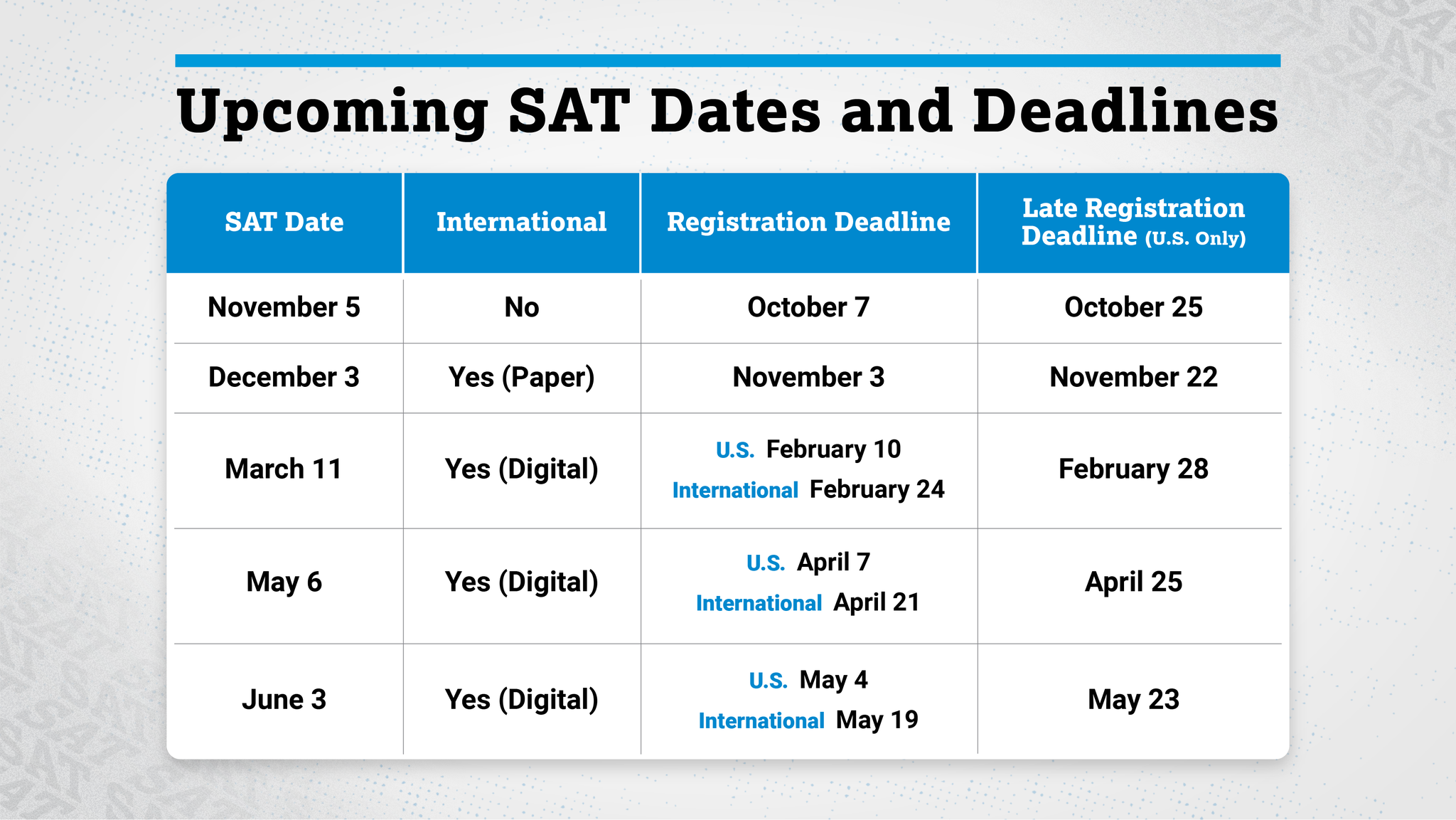
Register for an SAT date that allows time for a retake if needed. Plan to test in spring of junior year or fall of senior year.
Make Strategic Submission Decisions
After receiving scores, submit them to schools where you're at or above the 50th percentile. Go test-optional where scores fall below median.
Get Expert SAT Prep Guidance
RevisionTown offers comprehensive SAT preparation resources, practice tests, and personalized strategies to help you achieve your target score and maximize your college admissions success.
Explore SAT Prep Resources →Last Updated: February 2026 | Published by RevisionTown
College testing policies change frequently. Always verify current requirements on official university websites.