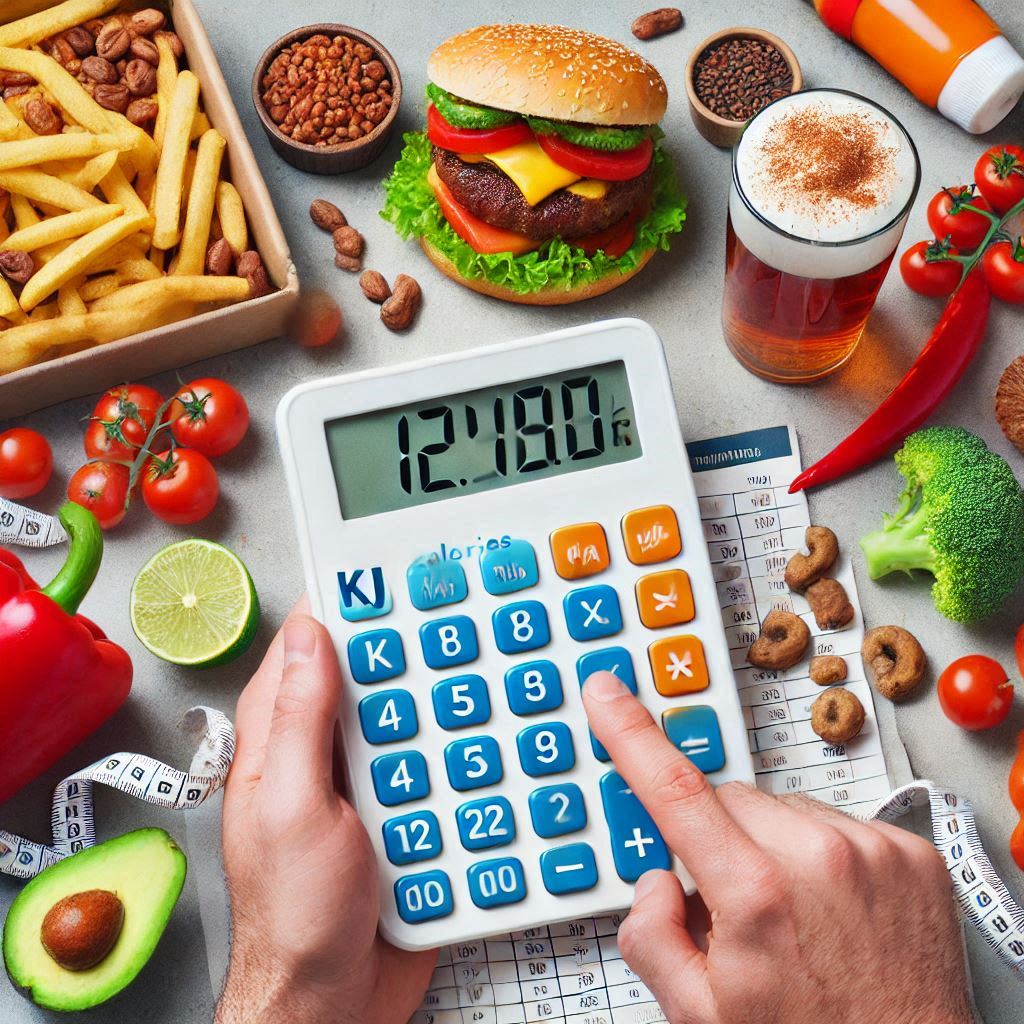
kJ to Calories Conversion Calculator
Convert Kilojoules to calories (cal) and Calories (kcal) Instantly - Free Nutrition Energy Converter
Conversion Result:
Understanding kJ to Calories Conversion
The kilojoule (kJ) to calorie conversion is essential for understanding food energy content and nutrition labeling worldwide. While kilojoules represent the metric standard for energy measurement, calories (particularly kilocalories or Calories with a capital C) remain widely used, especially in the United States. The distinction between small calories (cal) and kilocalories (kcal, also written as Calories with capital C) is crucial: food labels use kilocalories, not small calories, though they're often simply called "calories" in everyday language.
This conversion calculator provides instant, accurate results for converting between kilojoules, small calories, and kilocalories, helping nutritionists, dietitians, fitness enthusiasts, students, and anyone tracking food energy intake. Whether you're comparing nutrition labels from different countries, calculating daily caloric intake, converting recipe energy values, or studying thermodynamics and chemistry, understanding this conversion enables accurate energy tracking and informed dietary decisions across international measurement standards.
Conversion Formulas
The mathematical relationship between kilojoules and calories is based on thermodynamic definitions of energy units, with different conversion factors for small calories versus kilocalories.
Kilojoules to Small Calories:
\[ \text{cal} = \text{kJ} \times 239.006 \]
Kilojoules to Kilocalories (Dietary Calories):
\[ \text{kcal} = \frac{\text{kJ}}{4.184} \]
Alternative Form:
\[ \text{kcal} = \text{kJ} \times 0.239006 \]
Fundamental Relationships:
\[ 1 \text{ kJ} = 239.006 \text{ cal} = 0.239006 \text{ kcal} \]
\[ 1 \text{ kcal} = 4.184 \text{ kJ} = 1{,}000 \text{ cal} \]
Where:
- kJ = Energy in kilojoules (1,000 joules)
- cal = Small calorie (energy to heat 1g water by 1°C)
- kcal = Kilocalorie = 1,000 small calories
- Cal = Calorie with capital C = kilocalorie (food labels)
- 4.184 = Conversion factor (exact: 1 calorie thermochemical = 4.184 joules)
Important Note: When food labels say "Calories" (with capital C), they mean kilocalories (kcal). One food Calorie (Cal) = 1 kilocalorie (kcal) = 1,000 small calories (cal) = 4.184 kilojoules (kJ). To avoid confusion, nutritionists use kcal, but food labels in the US typically just say "Calories."
How to Convert kJ to Calories: Step-by-Step Guide
Converting kilojoules to calories requires knowing which type of calorie you need:
- Identify Your Value: Find the energy value in kilojoules (kJ) from a food label, calculation, or specification.
- Determine the Target Unit:
- For food/nutrition: Use kilocalories (kcal) or Calories (Cal)
- For chemistry/physics: May need small calories (cal)
- Choose the Appropriate Formula:
- For kcal (food energy): Divide kJ by 4.184
- For small cal: Multiply kJ by 239.006
- Calculate the Result: Apply the chosen conversion factor.
- Verify: For food, kcal should be about 1/4 of the kJ value.
Example Calculation 1:
Convert 100 kilojoules (snack food) to Calories (kcal):
\[ \text{kcal} = \frac{100}{4.184} = 23.9 \text{ kcal} \]
100 kJ equals approximately 24 dietary Calories (kcal).
Example Calculation 2:
Convert 2,000 kJ (meal energy) to kcal:
\[ \text{kcal} = \frac{2{,}000}{4.184} = 478 \text{ kcal} \]
2,000 kJ equals approximately 478 Calories.
Example Calculation 3:
Convert 8,400 kJ (daily intake) to kcal:
\[ \text{kcal} = \frac{8{,}400}{4.184} = 2{,}007 \text{ kcal} \]
8,400 kJ equals approximately 2,007 Calories (typical daily intake).
Quick Reference Conversion Table
This comprehensive table provides common kilojoule to calorie conversions for food and nutrition:
| Kilojoules (kJ) | Kilocalories (kcal) | Small calories (cal) | Context/Example |
|---|---|---|---|
| 1 kJ | 0.239 kcal | 239 cal | Basic unit conversion |
| 10 kJ | 2.4 kcal | 2,390 cal | Very small food portion |
| 100 kJ | 23.9 kcal | 23,900 cal | Small snack |
| 250 kJ | 59.8 kcal | 59,750 cal | Piece of fruit |
| 500 kJ | 119.5 kcal | 119,500 cal | Light snack |
| 1,000 kJ | 239 kcal | 239,000 cal | Light meal/substantial snack |
| 2,000 kJ | 478 kcal | 478,000 cal | Medium meal |
| 4,184 kJ | 1,000 kcal | 1,000,000 cal | Exactly 1,000 Calories |
| 8,400 kJ | 2,007 kcal | 2,007,000 cal | Average daily intake (adult) |
| 10,000 kJ | 2,390 kcal | 2,390,000 cal | Active person daily intake |
Understanding calorie vs Calorie (cal vs kcal)
One of the most confusing aspects of energy measurement is the distinction between different types of calories:
Small Calorie (cal) - Lowercase c
The small calorie, also called gram calorie, is the amount of energy required to raise the temperature of one gram of water by one degree Celsius at standard atmospheric pressure.
- Symbol: cal (lowercase)
- Definition: Energy to heat 1 gram water by 1°C
- Usage: Chemistry, physics, scientific calculations
- Relationship: 1 cal = 4.184 joules = 0.004184 kJ
- Not used on food labels
Kilocalorie (kcal) or Large Calorie (Cal) - Uppercase C
The kilocalorie, also called large calorie or dietary calorie, equals 1,000 small calories. This is the unit used on food labels, though often written simply as "Calorie" with a capital C.
- Symbols: kcal, Cal (capital C), Calorie
- Definition: 1,000 small calories = 1 kilocalorie
- Usage: Food labels, nutrition, dietetics
- Relationship: 1 kcal = 1,000 cal = 4,184 joules = 4.184 kJ
- Standard on food labels worldwide
Common Confusion: When a food label says "100 Calories," it means 100 kilocalories (100 kcal), NOT 100 small calories. If it were 100 small calories, the food would provide almost no energy. Always remember: Food Calories = kilocalories = kcal, even though the label may just say "Calories."
Why the Confusion Exists
The confusion arose because in American English, the term "Calorie" (with capital C) became standard for food energy, but many people pronounce and write it as "calorie" (lowercase), not realizing they're actually referring to kilocalories. This linguistic shortcut has persisted for over a century, causing ongoing confusion in nutrition education.
What is a Kilojoule (kJ)?
A kilojoule is the metric unit of energy equal to 1,000 joules, part of the International System of Units (SI). It represents the modern, scientifically preferred unit for measuring energy in all contexts, including food nutrition.
Definition and Characteristics
- Symbol: kJ
- Definition: 1 kJ = 1,000 joules
- SI status: Accepted metric unit
- Relationship: 1 kJ = 239.006 cal = 0.239006 kcal
- Global usage: Primary unit in most countries
Kilojoules in Food Labeling
Many countries require or prefer kilojoules on food labels:
- Australia: kJ required, kcal optional
- New Zealand: kJ required, kcal optional
- European Union: kJ required first, kcal shown second
- United Kingdom: Both kJ and kcal required
- United States: kcal (Calories) required, kJ rarely shown
Why Kilojoules are Preferred Scientifically
- SI standard: Part of the international metric system
- No confusion: Unlike calorie vs Calorie ambiguity
- Universal: Used across all scientific disciplines
- Consistent: Same unit for all energy types (food, mechanical, thermal)
- Modern: Reflects 20th-21st century scientific standards
Practical Applications of kJ to Calories Conversion
Understanding kilojoule to calorie conversion is essential across numerous applications:
Nutrition and Diet Planning
- Food label reading: Converting kJ to familiar kcal for Americans
- Diet tracking: Logging food intake when using apps from different countries
- Meal planning: Calculating total daily caloric intake
- Recipe conversion: Adapting international recipes
- Nutritional counseling: Explaining energy content to clients
Health and Fitness
- Weight management: Tracking caloric deficit or surplus
- Exercise nutrition: Calculating pre/post-workout energy needs
- Athletic training: Meeting specific caloric targets
- Metabolic calculations: Estimating basal metabolic rate (BMR)
- Sports nutrition: Timing and quantity of energy intake
Education and Research
- Chemistry: Calorimetry experiments and energy calculations
- Physics: Thermodynamics and heat transfer
- Biochemistry: Metabolic pathway energetics
- Food science: Analyzing food composition
- Nutritional science: Research requiring both unit systems
International Context
- Travel: Understanding food labels in different countries
- Import/export: Meeting different labeling requirements
- Product development: Creating labels for multiple markets
- Scientific collaboration: Standardizing measurements across borders
Reverse Conversion: Calories to Kilojoules
Converting calories or Calories back to kilojoules is equally important:
Kilocalories to Kilojoules:
\[ \text{kJ} = \text{kcal} \times 4.184 \]
Small Calories to Kilojoules:
\[ \text{kJ} = \frac{\text{cal}}{239.006} \]
Reverse Conversion Examples:
Example 1: Convert 500 kcal (meal) to kJ:
\[ \text{kJ} = 500 \times 4.184 = 2{,}092 \text{ kJ} \]
Example 2: Convert 2,000 kcal (daily intake) to kJ:
\[ \text{kJ} = 2{,}000 \times 4.184 = 8{,}368 \text{ kJ} \]
Example 3: Convert 100 kcal (snack) to kJ:
\[ \text{kJ} = 100 \times 4.184 = 418.4 \text{ kJ} \]
This reverse conversion is useful when:
- Creating food labels for countries requiring kJ
- Converting American recipes for international use
- Standardizing nutritional databases
- Scientific research requiring SI units
Daily Energy Requirements in kJ and kcal
Understanding daily energy needs in both units helps with diet planning:
Average Daily Energy Requirements
| Category | kcal/day | kJ/day |
|---|---|---|
| Sedentary woman | 1,600-2,000 | 6,694-8,368 |
| Active woman | 2,000-2,400 | 8,368-10,042 |
| Sedentary man | 2,000-2,400 | 8,368-10,042 |
| Active man | 2,400-3,000 | 10,042-12,552 |
| Teen (14-18) | 2,000-3,200 | 8,368-13,389 |
| Child (9-13) | 1,600-2,600 | 6,694-10,878 |
| Athlete training | 3,000-5,000 | 12,552-20,920 |
Factors Affecting Energy Needs
- Age: Metabolism slows with age
- Sex: Males typically need more energy
- Body composition: More muscle = higher metabolism
- Activity level: Exercise increases needs significantly
- Climate: Cold/hot environments affect energy expenditure
- Health conditions: Illness, pregnancy, lactation alter needs
Common Mistakes to Avoid
When converting between kilojoules and calories, watch out for these frequent errors:
- Confusing cal and kcal: Using small calories instead of kilocalories for food
- Wrong conversion factor: Using 4.0 instead of 4.184
- Mixing units: Adding kJ and kcal without converting
- Misreading labels: Thinking "Calorie" means small calorie
- Decimal errors: Misplacing decimal points (23.9 vs 239)
- Rounding too early: Using 4.2 instead of 4.184 reduces accuracy
- Calculator mistakes: Entering numbers incorrectly
- Unit inconsistency: Not standardizing units before comparing
Quick Check: For food energy, kcal should be roughly 1/4 of kJ (divide kJ by 4). If you get kcal = 239 when converting 100 kJ, you've used the wrong formula (you got small calories instead of kilocalories)!
Frequently Asked Questions (FAQs)
How many calories are in 1 kilojoule?
1 kilojoule (kJ) equals approximately 239.006 small calories (cal) or 0.239006 kilocalories (kcal or Calories). For food labeling purposes, 1 kJ ≈ 0.24 kcal. This means about 4.2 kJ equals 1 food Calorie (kcal).
What is the formula to convert kJ to calories?
The conversion formulas are: cal = kJ × 239.006 for small calories, and kcal = kJ ÷ 4.184 for kilocalories (dietary Calories). For nutrition purposes, always use the kcal formula: divide kilojoules by 4.184 to get food Calories.
What is the difference between calories and Calories?
A small calorie (cal) with lowercase c is the energy to heat 1 gram of water by 1°C. A Calorie (Cal) with capital C, also called kilocalorie (kcal), equals 1,000 small calories. Food labels use Calories (kcal), not small calories. When labels say "100 Calories," they mean 100 kilocalories or 100,000 small calories.
How do you convert 100 kJ to Calories?
To convert 100 kilojoules to Calories (kcal): 100 ÷ 4.184 = 23.9 kcal. So 100 kJ equals approximately 24 dietary Calories. This is a typical energy content for a small snack or piece of fruit.
Why do food labels use both kJ and Calories?
Many countries require both units to accommodate international standards. The EU, Australia, and New Zealand primarily use kilojoules as the metric standard, while the US primarily uses Calories (kcal). Showing both helps consumers worldwide understand energy content regardless of their local measurement system.
Is 2,000 Calories the same as 2,000 kJ?
No! 2,000 Calories (kcal) equals about 8,368 kJ, NOT 2,000 kJ. 2,000 kJ equals only about 478 Calories (kcal). This is a common and serious mistake. Always convert properly: multiply Calories by 4.184 to get kJ, or divide kJ by 4.184 to get Calories.
Which is bigger, kJ or kcal?
A kilocalorie (kcal) is bigger than a kilojoule (kJ). One kcal equals about 4.18 kJ. So if a food has 100 kcal, it has about 418 kJ. Think of it as: kJ numbers are about 4 times larger than kcal numbers for the same energy amount.
Should I count calories or kilojoules?
It doesn't matter which unit you use—they measure the same thing (energy). Choose based on your location and preference: use Calories (kcal) if you're in the US or prefer traditional units, or use kilojoules if you're in Australia, NZ, or prefer metric. Just stay consistent with one unit for tracking.
How many kJ should I eat to lose weight?
Weight loss requires a caloric deficit. Women typically need 6,000-8,000 kJ/day (1,400-1,900 kcal) for weight loss, men 7,500-10,000 kJ/day (1,800-2,400 kcal), depending on size and activity level. A deficit of 2,000-3,000 kJ/day (500-700 kcal) typically produces 0.5-1 kg weight loss per week. Consult a healthcare professional for personalized advice.
Are low-calorie and low-kilojoule foods the same?
Yes! A low-calorie food is also low in kilojoules—they're just different ways to express the same energy content. A food with 50 kcal also has about 209 kJ. Both describe low-energy foods. The terms are interchangeable; they just use different measurement units.
Expert Tips for kJ to Calories Conversions
- Remember the rough rule: Divide kJ by 4 for quick kcal estimate
- Use 4.184 for accuracy: The precise conversion factor for calculations
- Always use kcal for food: Food labels use kilocalories, not small calories
- Check capitalization: Calorie (capital C) = kilocalorie = kcal
- Learn common values: 8,400 kJ ≈ 2,000 kcal (typical daily intake)
- Verify label units: Check whether the label shows kJ, kcal, or both
- Use apps wisely: Ensure your tracking app uses the correct unit
- Don't mix units: Convert everything to either kJ or kcal before adding
- Context matters: Chemistry uses cal; nutrition uses kcal
- Round appropriately: Whole numbers are fine for daily tracking
Conclusion
Converting between kilojoules and calories is essential for navigating food labels, tracking nutrition, and understanding energy content across international measurement standards. The critical distinction between small calories (cal), used in scientific contexts, and kilocalories (kcal or Calories with capital C), used for food labeling, cannot be overstated. Understanding that 1 kilojoule equals approximately 0.24 kilocalories (food Calories) enables accurate dietary tracking and informed nutritional decisions whether you're reading Australian food labels or American nutrition facts panels.
The ongoing coexistence of kilojoules and calories in nutrition reflects both scientific standardization (favoring the metric kJ) and cultural tradition (maintaining kcal in American usage). While kilojoules represent the modern SI standard preferred globally, calories remain deeply embedded in American dietary culture and communication. Mastering the conversion between these units—remembering the key factor of 4.184—empowers you to understand food energy content regardless of which measurement system is used on the label.
Bookmark this RevisionTown kJ to Calories calculator for quick access whenever you need to convert between kilojoules, small calories, and kilocalories for nutrition tracking, food label interpretation, diet planning, recipe conversion, or educational purposes. Understanding both measurement systems and converting confidently between them enhances your nutritional literacy and enables effective energy management for health, fitness, and scientific applications worldwide.